Facebook announced on Wednesday a comprehensive ban on white nationalism and white separatism, two ideologies that the company previously viewed as different from white supremacy, which the social network blocked in 2018.

But activists and civil rights groups have long argued that the tenets make up distinctions without a difference.

“Today we’re announcing a ban on praise, support and representation of white nationalism and separatism,” the social media giant said in a statement. “It’s clear that these concepts are deeply linked to organized hate groups and have no place on our services.”

The new policy comes less than two weeks after a white supremecist killed 50 worshippers at two mosques in Christchurch, New Zealand. The accused terrorist live-streamed the attack in a horrifying 17-minute video. He also posted a manifesto laden with racist and white nationalist parlance on social media before going into the mosques.

Facebook said it did not originally include white nationalism and separatism in its ban on white supremacy because the company understood them in “broader concepts of nationalism and separatism — things like American pride and Basque separatism, which are an important part of people’s identity.”

In recent months, however, the company realized “that white nationalism and separatism cannot be meaningfully separated from white supremacy and organized hate groups.”

Facebook said its realization came after speaking with activists in civil society, academics, and other experts on race relations.

The Southern Poverty Law Center, which monitors hate groups in the U.S. and pressured Facebook to make the change, praised the decision on Twitter.

However, the group criticized the platform for banning white supremacy but allowing white nationalist and separatist content to spread “despite the lack of difference between ideologies.”

Facebook was also pressured by the social justice organization Lawyers' Committee for Civil Rights Under Law to update its policy. “Took hard work to achieve this victory but our work is not over,” tweeted Kristen Clarke, the group’s president and executive director. “We will be monitoring Facebook closely to ensure that they implement this policy fully. We can't allow violent white supremacists to incubate, organize & recruit on our online platforms.”

In addition to external counsel, Facebook said it conducted an internal review of hate figures and organizations on the platform, which revealed an overlap between white nationalism and separatism and white supremacy.

Moreover, when future users search for terms associated with white supremacy, Facebook will direct them to Life After Hate, a counter-extremist group that works to interrupt violence committed in the name of ideological or religious beliefs.

“Unfortunately, there will always be people who try to game our systems to spread hate,” Facebook’s statement added. “Our challenge is to stay ahead by continuing to improve our technologies, evolve our policies and work with experts who can bolster our own efforts.”

The ban will apply to Facebook and Instagram and go into effect next week.

Share:
More In Culture
UN Report: Countries "Nowhere Near" Ambition Needed To Limit Climate Change
According to the latest report from the UN, several countries around the world are "nowhere near" towards their goal of limiting gas emissions. This report comes ahead of the COP26 which is slated to take place in the month of November in Scotland. Senior Advisor at CDP Paula Diperna, joined Cheddar to discuss what the report highlights and what this tells us about the future plans of the Paris Climate Agreement.
New Details Emerge On Tragic Shooting at "Rust" Movie Set
New details surrounding the deadly shooting that took place on the production set of "Rust" have now emerged. According to sources close to the matter, hours before the set several crew members walked off set over safety concerns. Senior Editor at Variety and host of the "Just for Variety" podcast Marc Malkin along with Certified Firearms Instructor and Founder of The Reload Stephen Gutowski, joined Cheddar to discuss more.
Edtech Startup Entity Academy Raises $100 Million
Edtech startup ENTITY Academy raised $100 million in its latest round of funding. The company's platform offers tech training to women via online courses, in areas like data science and software development. The courses include mentoring and career coaching from people working in the tech industry. ENTITY Academy's founder and CEO Jennifer Schwab joined Cheddar News' Closing Bell to talk more about the company and the funding.
Why American's Are Splurging on Spooky Season
LendingTree's latest survey found that parents and Gen Zers are the most likely to overspend on Halloween this year. Brianna Wright, a senior consumer research specialist at LendingTree, joined Cheddar to discuss what exactly consumers are splurging on this spooky season and how to carve out room in your budget to celebrate.
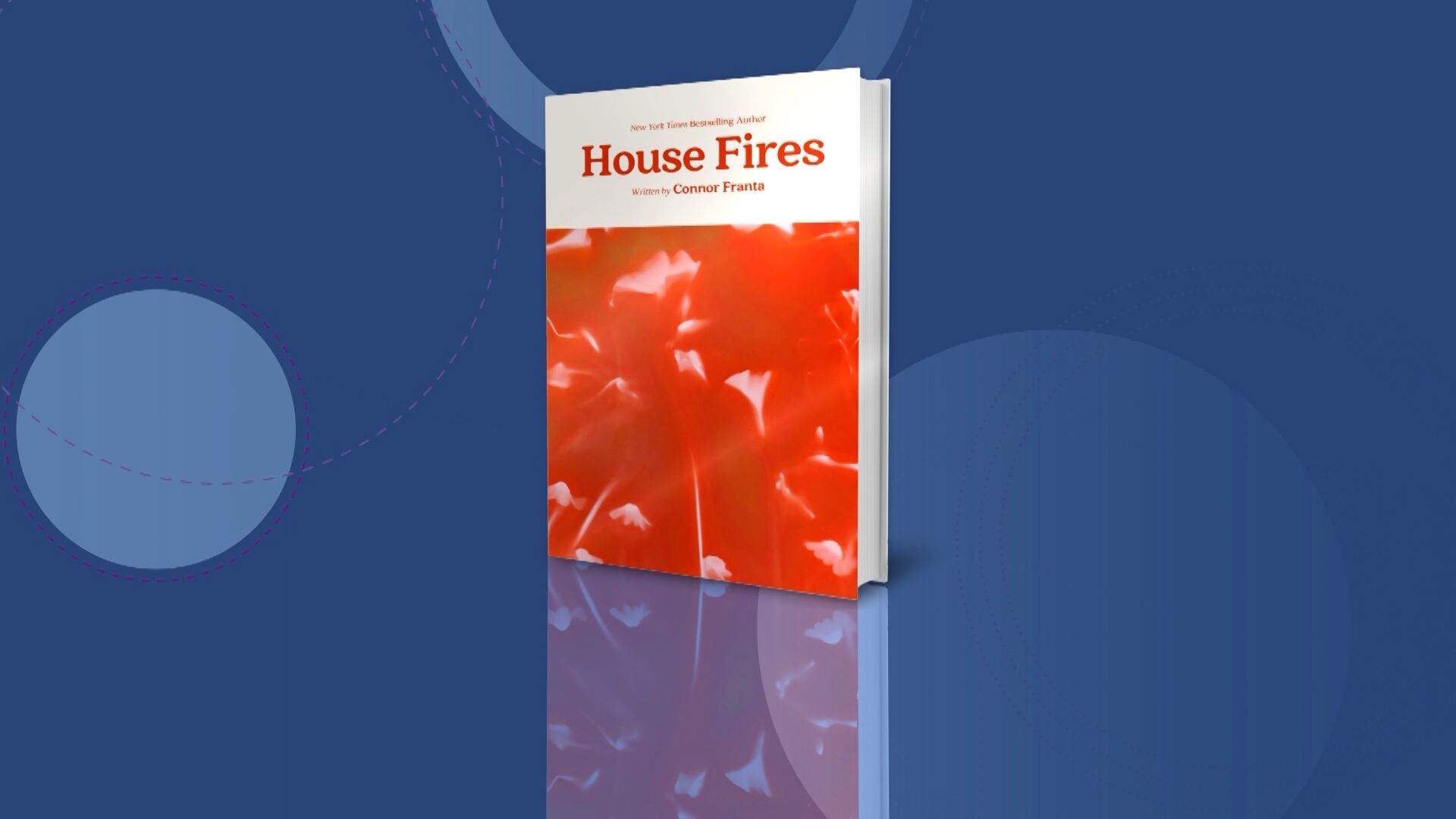
YouTube Star Connor Franta Talks New Book 'House Fires'
Connor Franta, YouTube star and author of 'House Fires,' joins Cheddar News to discuss his latest book which is a collection of essays, photos, and poems about dating, sex, relationships, mental health, and so much more.
New Twitter Research Reveals The Platform Content Amplifies 'Political Right'
According to new research by Twitter, the social media platform algorithm amplifies content from the "political right" rather than those on the left. The company says this data comes as the platform has been taking the time to research the implications of its algorithm and whether or not it has caused any "unknown harm". President and CEO of Media Matters for America Angelo Carusone, joined Cheddar to discuss more.
'Rust' Shooting Prompts Calls for Safety in Hollywood
The tragedy on the set of the movie "Rust" is sparking calls for safer Hollywood film sets. Actor Alec Baldwin accidentally killed the film's director of photography and injured the director when he fired a prop gun while rehearsing a scene last week, unaware the weapon was loaded with live rounds. Tom Murray, entertainment editor of Insider, joined Cheddar to discuss how prop guns can still be very dangerous and why Hollywood has prioritized realism over safety, despite several on-set accidents over the decades.
Load More