Facebook announced on Wednesday a comprehensive ban on white nationalism and white separatism, two ideologies that the company previously viewed as different from white supremacy, which the social network blocked in 2018.
But activists and civil rights groups have long argued that the tenets make up distinctions without a difference.
“Today we’re announcing a ban on praise, support and representation of white nationalism and separatism,” the social media giant said in a statement. “It’s clear that these concepts are deeply linked to organized hate groups and have no place on our services.”
The new policy comes less than two weeks after a white supremecist killed 50 worshippers at two mosques in Christchurch, New Zealand. The accused terrorist live-streamed the attack in a horrifying 17-minute video. He also posted a manifesto laden with racist and white nationalist parlance on social media before going into the mosques.
Facebook said it did not originally include white nationalism and separatism in its ban on white supremacy because the company understood them in “broader concepts of nationalism and separatism — things like American pride and Basque separatism, which are an important part of people’s identity.”
In recent months, however, the company realized “that white nationalism and separatism cannot be meaningfully separated from white supremacy and organized hate groups.”
Facebook said its realization came after speaking with activists in civil society, academics, and other experts on race relations.
The Southern Poverty Law Center, which monitors hate groups in the U.S. and pressured Facebook to make the change, praised the decision on Twitter.
However, the group criticized the platform for banning white supremacy but allowing white nationalist and separatist content to spread “despite the lack of difference between ideologies.”
Facebook was also pressured by the social justice organization Lawyers' Committee for Civil Rights Under Law to update its policy.
“Took hard work to achieve this victory but our work is not over,” tweeted Kristen Clarke, the group’s president and executive director. “We will be monitoring Facebook closely to ensure that they implement this policy fully. We can't allow violent white supremacists to incubate, organize & recruit on our online platforms.”
In addition to external counsel, Facebook said it conducted an internal review of hate figures and organizations on the platform, which revealed an overlap between white nationalism and separatism and white supremacy.
Moreover, when future users search for terms associated with white supremacy, Facebook will direct them to Life After Hate, a counter-extremist group that works to interrupt violence committed in the name of ideological or religious beliefs.
“Unfortunately, there will always be people who try to game our systems to spread hate,” Facebook’s statement added. “Our challenge is to stay ahead by continuing to improve our technologies, evolve our policies and work with experts who can bolster our own efforts.”
The ban will apply to Facebook and Instagram and go into effect next week.
Dr. Saralyn Mark, COVID-19 leader at the American Medical Women's Association and former senior medical advisor at the White House, joins Cheddar News' Closing Bell, where she says people should reconsider their plans for New Year's Eve due to the high transmissibility of the Omicron variant and adds that we should be using the resources at our disposal to make the best decisions.
2021 was a wild ride for the world of cryptos. Both Bitcoin and Etherum hit new all-time highs, as well as other coins like SHIB-INU. According to several experts, crypto is here to stay and is expected to blast off in the year 2022 as more and more people invest in the crypto world. The host of "The O Show" Wendy O, joined Cheddar to discuss more.
According to recent new polls, Americans are becoming more and more skeptical about tech companies. A number of respondents revealed their distrust of companies like Apple, Instagram, Facebook, and even Tik Tok. They say that they believe it is time for government agencies to step in to take action in order to protect users' personal information and data. Technology Reporter at AXIOS Ashley Gold, joined Cheddar to discuss more.
Over the past year, the new love for gaming has created a huge demand for the consumption of content on streaming platforms. All this has caused a rise in gaming influencers all over the world. Founder of Viral Nation Joe Gagliese and Digital Video Executive Andrew Wall, joined Cheddar to discuss more.
The U.S. population has dipped to its slowest rate since the nation's founding. According to the U.S. Census Bureau, the population grew just point 0.11% from 2020 to 2021 due in part to decreased international migration, decreased fertility, and increased mortality from the pandemic. Paul Overberg, reporter at the Wall Street Journal, joined Cheddar to discuss what's behind the record slow growth in population and why it has negative implications for the economy and the nation.
Carlo and Baker kick off the weirdest week of the year with all the news you missed over the holiday weekend, including calls for the CDC to shorten its isolation window as Omicron sweeps through the country.
The 2022 Winter Olympics will be without some of hockey's biggest players. The NHL and the NHL Player's Association have agreed to not participate in the men's hockey tournament at the Games in Beijing next year. The league has been forced to postpone some games because of a rise in COVID-19 cases among players. Washington Post sports reporter Samantha Pell joins Cheddar News' Closing Bell to discuss what this could mean for the Winter Olympics and the sport of hockey.
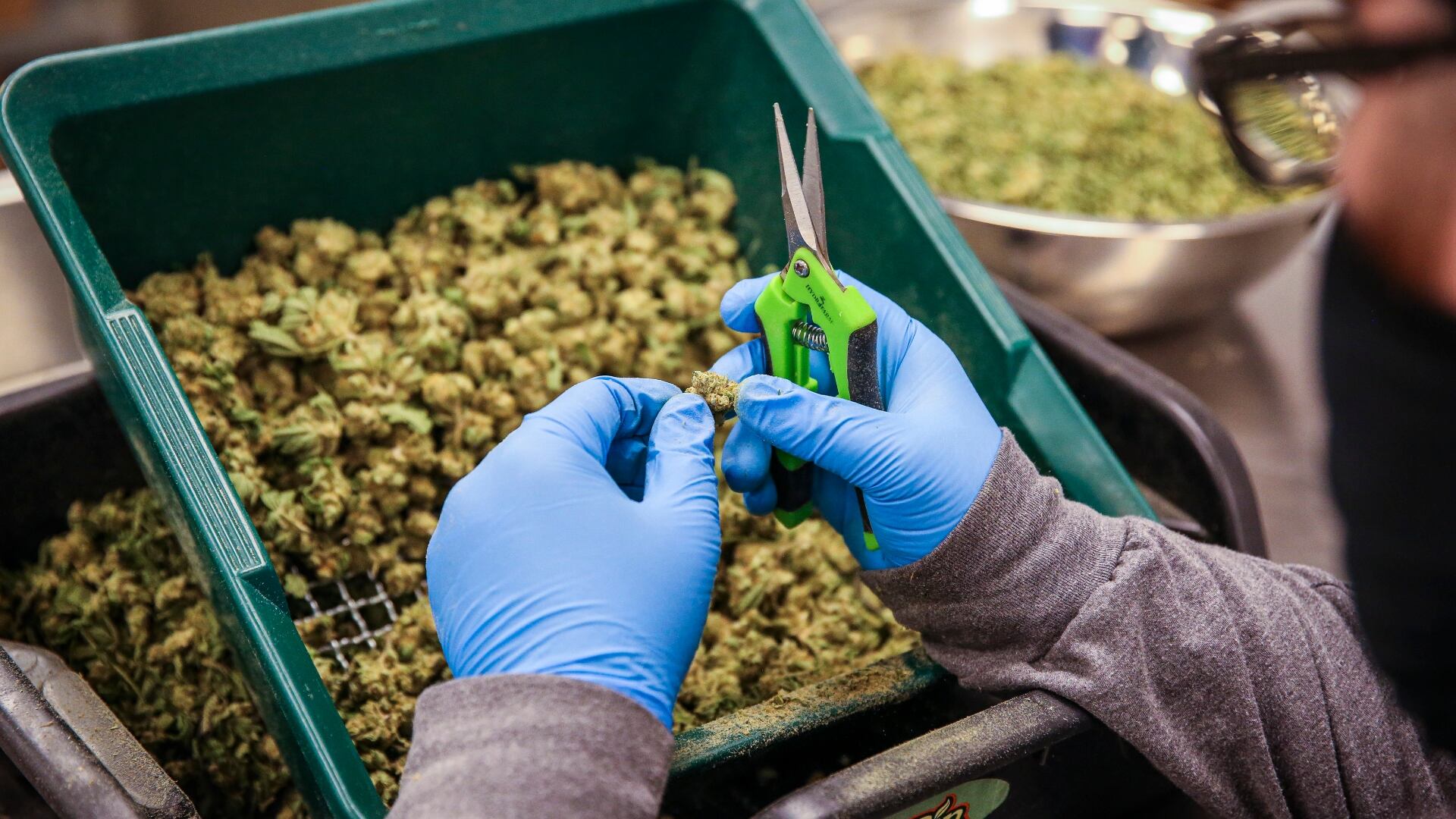
Baron Davis and Kate Hudson want you to bring cannabis home for the holidays. The cannabis-infused seltzer brand Cann released a new spot featuring the actress and former NBA player. The campaign comes hand in hand with Cann's launch of a new holiday bundle, which includes its product with Hudson's King Street Vodka. Davis and Hudson are also Cann investors. Cheddar cannabis reporter Chloe Aiello spoke to Davis about his involvement with the company and its new campaign.
Healthcare workforce management platform ShiftMed
recently announced a $45 million funding round.
The company's platform connects nurses and healthcare professionals to hospitals and other healthcare providers.
ShiftMed's new funding comes amid widespread labor shortages in the healthcare sector. The company's CEO Todd Walrath joins Cheddar News' Closing Bell to discuss.