*By Alisha Haridasani and Jacqueline Corba*
European lawmakers aggressively questioned Facebook's CEO Mark Zuckerberg on Tuesday, indicating they may consider further restricting the social media company's unchecked growth and regulating its business practices.
Zuckerberg, meeting publicly with members of the European Parliament in Brussels, again apologized for the company's failure to protect the personal data of millions of Facebook users from a third-party app that shared their information with the British research firm Cambridge Analytica.
"We haven't done enough to prevent these tools from being used for harm," Zuckerberg said Tuesday, echoing the apology he offered Congress in testimony last month in Washington. "That was a mistake."
But European lawmakers were even more confrontational than their American counterparts, piling questions on Zuckerberg over Facebook's failure to combat fake news, thwart foreign interference in democratic elections, and limit the access of private data collected from its users.
"They asked very intelligent questions that were drawn from the hearings in the Senate and the House of Representatives, building on them in very interesting ways," said Adi Robertson, a senior reporter for The Verge.
A German member of the European Parliament asked pointedly about Facebook’s market share, and whether it should be subject to [antitrust regulations](https://www.c-span.org/video/?446000-1/facebook-ceo-mark-zuckerberg-testifies-eu-lawmakers), a common theme in Tuesday's questions.
“It is time to discuss breaking Facebook’s monopoly because it’s already too much power in only one hand?” said Manfred Weber, the head of the European Parliament’s majority party, the European People's Party.
Guy Verhofstadt, a Belgium leader of the Alliance of Liberals and Democrats for Europe, suggested the company should consider splitting up WhatsApp, Instagram, and Facebook Messenger. “Could you or would you cooperate with the European antitrust authorities?” he asked Zuckerberg.
This line of questioning about Facebook's monopoly position was very "aggressive," said Roberson.
After all of the lawmakers asked their questions, Zuckerberg chose a few to answer at the end of the session, and he vowed to respond to the rest with written statements. With so many of their questions unanswered and no time remaining, the meeting bizarrely descended into back-and-forth bickering among lawmakers over the flawed format of the hearing.
"It seems like even people who were there on the floor were sort of baffled by the choice of panel," said Robertson.
Zuckerberg's questioning took place days before Europe’s General Data Protection Regulation, or GDPR, goes into effect. The new law, one of the most sweeping privacy protection laws in the world, requires all companies to share how online user data is used and offer users the option to delete their data. Companies that fail to comply can be fined up to 4 percent of their global revenue.
Zuckerberg said Tuesday that Facebook would extend to users elsewhere in the world the same data privacy protections that European citizens will have under the new law.
“At the heart of Europe’s new data protection law, the GDPR, are three important principles: control, transparency, and accountability,” he said. “We’ve always shared these values.”
For the full interview, [click here](https://cheddar.com/videos/zuckerberg-testifies-to-european-parliament).
Roundhill Investments is investing in the metaverse, and it wants consumers to as well. The firm launched a metaverse exchange-trade fund called Meta back in June - the first ETF in the U.S. targeting investments in the next era of the internet. The fund's launch came months before the company formerly known as Facebook changed its name to Meta Platforms. Since the launch of Roundhill Investments' Meta ETF, it has grown significantly, reaching $500 million in assets. Roundhill Investments Vice President Mario Stefanidis joined Cheddar News to discuss.
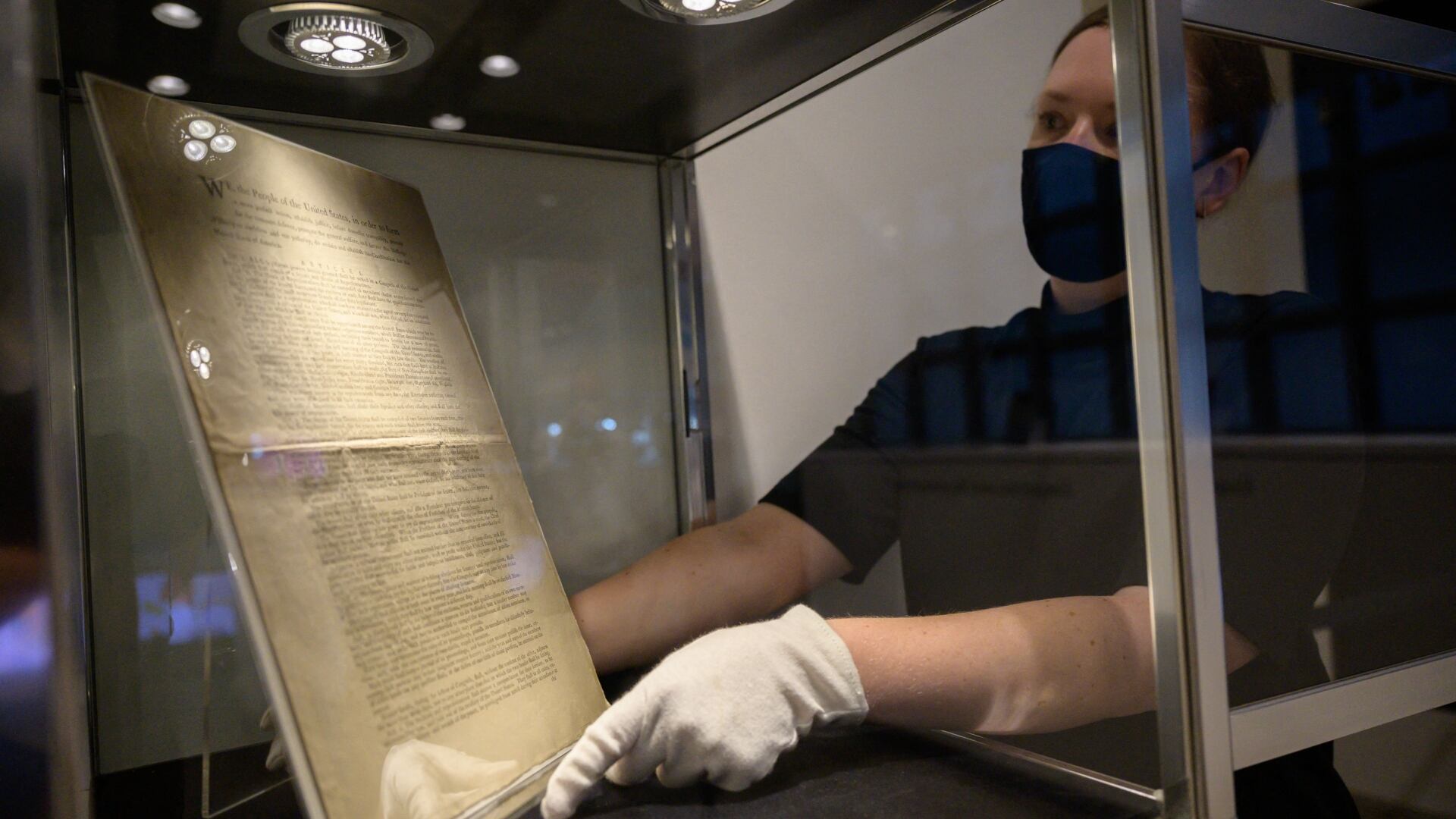
A group of crypto investors has come together to raise millions of dollars in the hopes of owning a rare piece of the U.S. Constitution. According to the crypto group, "Constitution DAO" It is time to put the constitution in the hands of the people. CEO and Founder of Metaversal Yossi Hasson, joined Cheddar to discuss more.
Over the weekend, Russia fired a missile at one of its own satellites, triggering an explosion that launched thousands of pieces of shrapnel through space and forced the astronauts aboard the International Space Station to shelter in place. Senior Writer from Space.com Chelsea 'Foxanne' Gohd, joined Cheddar to discuss more.
Twitter announced a partnership with S&P Dow Jones Indices on Thursday to build the S&P 500 Sentiment Index for monitoring the performance of 200 S&P members based on tweets with company $cashtags. Jared Podnos, strategic market development lead at Twitter, and Peter Roffman, global head of innovation and strategy at S&P Dow Jones Indices, joined Cheddar to provide some background on the partnership and to explain exactly how monitoring companies through public opinion will work. "[The S&P] taps into this conversation. They understand the real-time conversation as well as the historical trends, and then we can analyze that and understand the consumer sentiment and really build these innovative products around that conversation," Podnos added.
Cognitive healthcare platform BrainCheck recently raised $10 million in a Series B round. The platform offers neurologists a new way to detect and care for brain disorders like Alzeheimer's, and brain injuries like concussions. BrainCheck CEO Yael Katz joined Cheddar News' Closing Bell to discuss.
Jean-Denis Mariani, the chief digital officer at COTY, the parent company for major brands like Bottega Veneta, Burberry, and Kylie Skin, joined Cheddar to talk about the impact of the pandemic on the beauty industry and the rapid shift to e-commerce sales. "There is no digital strategy anymore, only strategy in a digital world," he said. Mariani also talked about personalized makeup selection for consumers as the beauty sector begins to incorporate technology like artificial intelligence.
Amid an ongoing global semiconductor chip shortage, American automaker Ford has decided to open up supply chains of its own. Karl Brauer, an executive analyst at iSeeCars.com, joined Cheddar to discuss Ford's new partnership with multinational semiconductor maker GlobalFoundries to build those chips domestically. Brauer praised Ford for the move both for ongoing supply woes and the future of automobile manufacturing. "It's not just the supply chain," he said. "It's not just about getting chips, but maybe getting chips that are more customized and specific to your needs."
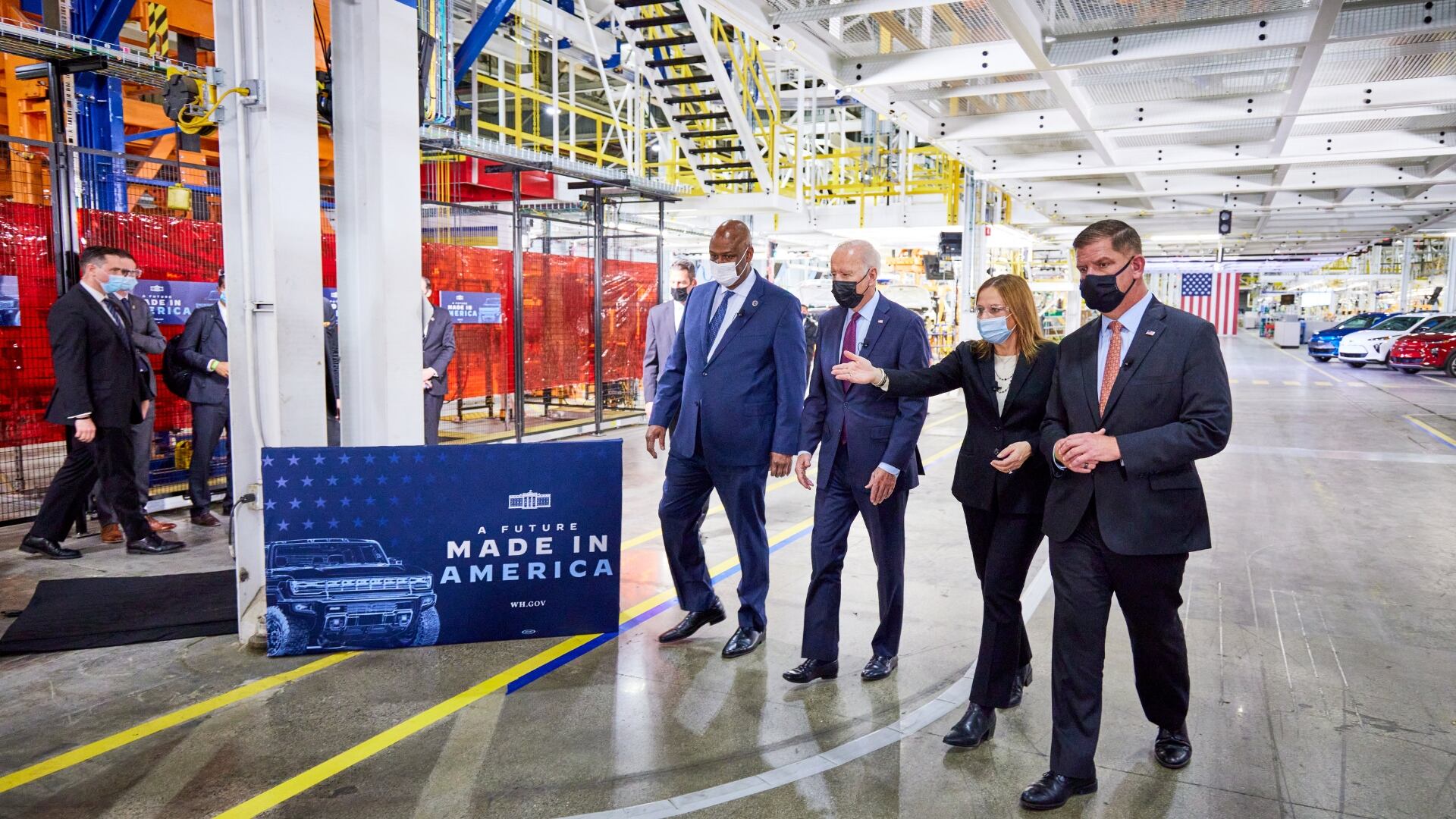
Gerald Johnson, Executive VP, Global Manufacturing and Sustainability at General Motors, joins Cheddar News to break down what Factory ZERO signifies for GM's all-electric future and why the auto manufacturer will be a leader in the growing EV industry.
Airlines are gearing up for a busy winter season as they continue to rebound from the pandemic. But jet fuel prices combined with the ongoing labor shortage could put a damper on those holiday gains. Christian Vernet, president of La Compagnie, the only all business class airline in the world, joined Cheddar for an update on the state of the airline industry and how it's dealing with the surge in demand after the U.S. reopened its border to international visitors.