*By Alisha Haridasani and Jacqueline Corba* European lawmakers aggressively questioned Facebook's CEO Mark Zuckerberg on Tuesday, indicating they may consider further restricting the social media company's unchecked growth and regulating its business practices. Zuckerberg, meeting publicly with members of the European Parliament in Brussels, again apologized for the company's failure to protect the personal data of millions of Facebook users from a third-party app that shared their information with the British research firm Cambridge Analytica. "We haven't done enough to prevent these tools from being used for harm," Zuckerberg said Tuesday, echoing the apology he offered Congress in testimony last month in Washington. "That was a mistake." But European lawmakers were even more confrontational than their American counterparts, piling questions on Zuckerberg over Facebook's failure to combat fake news, thwart foreign interference in democratic elections, and limit the access of private data collected from its users. "They asked very intelligent questions that were drawn from the hearings in the Senate and the House of Representatives, building on them in very interesting ways," said Adi Robertson, a senior reporter for The Verge. A German member of the European Parliament asked pointedly about Facebook’s market share, and whether it should be subject to [antitrust regulations](https://www.c-span.org/video/?446000-1/facebook-ceo-mark-zuckerberg-testifies-eu-lawmakers), a common theme in Tuesday's questions. “It is time to discuss breaking Facebook’s monopoly because it’s already too much power in only one hand?” said Manfred Weber, the head of the European Parliament’s majority party, the European People's Party. Guy Verhofstadt, a Belgium leader of the Alliance of Liberals and Democrats for Europe, suggested the company should consider splitting up WhatsApp, Instagram, and Facebook Messenger. “Could you or would you cooperate with the European antitrust authorities?” he asked Zuckerberg. This line of questioning about Facebook's monopoly position was very "aggressive," said Roberson. After all of the lawmakers asked their questions, Zuckerberg chose a few to answer at the end of the session, and he vowed to respond to the rest with written statements. With so many of their questions unanswered and no time remaining, the meeting bizarrely descended into back-and-forth bickering among lawmakers over the flawed format of the hearing. "It seems like even people who were there on the floor were sort of baffled by the choice of panel," said Robertson. Zuckerberg's questioning took place days before Europe’s General Data Protection Regulation, or GDPR, goes into effect. The new law, one of the most sweeping privacy protection laws in the world, requires all companies to share how online user data is used and offer users the option to delete their data. Companies that fail to comply can be fined up to 4 percent of their global revenue. Zuckerberg said Tuesday that Facebook would extend to users elsewhere in the world the same data privacy protections that European citizens will have under the new law. “At the heart of Europe’s new data protection law, the GDPR, are three important principles: control, transparency, and accountability,” he said. “We’ve always shared these values.” For the full interview, [click here](https://cheddar.com/videos/zuckerberg-testifies-to-european-parliament).

Share:
More In Technology
This Year In Trivia
Hena Doba and Azia Celestino recap some of the biggest stories of the year, and learn a thing or two while they're at it. It's This Year in Trivia!
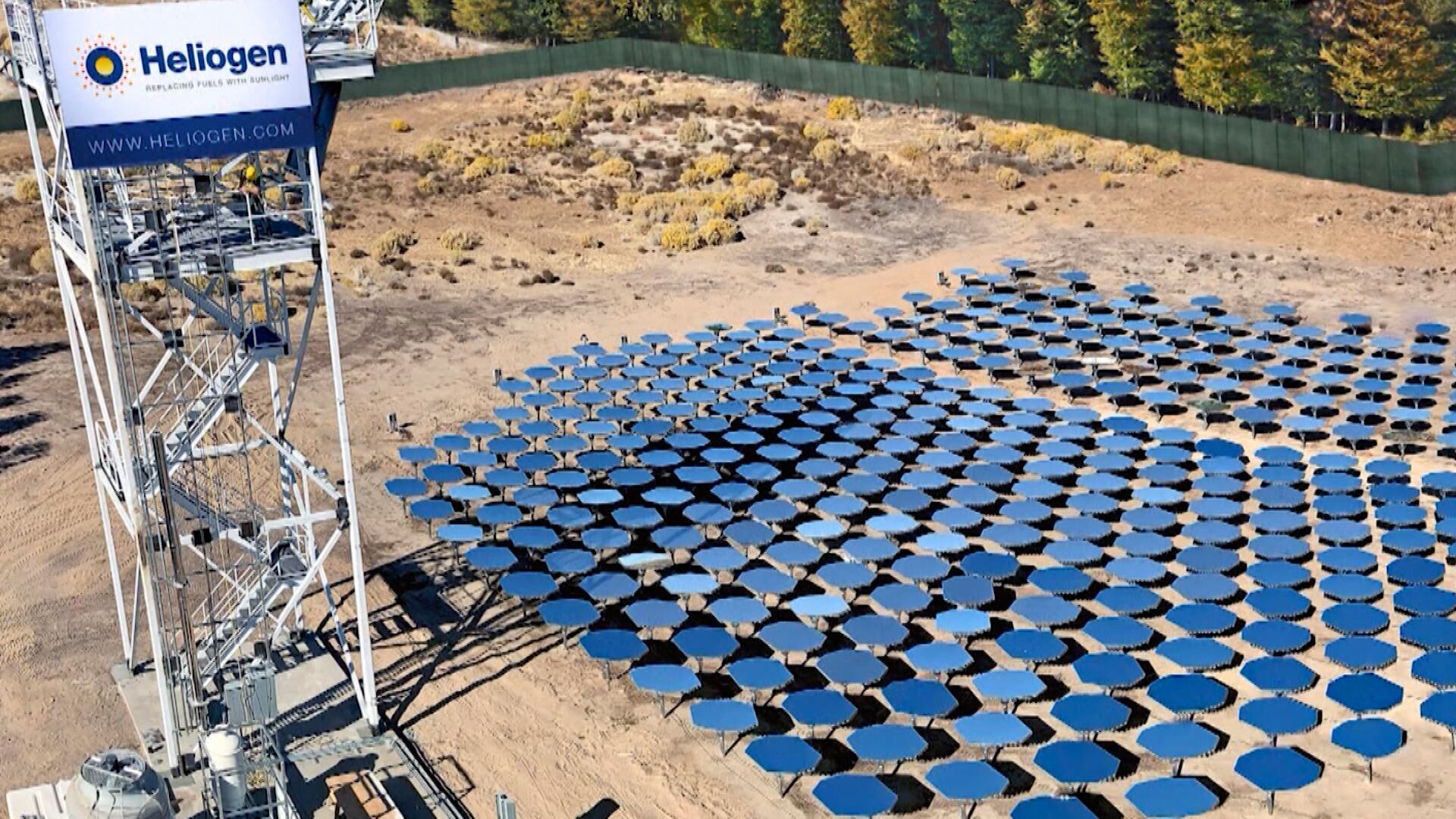
Heliogen Goes Public to Scale Up the Renewable Energy Revolution
Renewable energy company Heliogen has gone public via a SPAC merger with blank check company Athena Technology Acquisition Corp. on the NYSE. Joining Cheddar, founder and CEO Bill Gross went into why he felt the end of 2021 was the best time to get into the public markets. "If you think of the Industrial Revolution and the digital revolution, this renewable revolution is probably going to be as big or larger than that," he said. "So we're going to use this capital to scale our business, to meet more customer demand, to do more projects in parallel, and to scale our research and development to continue to drive down the price to be competitive with fossil fuels."
Crypto Investor on Purchasing His $2 Million Bugatti in Dubai With Ether
Carl "The Moon" Runefelt, a Bitcoin investment expert, recently made a hefty purchase of a $2 million Bugatti sports car at a Dubai dealership. The Swedish crypto evangelist joined Cheddar to talk about how he made the big acquisition of a luxury item he had long had his eye on and why he chose the dealership, The Car Vault, to make the unprecedented transaction. "They accepted crypto directly, and that was important to me," he said. "I am not going to go to any car dealership that don't accept crypto, and that's kind of a principle I have today."
A Year of Highs and Lows for Crypto in 2021
2021 proved that crypto currency is here to stay. This year saw more and more adoptions of crypto, from top athletes looking to be paid in bitcoin, to Elon Musk even experimenting with bitcoin and dogecoin payments for a bit over at Tesla. And it wasn't all bitcoin either - other cryptos like Cardano and Solana saw some action in 2021 as well. Patrick McConlogue, CEO of Overline and former Citadel Investment Group Engineer explains why 2021 was such a good year for crypto, and what to expect in 2022.
2022 Promises a Mixed Bag of Market Predictions
2021 saw markets continue to be impacted by the onslaught of the coronavirus pandemic -most recently in the form of the Omicron variant- in addition to the global supply chain shortage, and increased inflation. But it wasn't all bad news, as crypto soared throughout the year, and meme stocks continued to have a moment. With the year coming to a close, investors are keeping an eye out to see if they should expect more of the same in the new year. Chris Vecchio, Senior Analyst, at DailyFX tells us what market trends to be on the watch for in 2022.
Under Threaten of Competition, Tesla Held Its Own in 2021
2021 proved to be yet another formidable year for Tesla. In a year that saw electric vehicles carve out their own space in the transportation world, the company made further strides, keeping its spot on top even as new companies threatened competition. Tesla was able to hit the trillion dollar valuation mark, increase vehicle deliveries even as the world grappled with supply chain and delivery issues and sign a major deal with Hertz this year. And of course, you can't talk about Tesla without talking about Elon Musk, CEO and founder of the company, richest man in the world and Time Magazine Person of the Year, who saw plenty of successes in 2021 as well. Al Root, Senior Writer at Barron’s, explains just how good a year it was for Tesla.
Load More