By Kelvin Chan

European Union regulators accused Apple on Friday of violating the bloc's antitrust laws, alleging the iPhone maker distorts competition for music streaming by imposing unfair rules for rival services in its App Store.

The EU's executive Commission said it objected to Apple's rules for music streaming services that compete with its Apple Music service, saying they end up costing consumers more and limiting their choices.

The charges underscore the pressure Apple faces from EU regulators in Brussels, who have opened multiple investigations into the company. It also highlights the long-running feud between Apple and popular music streaming service Spotify over payments and app distribution.

One of the main concerns outlined by the EU centers on Apple's practice of forcing app developers selling digital content to use its in-house payment system, which charges a 30% commission on all subscriptions.

The EU's investigation, which was sparked by a complaint from Spotify, found that fees end up being passed on to consumers.

A second EU concern is that Apple prevents developers from telling users about cheaper ways to pay for subscriptions that don’t involve going through an app.

Apple rejected the charges, saying it was proud of its role in helping Spotify grow into a music streaming giant. The company also noted that Spotify doesn't pay Apple a commission for 99% of its paid subscribers.

“Once again, they want all the benefits of the App Store but don’t think they should have to pay anything for that,” Apple said in a statement. "The Commission’s argument on Spotify’s behalf is the opposite of fair competition.”

The EU’s competition commissioner, Margrethe Vestager, said while Spotify had grown despite Apple's rules, they appeared to hurt smaller music streaming players like Deezer and Soundcloud.

“Our concern is that Apple distorts competition in the music streaming market to the benefit of its own music streaming service, Apple Music," she told reporters in Brussels.

Vestager noted that Apple Music isn't subject to the same rules, which hurts rivals by raising their costs, reducing their profit margins and making them less attractive on the App Store. She said the problem is not the fee itself, but that Apple only charges it on payments for digital content and not other services such as transport or food deliveries. The EU's investigation found it typically pushed up the price of a monthly subscription to 12.99 euros ($15.70) from 9.99 euros, she said.

Spotify refuses to use Apple's app payment system to sell premium subscriptions, instead requiring customers to go through its website. Epic Games, which makes the popular video game Fortnite, has also filed an EU antitrust complaint against Apple. When it tried to bypass the App Store with its own payment system, Apple kicked out the Fortnite app.

Apple's ban on communicating with customers means app makers can't get the same insights into their users that Apple does, such as the reason for canceling a subscription, Vestager said.

“Not only are they not allowed to mention their websites or any link to them in their own apps,” Vestager said. “They are also not allowed to send emails to users that created an account in the app in order to inform them about cheaper alternatives."

Apple has 12 weeks to respond to the EU's objections. Under EU competition law, companies could offer a remedy — Vestager indicated she thought “Apple should end the infringement" and not do anything that would have the same effect. Or else, companies could be fined up 10% of their annual revenue for breaches. For Apple, which reported $274.5 billion in revenue in its latest financial year, that could mean a fine of up to $27.4 billion.

Spotify welcomed the EU's move. It's "a critical step toward holding Apple accountable for its anticompetitive behavior, ensuring meaningful choice for all consumers and a level playing field for app developers,” the company's chief legal officer, Horatio Gutierrez, said in a statement.

Updated on April 30, 2021, at 11:12 a.m. ET with the latest details.

Share:
More In Business
U.S. Propane Market's Dire Winter Outlook
The U.S. propane market is headed for 'armageddon' this winter, according to the research firm, IHS Markit Ltd. Residential propane prices nationwide are currently at their highest level for the month of October since 2011. It comes amid soaring demand and as the energy source is in short supply. This all could lead to some regions experiencing shortages before winter ends. President and CEO of Suburban Propane Michael Stivala joins Cheddar News' Closing Bell to discuss.
November Begins with Record Closes, Clorox Reports Earnings
The Dow, S&P, and Nasdaq begin November by not only ending Monday's session higher but with a record close as well. Melissa Armo, Founder and Owner of The Stock Swoosh, has her eye on major economic storylines and joins Cheddar News' Closing Bell to discuss what role the news could play on Wall Street.
October Smashes Box Office Expectations
October was a great month for movies, as it's set to bring in more than $600 million this month, according to Comscore. Thanks to big hits like Venom 2, No Time to Die, Halloween Kills, Dune, and The Addams Family 2, October is expected to be the best month since the pandemic began in regards to combined domestic ticket sales. Mark Sebastian, CIO of Karman Line Capital, explains why October wasn't just a fluke for movie theaters. He also gives a look at AMC stock as the chain is set to report its third quarter earnings on November 8.
Hub and Spoke System Vulnerable to Weather, Staffing Issues That Hobbled American Airlines
Michael Boyd, CEO of aviation consultancy Boyd Group International, joined Cheddar to discuss recent mass flight cancellations by airlines like American and Southwest. Boyd noted that the usually efficient hub and spoke system left American Airlines vulnerable to the weather event in Dallas-Fort Worth and staffing shortages. He also said that while planning trips in the current climate can be unnerving, problems like weather delays are just part of the flying experience.
The Search Engine Fighting the Climate Crisis
Christian Kroll, CEO of Ecosia, joins 'Fast Forward' to discuss how Ecosia uses its ad revenue to plant trees, and what the company plans to do after launching a $405 million venture capital fund focused on combating the climate crisis.
How Bitcoin Became a Mainstream Asset 13 Years After White Paper Release
Guy Hirsch, USA managing director and head of NFT at eToro, joined Cheddar to discuss the evolution of bitcoin into the mainstream 13 years after the white paper from the presumed pseudonym Satoshi Nakamoto was published. Hirsch said there were several groundbreaking moments for the cryptocurrency, starting with the financial crisis of 2008, noting that people began seeking a solution to protect wealth, and bitcoin "gave people the confidence that it is an immutable ledger that no one can really hack or interfere with."
Why Visa Doesn't See a Full Economic Recovery Until 2023
Visa CFO Vasant Prabhu, joined Cheddar's "Closing Bell" to talk about the financial service company's prediction that a full economic recovery from the pandemic won't happen until summer 2023 based on travel-related sources. Prabhu noted that a big question mark for the recovery is when Asia reopens for travel but "anything's possible" and the recovery could still end up going faster than anticipated.
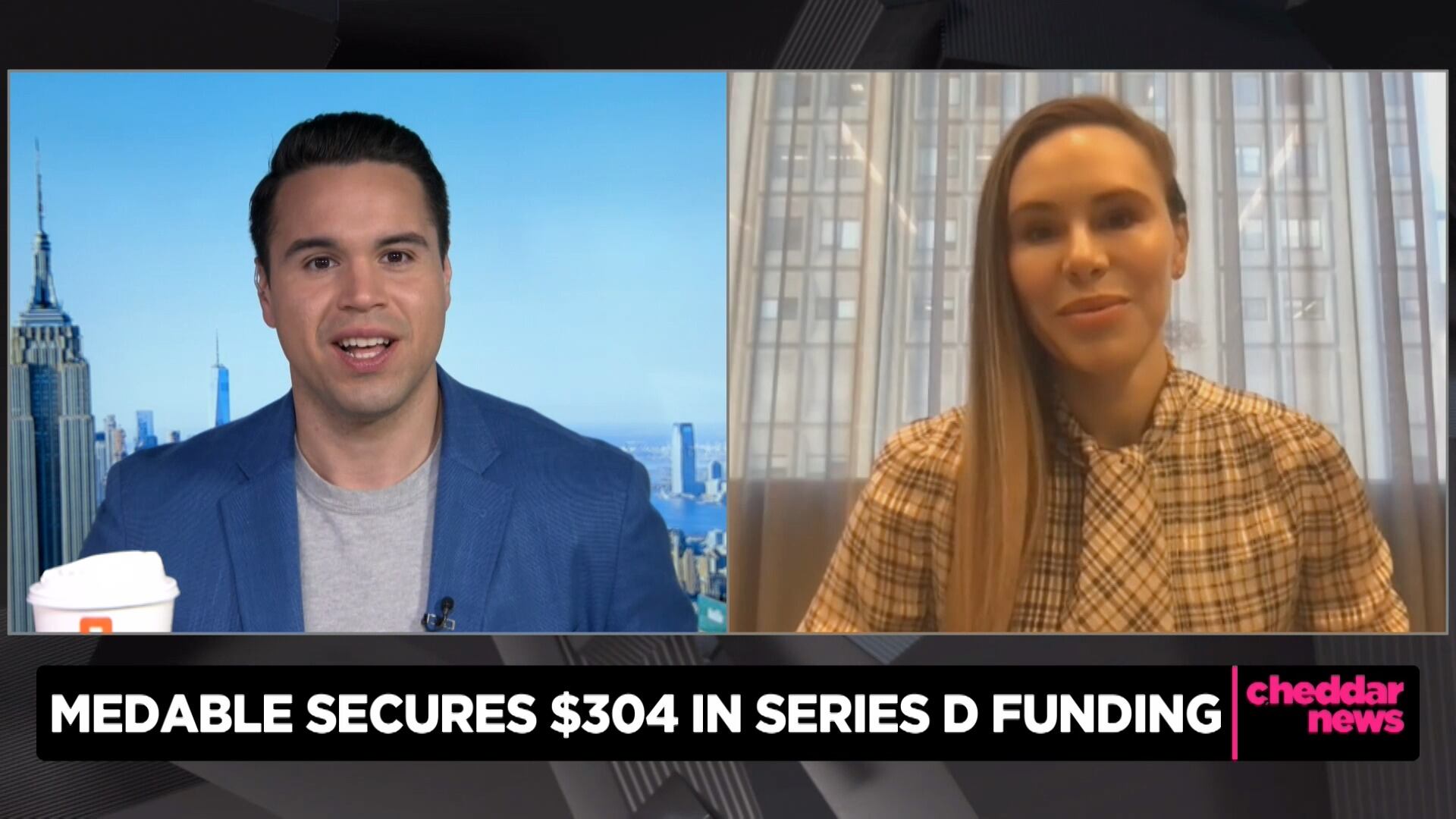
Medable Secures $304M in Series D Funding
Clinical research company Medable has secured $304 million in Series D funding, marking its fourth round since 2020, giving the firm a valuation of just over $2 billion. Dr. Michelle Longmire, CEO and Co-founder, Medable joined Cheddar's Opening Bell to discuss the future of the company.
House Democrats Race to Vote on Biden Spending Bill
House Democrats are scrambling to hold a vote as soon as Tuesday on President Joe Biden's economic agenda — both the $1 trillion bipartisan infrastructure bill and the $1.85 trillion social safety net and climate bill. With Biden still overseas, the bill stands in flux. Jennifer Haberkorn, congressional reporter at the Los Angeles Times, joined Cheddar's "Opening Bell" to discuss.
Load More