By Kelvin Chan

European Union regulators accused Apple on Friday of violating the bloc's antitrust laws, alleging the iPhone maker distorts competition for music streaming by imposing unfair rules for rival services in its App Store.

The EU's executive Commission said it objected to Apple's rules for music streaming services that compete with its Apple Music service, saying they end up costing consumers more and limiting their choices.

The charges underscore the pressure Apple faces from EU regulators in Brussels, who have opened multiple investigations into the company. It also highlights the long-running feud between Apple and popular music streaming service Spotify over payments and app distribution.

One of the main concerns outlined by the EU centers on Apple's practice of forcing app developers selling digital content to use its in-house payment system, which charges a 30% commission on all subscriptions.

The EU's investigation, which was sparked by a complaint from Spotify, found that fees end up being passed on to consumers.

A second EU concern is that Apple prevents developers from telling users about cheaper ways to pay for subscriptions that don’t involve going through an app.

Apple rejected the charges, saying it was proud of its role in helping Spotify grow into a music streaming giant. The company also noted that Spotify doesn't pay Apple a commission for 99% of its paid subscribers.

“Once again, they want all the benefits of the App Store but don’t think they should have to pay anything for that,” Apple said in a statement. "The Commission’s argument on Spotify’s behalf is the opposite of fair competition.”

The EU’s competition commissioner, Margrethe Vestager, said while Spotify had grown despite Apple's rules, they appeared to hurt smaller music streaming players like Deezer and Soundcloud.

“Our concern is that Apple distorts competition in the music streaming market to the benefit of its own music streaming service, Apple Music," she told reporters in Brussels.

Vestager noted that Apple Music isn't subject to the same rules, which hurts rivals by raising their costs, reducing their profit margins and making them less attractive on the App Store. She said the problem is not the fee itself, but that Apple only charges it on payments for digital content and not other services such as transport or food deliveries. The EU's investigation found it typically pushed up the price of a monthly subscription to 12.99 euros ($15.70) from 9.99 euros, she said.

Spotify refuses to use Apple's app payment system to sell premium subscriptions, instead requiring customers to go through its website. Epic Games, which makes the popular video game Fortnite, has also filed an EU antitrust complaint against Apple. When it tried to bypass the App Store with its own payment system, Apple kicked out the Fortnite app.

Apple's ban on communicating with customers means app makers can't get the same insights into their users that Apple does, such as the reason for canceling a subscription, Vestager said.

“Not only are they not allowed to mention their websites or any link to them in their own apps,” Vestager said. “They are also not allowed to send emails to users that created an account in the app in order to inform them about cheaper alternatives."

Apple has 12 weeks to respond to the EU's objections. Under EU competition law, companies could offer a remedy — Vestager indicated she thought “Apple should end the infringement" and not do anything that would have the same effect. Or else, companies could be fined up 10% of their annual revenue for breaches. For Apple, which reported $274.5 billion in revenue in its latest financial year, that could mean a fine of up to $27.4 billion.

Spotify welcomed the EU's move. It's "a critical step toward holding Apple accountable for its anticompetitive behavior, ensuring meaningful choice for all consumers and a level playing field for app developers,” the company's chief legal officer, Horatio Gutierrez, said in a statement.

Updated on April 30, 2021, at 11:12 a.m. ET with the latest details.

Share:
More In Business
Stocks Close the Week Lower on Mixed Jobs Report, COVID-19 Omicron Variant Volatility
Stocks closed lower Friday after a volatile week that saw investor skittishness over the COVID-19 omicron variant. Investors were also eyeing the mixed November jobs report, which showed a lower than expected number of 210,000 jobs added, but unemployment falling to 4.2%. Aadil Zaman, Partner at Wall Street Alliance Group, joins Cheddar News' Closing Bell to discuss today's close, the mixed jobs report, what impact the omicron variant could have on markets, and more.
Some U.S. Restaurants Are Pausing Online Delivery Orders During Peak Hours
Many restaurants across the country have lately turned off delivery and online orders during peak hours, as eateries are still struggling with labor shortages and as many are also seeing more customers return for in-person dining. Wall Street Journal reporter Heather Haddon joins Cheddar News' Closing Bell to discuss.
Mixed November Jobs Report Shows Hiring Slump, But Lower Unemployment Rate
November's jobs report is tricky: nonfarm payrolls only increased by 210,000, following an October gain of 546,000. At the same time, the unemployment rate fell to 4.2% - and the labor force participation rate rose 61.8% to its highest level since March 2020. Also of note: the retail sector saw a decline of 20,000 jobs despite what was once a traditional late fall push to hire before the holiday sales rush. What's going on in the labor market, and can we expect more volatile numbers as the omicron variant spreads during the winter months? Adam Ozimek, Chief economist at Upwork, joins Cheddar News' Closing Bell to discuss the mixed jobs report, sector winners and losers, retail's flip-flop, and more.
DiDi Delisting Could Signal Forced Decoupling of China-U.S. in Financial Markets
Chinese regulators are reportedly behind China-based ride-hailing company DiDi exiting from the New York Stock Exchange, just days after listing earlier this year. The regulators stated prior that DiDi had not received the necessary clearances to list in the states. Gordon Chang, Asian affairs expert, joined Cheddar to break down what the delisting says about the relationship between nations. "This really strikes me as an attempt to really to force a decoupling of China and the U.S. in the financial markets," Chang said.
PORTL CEO on 'Real' Experience of Hologram Platform vs. AR, Metaverse
Hologram communication platform maker PORTL is looking to take communication to the next level. Founder and CEO David Nussbaum joined Cheddar to talk about the company's recent $12 million Series A funding round that will be used to bring the concept of holoportation to market. Nussbaum noted his hologram technology is just not comparable to augmented reality or virtual metaverses because the image projection is happening in real-time and in actual reality. "Well, unlike VR or AR, we're 'R.' We're real. You don't need a headset. You don't need wearables. You don't need to download anything. It's incredible," he said.
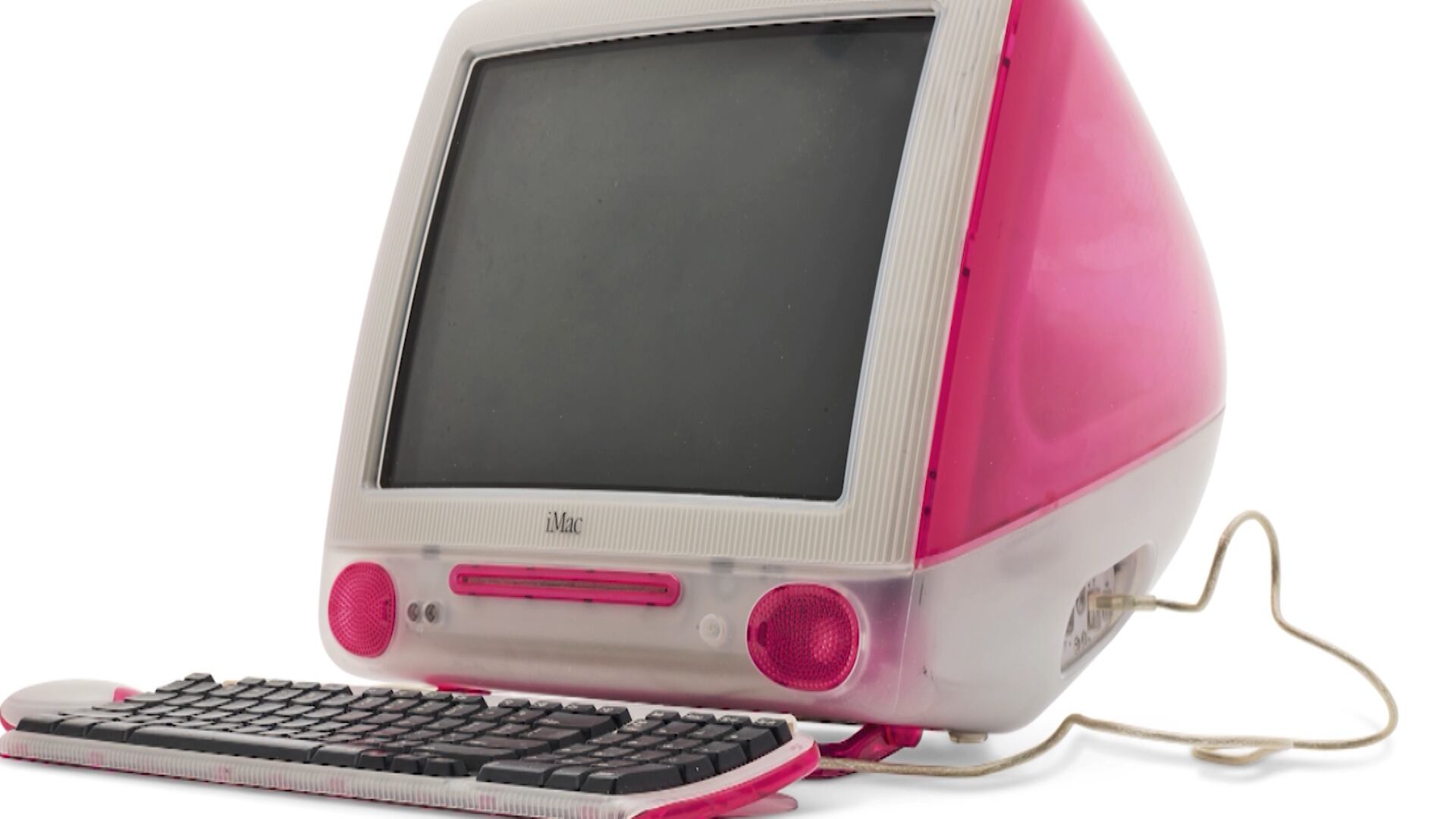
Wikipedia Founder Jimmy Wales Auctioning His Strawberry iMac and Interactive NFT
Wikipedia founder Jimmy Wales stopped by Cheddar's "Between Bells" to talk about his Birth of Wikipedia auction at Christie's putting two items linked to the origins of Wikipedia up for sale. On the auction block are his original strawberry iMac that was used to create the long-running online encyclopedia and what Wales described as an interactive NFT of his first Wikipedia edit rather than a static image. "Once it's been sold, the owner can turn it on, and anyone can edit the page and it will be reflected in the NFT," he said.
The Rise of Smart Tech and Voice Games; Warming Your Home Through Interior Design
On this episode of Your Future Home, Carmine Satabella, Interior Designer & Television Host, joins to break down how to get the most out of your winter decor this year and basic kitchen fundamentals that go a long way; Max Child, CEO and co-founder of Volley, discusses the rise of voice games and how tech is continuing to change smart homes; Cheddar breaks down everything you need to know about how to start flipping homes.
Load More