European Union regulators accused Apple on Friday of violating the bloc's antitrust laws, alleging the iPhone maker distorts competition for music streaming by imposing unfair rules for rival services in its App Store.
The EU's executive Commission said it objected to Apple's rules for music streaming services that compete with its Apple Music service, saying they end up costing consumers more and limiting their choices.
The charges underscore the pressure Apple faces from EU regulators in Brussels, who have opened multiple investigations into the company. It also highlights the long-running feud between Apple and popular music streaming service Spotify over payments and app distribution.
One of the main concerns outlined by the EU centers on Apple's practice of forcing app developers selling digital content to use its in-house payment system, which charges a 30% commission on all subscriptions.
The EU's investigation, which was sparked by a complaint from Spotify, found that fees end up being passed on to consumers.
A second EU concern is that Apple prevents developers from telling users about cheaper ways to pay for subscriptions that don’t involve going through an app.
Apple rejected the charges, saying it was proud of its role in helping Spotify grow into a music streaming giant. The company also noted that Spotify doesn't pay Apple a commission for 99% of its paid subscribers.
“Once again, they want all the benefits of the App Store but don’t think they should have to pay anything for that,” Apple said in a statement. "The Commission’s argument on Spotify’s behalf is the opposite of fair competition.”
The EU’s competition commissioner, Margrethe Vestager, said while Spotify had grown despite Apple's rules, they appeared to hurt smaller music streaming players like Deezer and Soundcloud.
“Our concern is that Apple distorts competition in the music streaming market to the benefit of its own music streaming service, Apple Music," she told reporters in Brussels.
Vestager noted that Apple Music isn't subject to the same rules, which hurts rivals by raising their costs, reducing their profit margins and making them less attractive on the App Store. She said the problem is not the fee itself, but that Apple only charges it on payments for digital content and not other services such as transport or food deliveries. The EU's investigation found it typically pushed up the price of a monthly subscription to 12.99 euros ($15.70) from 9.99 euros, she said.
Apple's ban on communicating with customers means app makers can't get the same insights into their users that Apple does, such as the reason for canceling a subscription, Vestager said.
“Not only are they not allowed to mention their websites or any link to them in their own apps,” Vestager said. “They are also not allowed to send emails to users that created an account in the app in order to inform them about cheaper alternatives."
Apple has 12 weeks to respond to the EU's objections. Under EU competition law, companies could offer a remedy — Vestager indicated she thought “Apple should end the infringement" and not do anything that would have the same effect. Or else, companies could be fined up 10% of their annual revenue for breaches. For Apple, which reported $274.5 billion in revenue in its latest financial year, that could mean a fine of up to $27.4 billion.
Spotify welcomed the EU's move. It's "a critical step toward holding Apple accountable for its anticompetitive behavior, ensuring meaningful choice for all consumers and a level playing field for app developers,” the company's chief legal officer, Horatio Gutierrez, said in a statement.
Updated on April 30, 2021, at 11:12 a.m. ET with the latest details.
Stocks closed lower to end the day Thursday, the second to last trading day of 2021. The Dow snapped a six-day winning streak, and the S&P 500 was weighed down by chip and energy stocks. This all comes as weekly jobless claims fell to a 52-year low to 198,000. Kevin Riley, Managing Partner at Exponential Investment Partners, joins Cheddar News' Closing Bell to discuss today's close, his 2022 market predictions, the state of business in China, and more.
Daniel Newman, Founding Partner and Principal Analyst at Futurum Research, joins Cheddar News' Closing Bell, where he says the markets are going to feel very uncomfortable receiving news of more potential setbacks for chip manufacturers after already enduring a lengthy chip shortage.
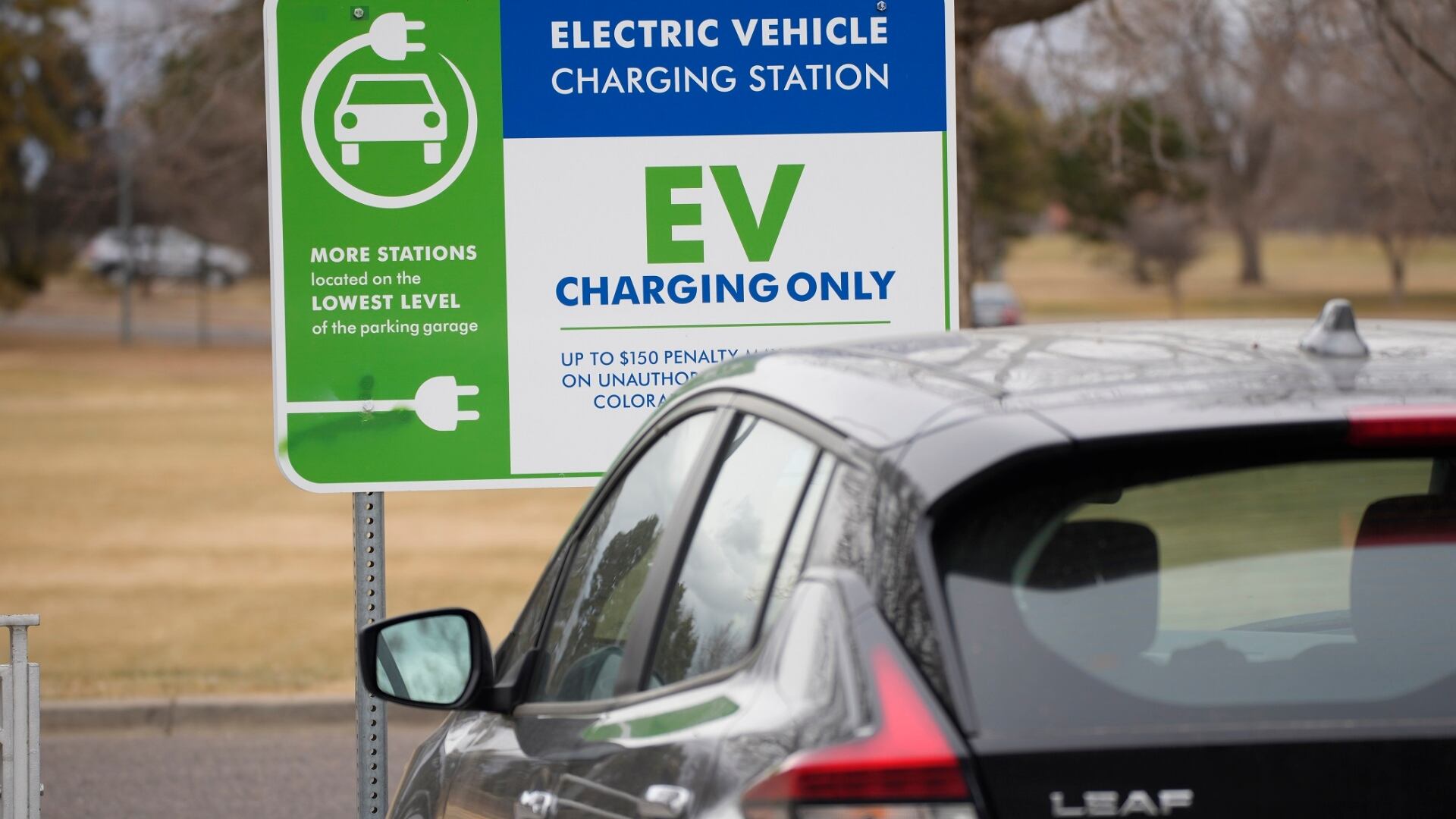
The federal government and numerous industries have been preparing for a greener future, setting goals to reduce greenhouse emissions by switching to electric vehicles. But the next hurdle to clear is convincing the wider public to get on board. Arun Kumar, managing director in automotive practice at AlixPartners, spoke to Cheddar's Ken Buffa about consumer trends related to EV transition and said he believes a widespread switch is imminent in 2022. Despite this, he acknowledged there are still significant obstacles to overcome, including high prices and more charging stations. "Without charging infrastructure, people are going to struggle with increasing adoption of electric vehicles in the future," Kumar told Cheddar. "I think by 2030 our estimate is that about a million chargers need to be put in place nationally in the U.S."
The pandemic has supercharged the creator economy, and there are no signs of it slowing down no matter when the pandemic officially ends. Creators prove to be a key factor in driving purchasing decisions and retail sales, and an increasing amount of platforms are taking advantage of the social influence. Karissa Bell, senior editor at Engadget, joins cheddar news to discuss the creator economy boom.
The National Women's Soccer League is partnering with Voyager Digital as its first-ever cryptocurrency brokerage in a multi-year deal. Marla Messing, interim CEO of the NWSL, and Steve Ehrlich, CEO of Voyager Digital, joined Cheddar to discuss benefitting the league and educating players and fans as a way of democratizing cryptocurrency. Messing explained that the players themselves will own half the assets as part of how the deal is structured. "My hope is, just in terms of the expectations of crypto over the long term, that I hope a lot of them are able to just let it sit there," she said. "And that one day this will be a nice retirement account for them."
Howard Lorber, chairman, president, and CEO of Douglas Elliman Inc., and Scott Durkin, CEO of Douglas Elliman Realty, joined Cheddar's "Opening Bell" to talk about the real estate brokerage company's recent IPO launch on the New York Stock Exchange following the spinoff of its tobacco subsidiary Vector Group. "There are many investors that cannot buy tobacco because of their mandates," said Lorber. "And therefore splitting off Douglas Elliman the real estate, and there's a lot of people looking for real estate investments, so they'll be able to buy Douglas Elliman, and those that want tobacco can buy Vector alone." The pair also discuss the future of New York real estate and the auxiliary business the property broker sees as growth prospects.
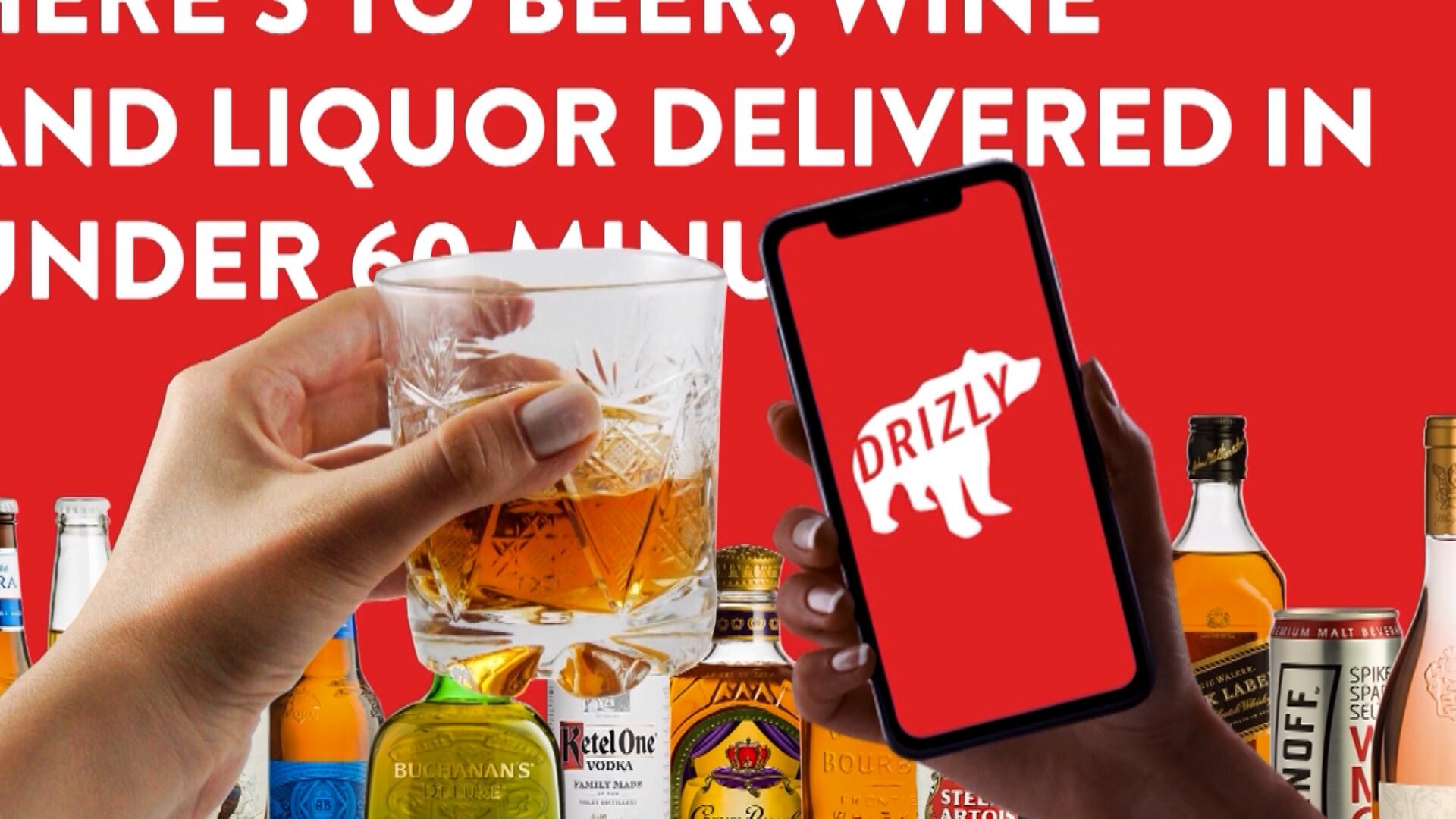
Despite a champagne shortage ahead of New Year's Eve, adult beverage retailers are staying optimistic about 2022. Cathy Lewenberg, COO at online alcoholic beverages platform Drizly, joined Cheddar to talk about the sunny outlook for next year and the current state of the industry. She noted a 20 percent higher demand for champagne year-over-year has led to the holiday's shortfall and that the spirit category is continuing to thrive with tequila on pace to outsell vodka for the first time. "Tequila has just been on fire on our platform. It's grown 13 percent in share on our platform over the last couple of years where vodka obviously had been the leader," she said. "Tequila is the top thing in addition to bourbon that retailers are looking to give more shelf space to in 2022."
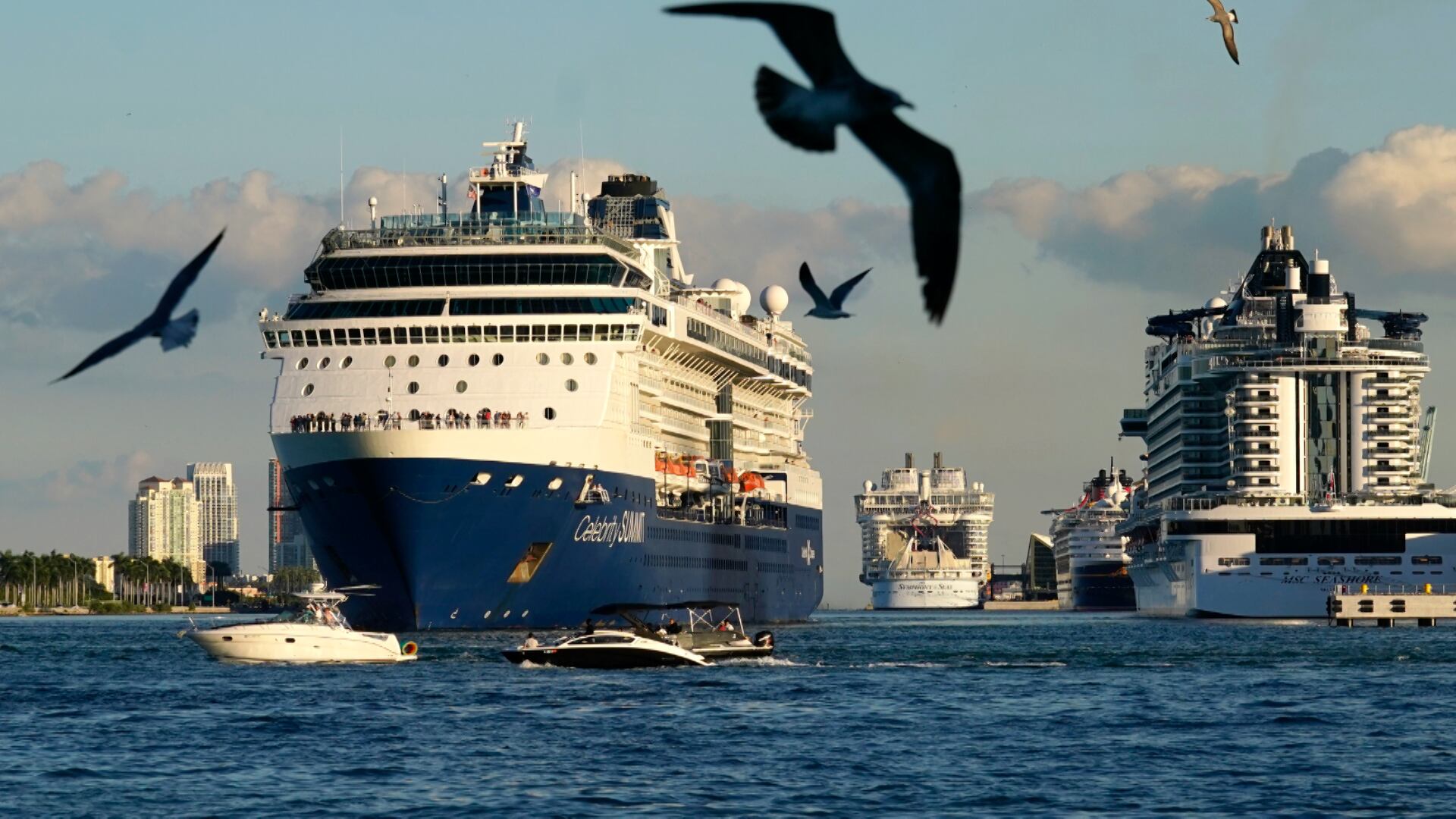
Travel expert Francesca Page joined Cheddar's Baker Machado to break down how the omicron-fueled COVID-19 surge of cases on cruise ships is impacting the industry, as the CDC is actively monitoring at least 92 ships for outbreaks. Page also talked about the upcoming expiration of the CDC's conditional sailing order mandating mask-wearing and addressed passenger concerns. "Everyone is asking, financially, should I cancel my cruise should COVID surges keep going, which it looks they are, and to a large degree I think that decision is very personal and is based on one's own risk tolerance," she said.