Harvard University's Edmond J. Center for Ethics has launched a research initiative to help answer the question looming on most people's minds: when will the coronavirus quarantines end?
Danielle Allen, director of the center, told Cheddar that ending quarantine will require a robust social effort involving potentially thousands of workers and brand new technology solutions.
In the past, best practices for a quarantine order included setting a deadline to protect individual rights and set expectations, but COVID-19 presented too many unknown variables for lawmakers to come out of the gate with a set date for letting people return to normal.
"It was absolutely reasonable in this case that people issued orders with indefinite duration," Allen said. "This disease is so new and has so many distinctive features that it has been very hard for people to completely master its shape, its parameters. We did sort of need that blunt instrument."
But more than a month since the first stay-at-home orders went into effect, there is widespread demand for more information about when to expect state and local quarantine orders to end.
"It's going to take massively scaling up testing, tracing, and supportive isolation," Allen said.
Testing is perhaps the most widely understood post-quarantine measure, but it's also one of the most logistically complicated. Governors are currently making the case that heavy federal support will be necessary to produce the supply of tests needed to cover the entire U.S.
Tracing presents challenges as well, but there are a number of available options to pull it off.
"Contact tracing is one of the oldest and most important tools in the public health toolkit," Allen said.
The old-fashioned way to handle tracing is to do it manually. Individual investigators interview positive cases about where they've been and who they've been in contact with over the last two weeks.
"Can you actually achieve that with people, with person power doing all that contact tracing, or do also you need tech support?" Allen said. "Right now, I think the jury is out."
She pointed to a proposal from Johns Hopkins University recommending that the federal government invest in 100,000 paid or volunteer contact tracers to spread out across the country.
On the technology side, Allen highlighted Bluetooth-based apps that would help you track interactions for rolling two-week periods. That way, if someone comes up positive, the people they contacted could be warned.
Lastly, shifting to supportive isolation would be a step down from current stay-at-home orders.
"[Supportive isolation] is when you're infected and then you stay home, but it means people who aren't infected don't have to stay home," she said.
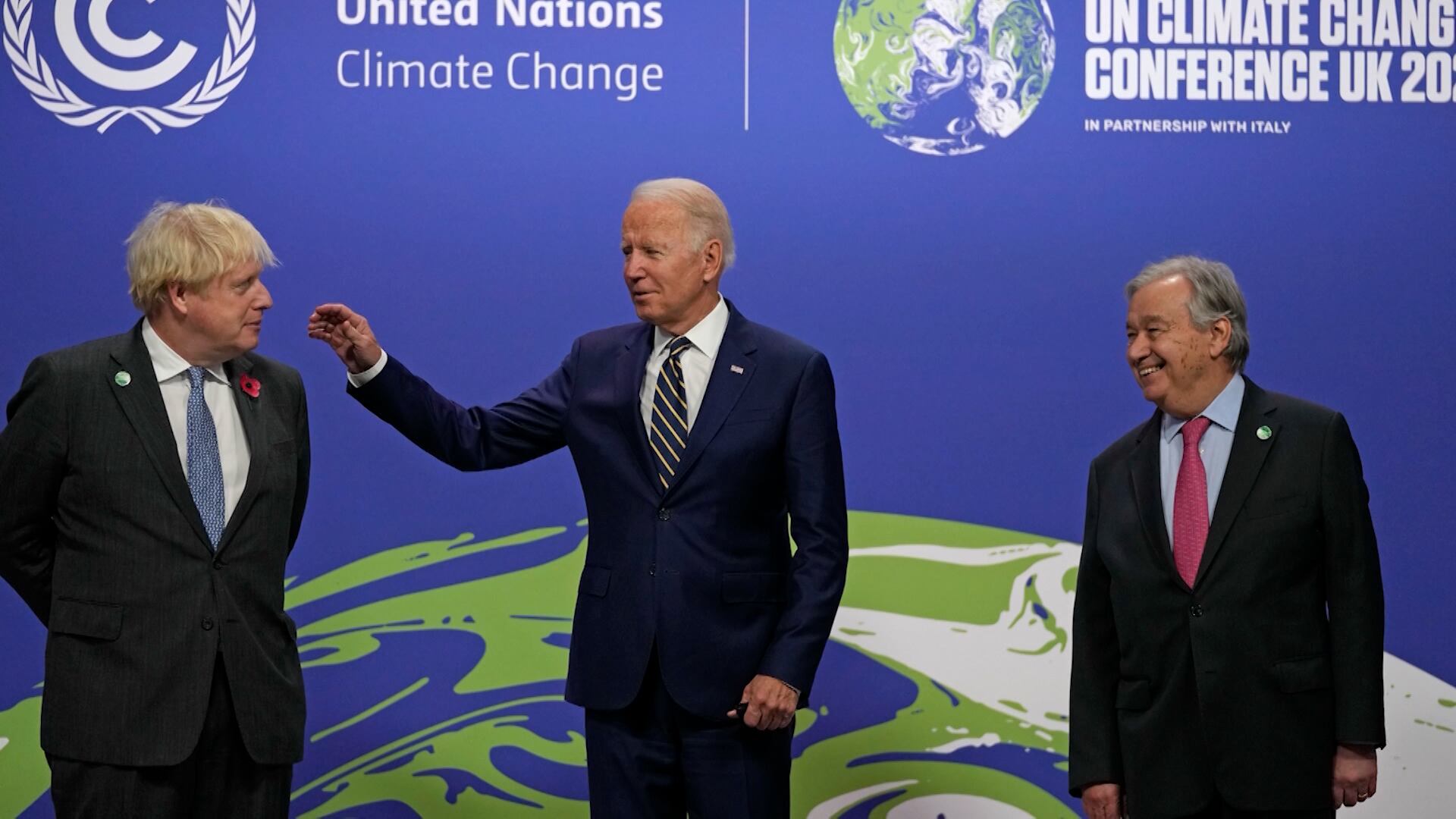
The two-week COP26 climate conference has now ended with leaders reaching a deal, but so far the deal is getting mixed reviews from climate experts across the globe. Chloe Demrovsky, president and CEO of Disaster Recovery Institute International, explains that while the agreement is a step forward in some ways, the world still has much more to work on in order to keep warming to below 2 degrees Celsius.
Jill and Carlo cover the latest with the infrastructure bill, the growing state rebellion over boosters, Trump's dereliction of duty on the pandemic, Taylor Swift's reign of cultural domination and more.
Sen. Sheldon Whitehouse joined Cheddar to discuss the latest push to get rid of Daylight Savings Time. A practice where several say can cause havoc on one's sleeping schedule and cause disruptions to our economy.
The past decade or so has been a has seen massive change-- usually good-- for the LGBTQ+ community. Same-sex marriage has seen broader acceptance, and there's been increased conversation about the reality of gender identity. Now, folks who don't identify as male or female can travel while staying true to their more authentic self.
The Biden administration has issued the first passport with a gender-neutral designation "X." the passport was issued to Dana Zzyym, an intersex activist from Colorado, after a long legal battle with the state department in which Zzyym argued they shouldn't be required to lie about their identity on their passport. Advocates for such changes have applauded the move, saying it will allow people who don't identify as male or female to travel the globe in a more safe and visible way.
Paul Castillo, counsel at Lambda Legal and Zzyym's attorney in this case, joins None of the Above to discuss.
The Biden Administration has announced its latest plans to support veterans who had been exposed to toxic chemicals from burn pits. According to several veterans who served in Iraq and Afghanistan, a number of them were exposed to hour-long periods of burn pits. As a result, many of them say they have suffered from severe life-long side effects. Co-founder at Burn Pits 360 Le Roy Torres, joined Cheddar to discuss more.
Ballots have been sent to workers at three different Starbucks locations in Buffalo, NY to decide whether they will unionize for the first time ever. Wilma Liebman, former Chair of the National Labor Relations Board and Michelle Eisen from the Starbucks Workers United Organization, which is behind this vote, joined Cheddar to discuss.
The parent company of North Face, Vans and Supreme, VF Corp, released its fourth annual "Made for Change" sustainability and responsibility report. It details the company's ongoing efforts to tackle social and climate related issues. This comes as climate experts continue to warn about the dangers of fast fashion and its impact on global CO2 emissions. Sean Cady, Vice President of Global Sustainability, Responsibility and Trade at VF Corporation, joins Cheddar News to discuss.
A jam-packed Freitag pod with Carlo and Baker: new Covid hotspots, Kyle Rittenhouse trial, Belarus making trouble for Europe, red-hot housing market, and how to manage a PR crisis the right way.