*By Conor White*
Apple, the world's most valuable publicly traded company, may be seriously undervalued, said longtime tech investor Eric Jackson, founder and president at EMJ Capital. He told Cheddar that the iPhone maker should've crossed the $1 trillion threshold long ago.
"This is a company that should be valued as a services business instead of a discreet product business, which is, as long as I can remember, how this company has been valued," he said in an interview Friday.
Jackson estimated Apple's value closer to $1.5 trillion, and he views it as a service-oriented company, much like Salesforce and Google, which get traded at roughly six times price-to-sales multiple.
Though many investors consider Apple a hardware company, Jackson said most consumers have a different relationship with Apple's products.
"Your relationship with your iPhone itself is a long-term service commitment," he said. "Even though you don't have a contract that says your next iPhone you're going to upgrade in one year or two years, who among us who owns an iPhone is not going to, in three to four years, upgrade to the latest and greatest iPhone?"
As bullish as Jackson is on Apple, he admitted China ー and consumers in other countries ー may stunt the company's growth because the iPhone faces competition from cheaper smartphones.
"China is a challenge, for sure, probably the biggest challenge that Apple faces in that regard because you have other services like WeChat that can potentially get in between your personal relationship with the phone," Jackson said.
For more on this story, [click here](https://cheddar.com/videos/why-one-investor-believes-apple-is-worth-more-than-1-trillion).
David Nelson, Chief Strategist at Belpointe, joins Cheddar News' Closing Bell, where he says that Wednesday's market movement shows a rotation back into the industries that were hit hard in January, but says his eyes are firmly fixed on the January CPI data set to be released Thursday.
Earlier this week, Peloton announced a change in its C-suite, with new chief executive Barry McCarthy telling the company's remaining staff in an email that he’s, 'here for the comeback story.' Greg Martin, Co-Founder of Rainmaker Securities, joins Cheddar's Closing Bell where he discusses how difficult are Peloton's challenges will be to overcome, especially after the company recently laid off approximately 20% of its staff.
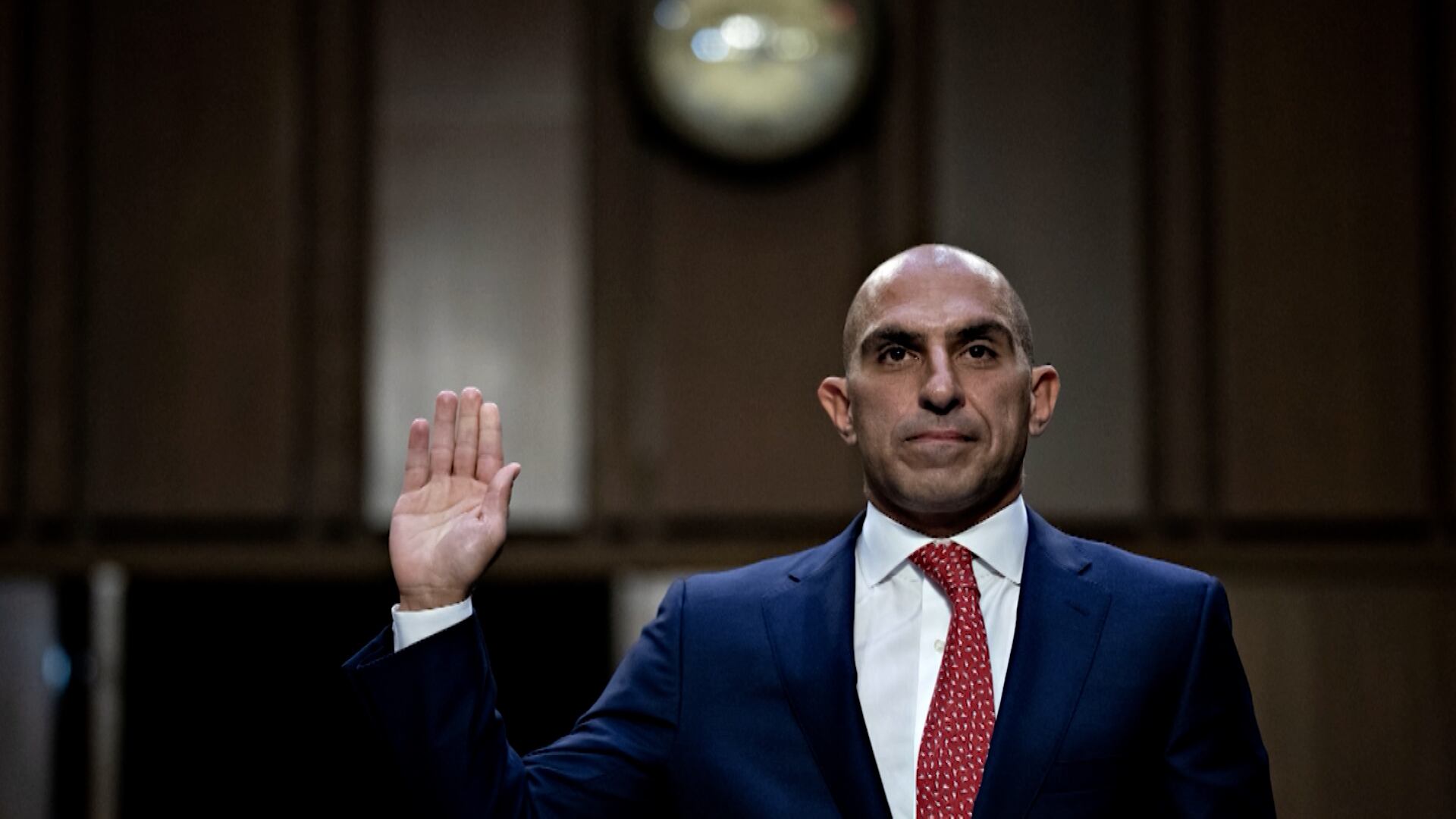
Ben McMillan, Founder and CIO at IDX Digital Assets, joins Cheddar News' Closing Bell, where he discusses the significance of CFTC Chairman Rostin Behnam testifying at Wednesday's Senate Agriculture Committee hearing, and when we could expect to see more regulation in place following the second straight day of congressional hearings on the crypto industry.
Truckers in Canada have blockaded the Ambassador Bridge, the busiest border crossing between Canada and the U.S. protesting a COVID-19 vaccine mandate. Cheddar News spoke with Samir Kapadia, head of trade practice at the Vogal Group, about how this impacts trade between the two countries.
Florists are dreading weekend pickups for this year's Valentine's Day, which lands on a Monday. Christina Stembel, founder and CEO of Farmgirl Flowers joined Cheddar News to discuss the challenges presented by shortages caused by supply chain issues, lack of labor, and climate change and how her company is preparing for this year's holiday. “A Monday delivery is just really hard for small businesses like us," said Stembel. "Larger companies have the scale that some of the large transportation carriers will provide a Sunday pick up for Monday delivery, but for small companies like us, that's not an option. So we have to try to convince people to order early."
Americans placing bets on the Super Bowl is expected to reach a record high due to multiple states legalizing sports gambling. Hana Ostapchuk, the host of Cheddar Bets, joined Baker Machado on Between Bells to discuss the action on the Big Game.
Chipotle posted its quarterly report showing a beat on earnings and revenue. The restaurant chain was able to stay ahead of inflation by raising prices and noted digital sales made up more than 40 percent of overall sales.