Elon Musk's Chicago Loop May Be Ambitious to a Fault
*By Britt Terrell*
Elon Musk is a man with ideas...a lot of them.
But Vanity Fair's Maya Kosoff wonders if his latest project may be more than he can handle.
The Tesla and SpaceX CEO won his bid to build a tunnel from downtown Chicago to O'Hare International Airport, partnering with Mayor Rahm Emanuel to modernize the city's struggling transportation system.
The task, though, may be particularly tricky.
"With public infrastructure, you have contracts with the government, and digging a tunnel underneath the city literally disrupts people's lives. I think it's more impactful so therefore it's kind of the most difficult (problem) to solve," Kosoff said.
The issues are only exacerbated by the fact that the airport link is far from Musk's only project. His SpaceX still aims to send humans to Mars by 2014, and Tesla is developing new cars and trucks, even as it continues to struggle with meeting production targets and burns through cash.
And in her article, ["Is Elon Musk Scamming Chicago?"](https://www.vanityfair.com/news/2018/06/is-elon-musk-scamming-chicago), Kosoff points out that the cost and the time it will take to construct the Chicago Express Loop may also be far higher than anticipated.
"It's supposed to cost a billion dollars," Kosoff said. "But look at the cost of other public infrastructure projects in the country. It cost a billion dollars to build less than a mile of the expanded Q train on \[New York City's\] Upper East Side."
Musk estimates the 18-mile track will take three years to complete and says his Boring Company - not taxpayers - will foot the bill.
For the full interview, [click here](https://cheddar.com/videos/elon-musks-next-big-endeavor).
Venture capitalists and CEOs are clashing over the future of the internet. Web3 is the tech world's name for a decentralized, blockchain-based internet that runs on cryptocurrency. It was recently the topic of a tweet from Block CEO and former Twitter CEO Jack Dorsey who wrote that Web3 will not actually be owned by users, and instead be controlled by rich venture capitalists. Dorsey later shared that he was blocked on Twitter by Marc Andreesen, co-founder of VC firm Andreesen Horowitz, which has invested billions of dollars into Web3 and crypto projects. Correspondent for DealBook from the New York Times, Ephrat Livni, joins Cheddar News' Closing Bell to discuss what this could mean for the future of Web3.
Jim Worden, Chief Investment Officer at Wealth Consulting Group, joins Cheddar News' Closing Bell, where he says the period between Christmas and New Year's is difficult to predict due to a lack of institutional volume, with the Omicron variant adding even more uncertainty on Wall Street.
Prices at the pump this year reached a seven-year high, and a new forecast from GasBuddy shared with CNN predicts that gas prices will only continue to rise in 2022 and that the national average could even reach $4.00 a gallon; however, analysts at GasBuddy say anything could happen when it comes to gas prices in the future, as the pandemic has made it difficult to make any predictions about the economy. Consumer Energy Alliance federal policy advisor Michael Zehr joins Cheddar News' Closing Bell to discuss.
The record-breaking success of "Squid Game" on Netflix has many media companies competing to produce, stream, and invest in new content from South Korea. Netflix has spent half a billion dollars on developing Korean content this year, and other streaming services are taking note. Seth Schachner, managing director at StratAmericas and digital business executive, joins Cheddar News to discuss.
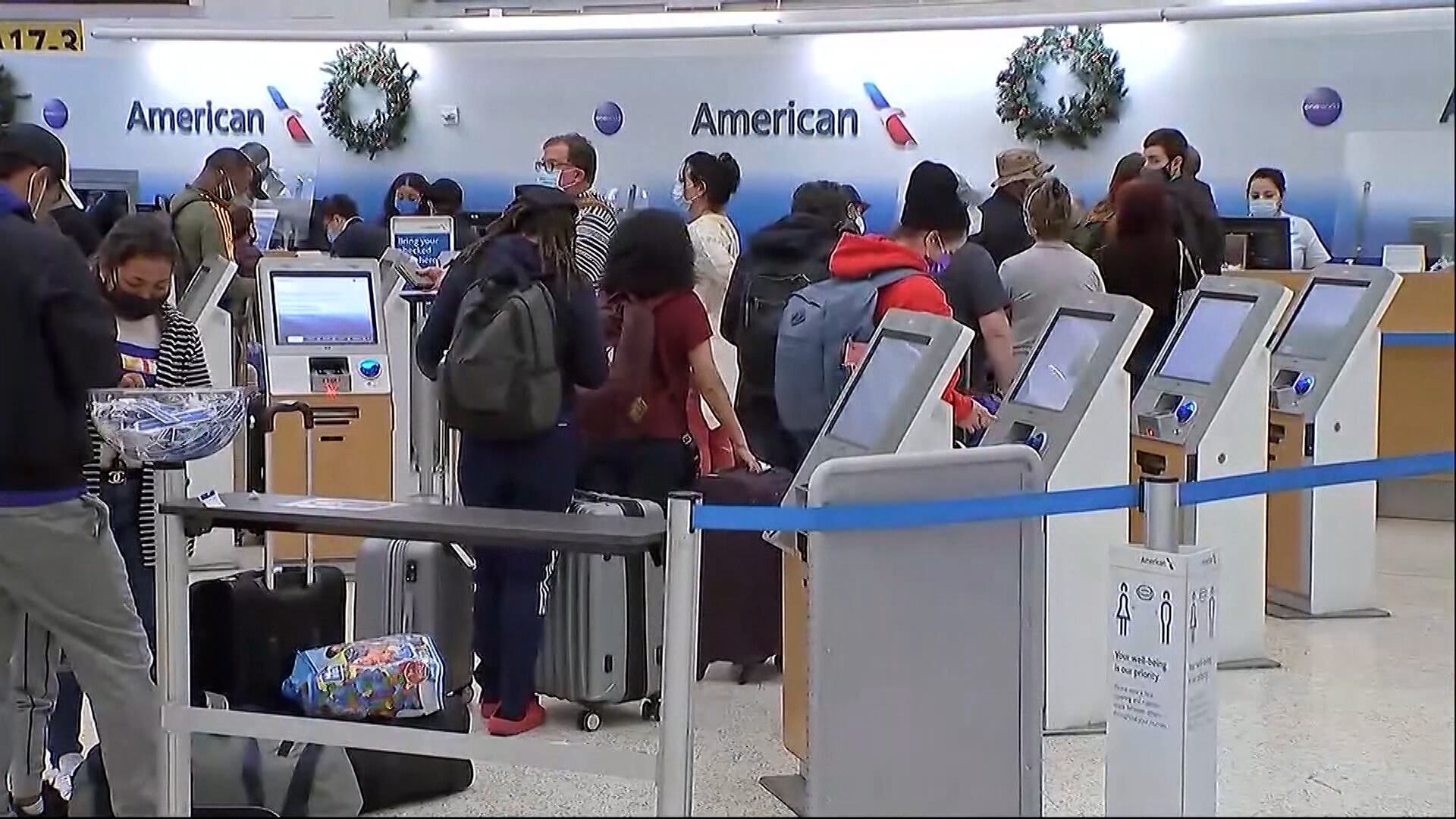
Airlines had to ground 2,500 flights in the U.S. on Tuesday, with bad weather and workers out with COVID-19 blamed as the main culprits. Scott Keyes, founder of ScottsCheapFlights.com and author of "Take More Vacations," joined Cheddar News Wrap to discuss how the surge from the omicron variant has been creating havoc in the air travel industry. Keyes noted that a lack of personnel from pilots to gate agents had been exacerbated by the coronavirus, an issue also disrupting labor markets throughout the economy. "Add to that the fact that travel has rebounded far quicker than many analysts and experts predicted, this is why I think you're seeing so many airlines caught a bit flat-footed in having to pare back the schedules they had set months ago," he said.