By Christina A. Cassidy and Anthony Izaguirre
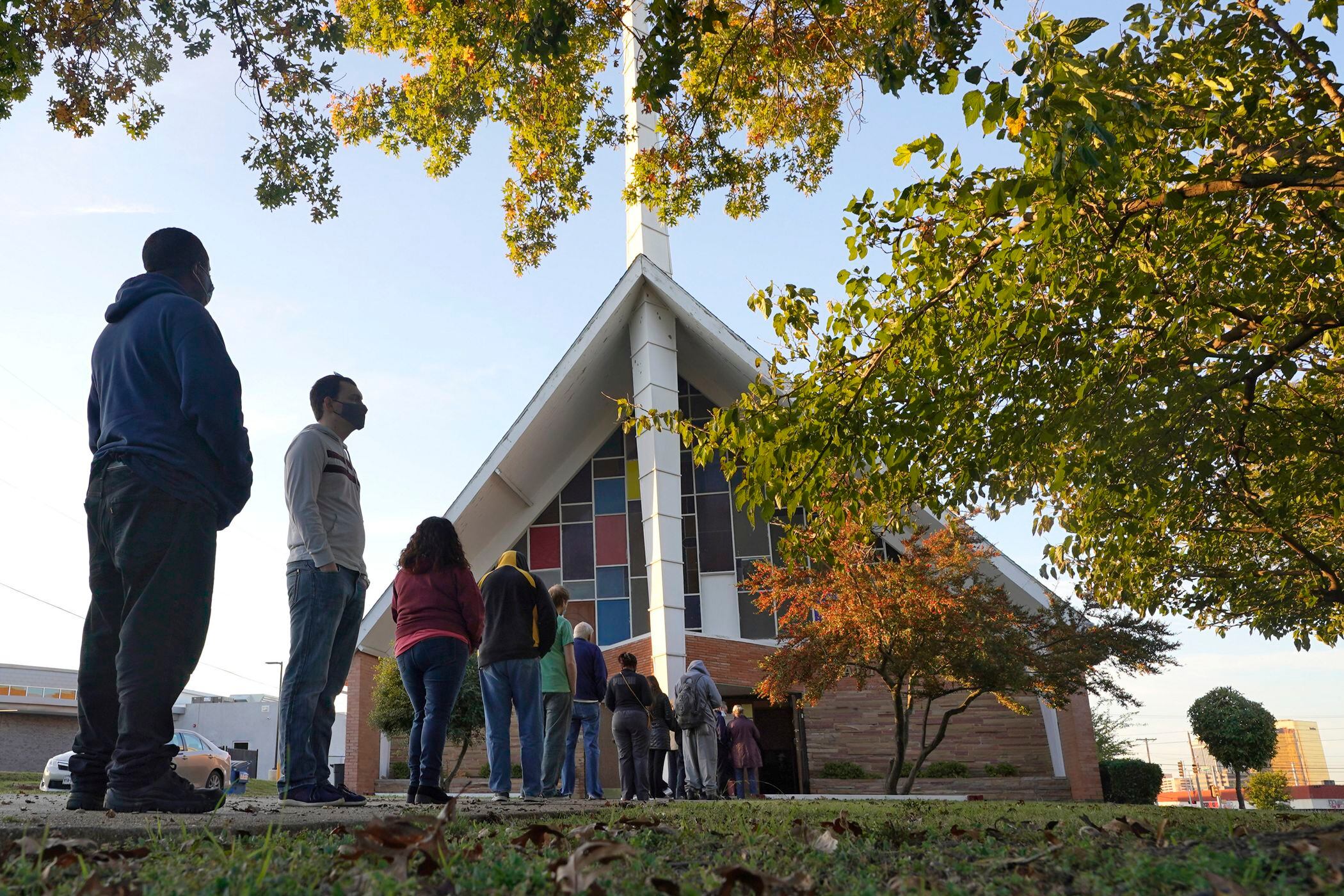
Amid a global pandemic that defined a tumultuous presidential campaign, voters across the U.S. on Tuesday braved worries about getting sick, threats of polling place intimidation, and expectations of long lines caused by changes to voting procedures.
The U.S. was on pace to exceed the 2016 presidential vote, driven largely by the nearly 102 million ballots cast ahead of Election Day, part of an early-voting push prompted by the pandemic. And coronavirus cases were on the rise, with new daily confirmed cases up 43 percent over the past two weeks in the U.S., according to data compiled by Johns Hopkins University.
“A lot of people were fearful to come out and vote today and for me I didn’t want fear to stop me from voting on Election Day,” said Sadiyyah Porter-Lowdry, 39, who cast her ballot at a church in Charlotte, North Carolina.
Minor problems occur every election, and Tuesday was no different given the level of voter enthusiasm, the decentralized nature of U.S elections and last-minute voting changes brought on by the global pandemic. But the stakes were high with so much scrutiny on voting this year and the potential for further litigation.
President Donald Trump has already threatened legal action to prevent the counting of ballots that arrive after Election Day, which some states allow. Meanwhile, concerns about mail delivery delays prompted a federal judge to order postal workers in major cities to sweep processing facilities for any remaining ballots before the end of the day.
Officials have already warned that counting ballots could take days due to the avalanche of mail votes, which take more time to process and could result in another round of court battles.
On Tuesday, there were long lines and sporadic reports of polling places opening late, along with equipment issues in counties in Pennsylvania, Ohio, Texas and Georgia.
There were also reports, as there are every election, of efforts to discourage people from voting that surfaced in robocalls in a few states. The FBI was investigating.
But there were no signs of large-scale voter intimidation or clashes at the polls as some had feared given the level of political rancor this year.
“I would say it is blissfully uneventful,” Michigan Attorney General Dana Nessel told reporters. “We’ve had virtually no disturbances of any kind.”
In the months leading up to Election Day, election officials had to deal with a pandemic that has infected more than 9 million Americans and killed more than 230,000, forcing them to make systemic changes largely on the fly and with limited federal money. Meanwhile, Trump repeatedly sought to undermine the election with unsubstantiated claims of widespread voter fraud.
He has particularly targeted the crucial battleground state of Pennsylvania, after the U.S. Supreme Court allowed — at least for now — a three-day extension for receiving and counting absentee ballots. Over the weekend, Trump said that as soon as the polls close there on Tuesday, “We’re going in with our lawyers.”
Election officials had hoped that if enough people voted early, it would ease some of the problems that states experienced during the primaries, when voters waited hours in line to cast ballots. That appeared to be what transpired Tuesday, although some problems seemed inevitable.
Hand sanitizer on voters’ hands caused a ballot scanner to jam at a polling place in Des Moines, Iowa. The machine was fixed in about an hour, and poll workers moved the sanitizing station farther back in the line so voters’ hands would be dry when they first touched the ballots.
In Pennsylvania, a judge in Democrat Joe Biden’s hometown of Scranton extended voting at two precincts inside an elementary school for 45 minutes past the normal 8 p.m. close of voting, because machines had been down earlier in the day, said Lackawanna County spokesman Joe D’Arienzo.
There were also a few other issues with voting technology. Electronic pollbooks from the vendor KnowInk failed in Ohio’s second-largest county and in a small Texas county, forcing voting delays as officials replaced them with paper pollbooks.
Even though problems were expected, voters were still frustrated.
“We’ve had four years to prepare for this,” said Jenny Harris, who encountered problems with touchscreen voting machines at her polling place in Atlanta. “And the fact that we’re still having issues on the day that we go to the polls, it blows my mind.”
Those who did vote on Election Day included some who wanted to vote by mail but waited too long to request a ballot or didn’t receive their ballots in time.
Kaal Ferguson, 26, planned to vote by mail but was concerned he hadn’t left enough time to send his ballot back. So he voted in person in Atlanta, despite worries he could be exposed to COVID-19 by fellow voters.
“Obviously everybody has their right to vote,” he said. “But it’s kind of scary knowing that there’s not a place just for them to vote if they’d had it, so you could easily be exposed.”
Others were likely persuaded by the president’s rhetoric attacking mail voting or simply preferred to vote in person after reports surfaced over the summer of mail delivery delays following a series of policy changes implemented by the U.S. Postal Service’s new leader, Postmaster General Louis DeJoy, a major GOP donor.
“I don’t want to see no mailman. I like to stand here, see my own people, wait in the line and do my civil duty,” said James “Sekou” Jenkins, a 68-year-old retired carpenter and mechanic who waited about 15 minutes before polls opened in West Philadelphia and voted for Biden about an hour later.
On Tuesday afternoon, a federal judge in Washington D.C. ordered U.S. Postal Service inspectors to sweep 27 mail processing facilities for lingering mail-in ballots and send out those votes immediately. The order, which includes centers in central Pennsylvania, Philadelphia, Detroit, Atlanta, south Florida, and parts of Wisconsin, followed concerns the agency wouldn’t be able to deliver ballots on time. Postal data has shown service in some battleground areas severely lagging.
“The slowdown and compromising of the U.S. Postal Service was a concern,” said Rebecca Kraft, a 41-year-old Milwaukee resident who voted in person. “So I said ‘All right, if I’m feeling healthy, I am going to go do it at the polls just to make sure.’”
Misinformation about election procedures and threats of foreign interference also clouded the run-up to Election Day. States hammered out plans for protecting against cyberattacks, countering misinformation, and strengthening an election infrastructure tested by massive early voting and pandemic precautions.
The cybersecurity agency at the Department of Homeland Security said Tuesday that it had seen no apparent signs of any malicious cyber activity, at least not yet. But officials with the U.S. Cybersecurity and Infrastructure Security Agency also said it was too early to declare victory.
“It has been quiet and we take some confidence in that but we are not out of the woods yet,” said a senior CISA official, speaking on condition of anonymity to brief reporters about ongoing nationwide election monitoring efforts ahead of an official evaluation.
___
Cassidy reported from Atlanta and Izaguirre from Lindenhurst, N.Y. Associated Press writers Nicholas Riccardi in Denver, Julie Carr Smyth in Columbus, Ohio, Natalie Pompilio in Philadelphia, Ben Fox in Washington, Sophia Tulp in Atlanta, and Sarah Blake-Morgan in Charlotte, N.C., contributed to this report.
___
Associated Press coverage of voting rights receives support in part from Carnegie Corporation of New York. The AP is solely responsible for this content.