Despite close competition from other pressing issues, the economy is still the top concern for voters, according to a new Cheddar/SurveyUSA poll.
The poll, conducted October 1-4, 2020, showed that 15 percent of respondents named the economy as the most important issue for them when marking their presidential ballot.
This perennial election issue squeaked in ahead of "defeating Donald Trump" at 14 percent, compared to "re-electing Donald Trump" at 9 percent. Replacing the president got a two-point boost, however, after his COVID-19 diagnosis, with the economy losing ground as well.
There was also a significant spread in which demographic groups pinpointed the economy as the top issue, with 19 percent of Hispanics, 15 percent of whites, and just 7 percent of Blacks choosing the issue.
Amid nationwide protests and counterprotests, respondents were neatly split on issues of social justice and law and order. Black Lives Matter, social justice, and law and order each received 3 percent while All Lives Matter received 5 percent.
Other top concerns include COVID-19 at 12 percent, healthcare at 9 percent, and "preserving the democracy" at 6 percent.
On the Affordable Care Act — which reemerged as an election-year issue with the passing of Supreme Court Justice Ruth Bader Ginsburg — 54 percent of respondents said the Court should leave it as the law of the land, while 31 percent said it should be declared unconstitutional.
This matches closely with the 56 percent who said they felt either favorably or very favorably toward Obamacare and the 38 percent who felt unfavorably or very unfavorably toward it.
Younger and lower-income voters also had a better impression of the healthcare law — though those who were most concerned with the economy were less likely to be in favor. After Trump's COVID diagnosis, favorable impressions got a boost as well.
Finally, the poll showed significant doubts about the outcome of the 2020 presidential election. Just 28 percent said the country will know the outcome on election day, while 42 percent said: "maybe a week after." A sizable 21 percent predicted we'd know sometime before Thanksgiving.
Again, Trump's hospital visit shifted the numbers, with slightly more believing the election would be over and done with on Election Day.
The House has officially passed the $1.75 trillion social policy and climate big. This new bill is expected to bring some huge investments into working towards fighting climate change. U.S. President of We Don't Have Time, Sweta Chakraborty, joined Cheddar to discuss more.
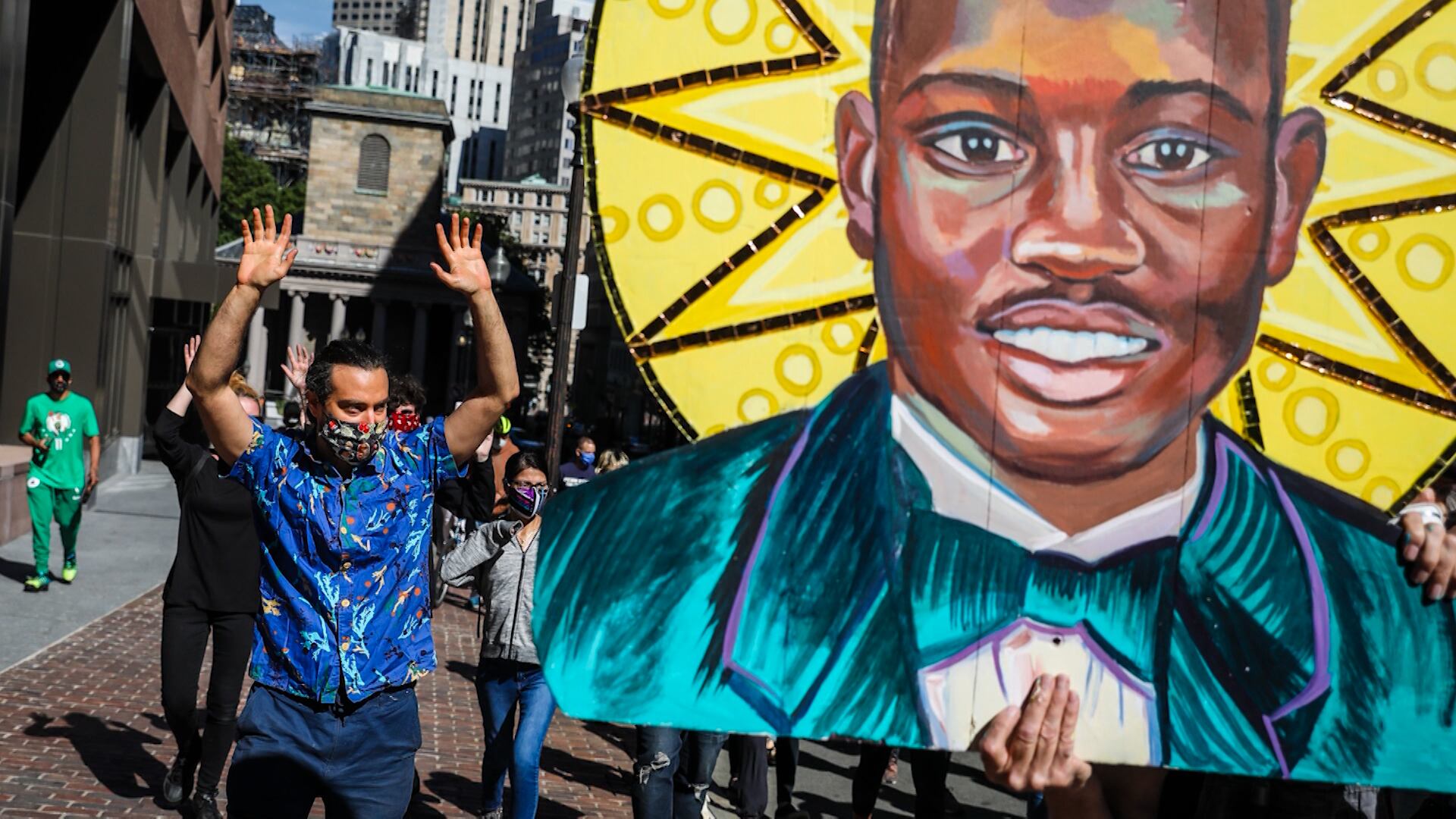
Guilty verdicts have been handed down to the three men charged with killing Ahmaud Arbery. Arbery was out for a jog in February 2020 when Travis McMichael, William "Roddie" Bryan, and Gregory McMichael chased him down and killed him. The judge read the verdicts for each of the three men aloud, starting with the man who pulled the trigger, Travis McMichael. Kirk Burkhalter, professor at New York Law School joins Cheddar News to recap the trial.
All three defendants in the Ahmaud Arbery killing were found guilty today on numerous charges including felony murder. Criminal Defense Attorney Anthony Hall joined Cheddar to discuss.
Carlo and Baker cover the latest developments with the Omicron variant, and break down what we know and what we still don't. Plus, a relatively tame Black Friday, and more.
Jurors on Wednesday convicted the three white men charged in the death of Ahmaud Arbery, the Black man who was chased and fatally shot while running through their Georgia neighborhood in an attack that became part of the larger national reckoning on racial injustice during the summer of 2020. Trial attorney and former prosecutor Leslie Ricard Chambers joins Cheddar News' Closing Bell to discuss the verdict, possible sentencing, and more.
Kyle Rittenhouse was acquitted of all charges Friday after pleading self-defense in the deadly Kenosha shootings that became a flashpoint in the debate over guns, vigilantism and racial injustice in the U.S. Criminal Defense Attorney Anthony Tall joins Cheddar News' Closing Bell to discuss the verdict, potential judicial precedent, and more.
President Biden has announced his intent to nominate Fed chair Jerome Powell for another four-year term, with Lael Brainard serving as vice chair. This comes at a crucial time for the economy as inflation is surging, the supply chain is broken, and labor shortages are hampering businesses across the country. Sabrina Escobar, reporter for Barron's, discusses why Biden passed up the opportunity to put the central bank in the hands of a Democrat, and what challenges Powell faces in his second term.