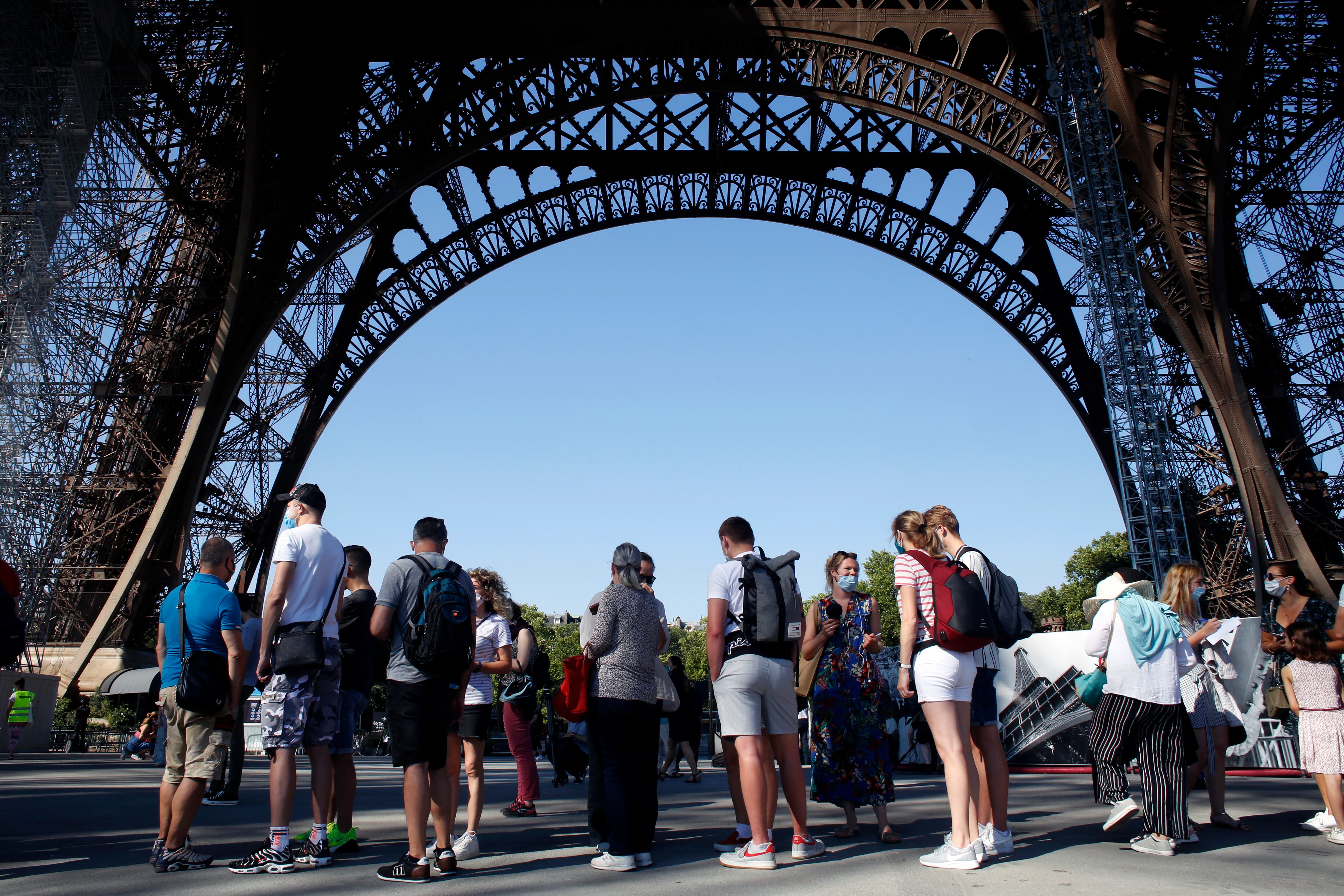
People queue up prior to visit the Eiffel Tower, in Paris, Thursday, June 25, 2020. The Eiffel Tower reopens after the coronavirus pandemic led to the iconic Paris landmark's longest closure since World War II. (AP Photo/Thibault Camus)
By Masha Macpherson
Marking another milestone in France's recovery from coronavirus lockdown, the Eiffel Tower reopened to visitors Thursday after its longest-ever closure in peace time: 104 days.
Tourists who are trickling back to Paris were delighted to find the landmark open when some other attractions in the French capital remain closed. The Louvre Museum isn't reopening until July 6.
"It's very special, very special because it's only the Paris people," said Annelies Bouwhuis, a 43-year-old visitor from the Netherlands. "We've seen a lot Paris people enjoying their city, enjoying their parks without all the tourists."
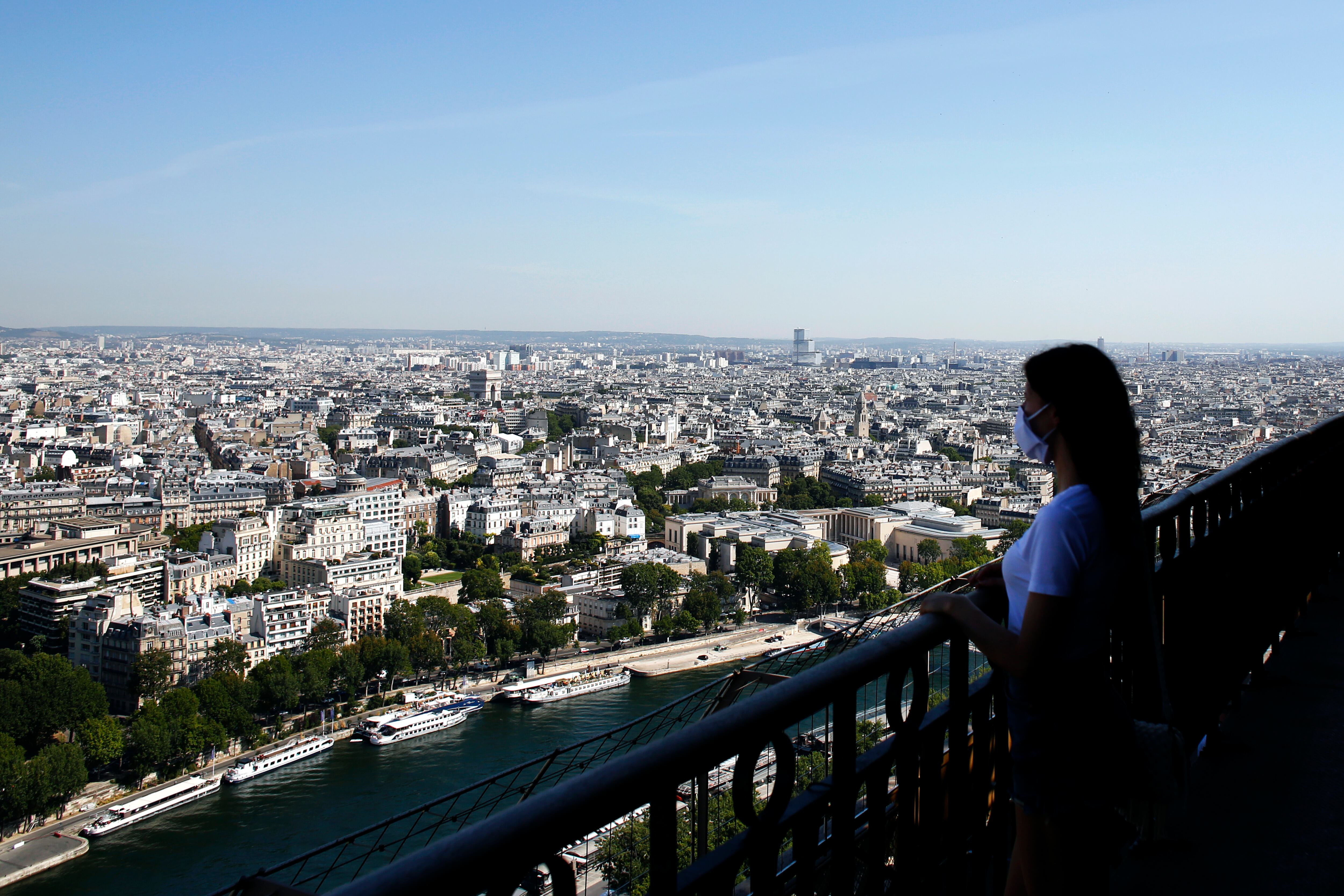
A visitor looks at the view from the Eiffel Tower, in Paris, Thursday, June 25, 2020. The Eiffel Tower reopens after the coronavirus pandemic led to the iconic Paris landmark's longest closure since World War II. (AP Photo/Thibault Camus)
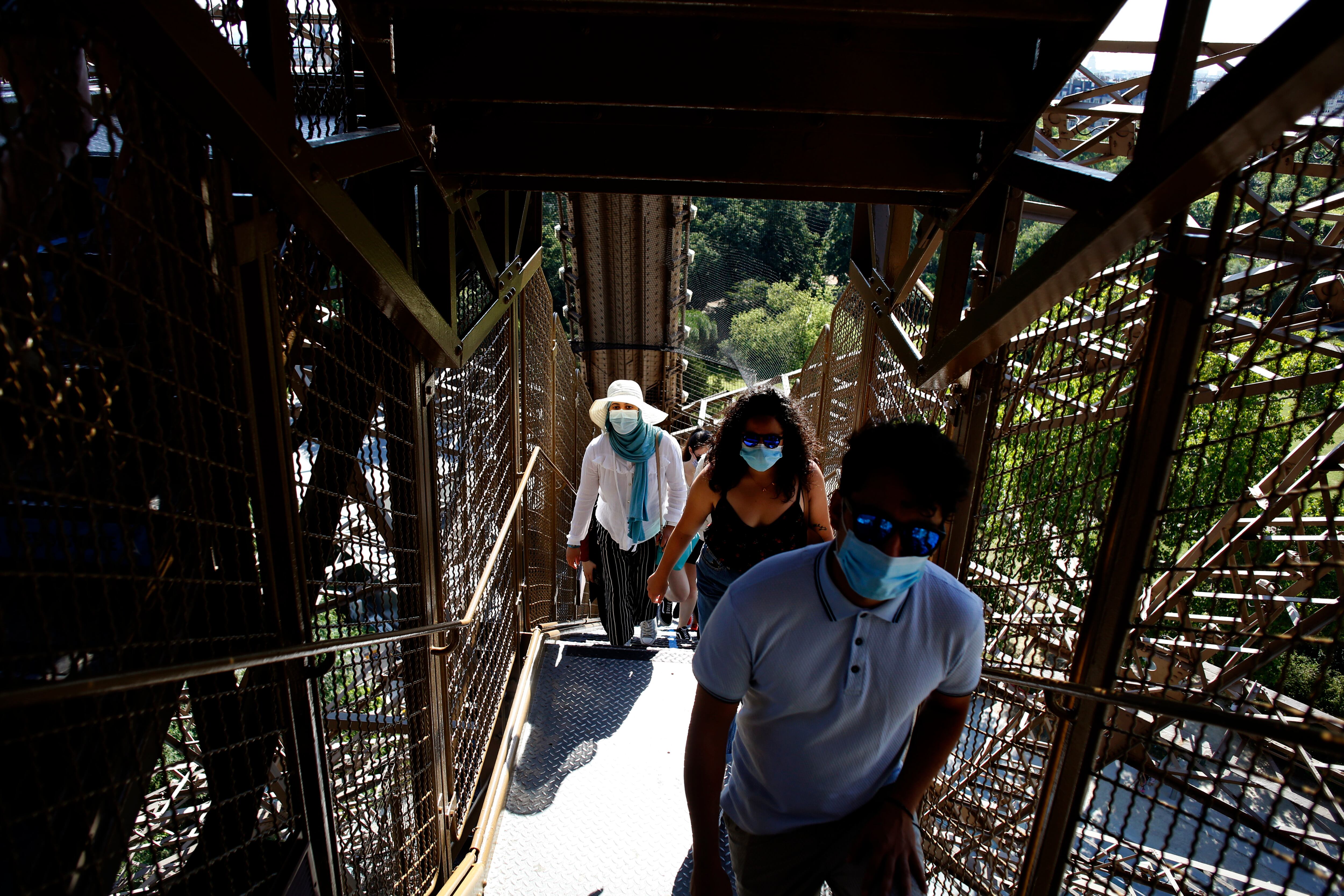
Lifts that usually whisk visitors up the 324-meter (1,063-foot) tall wrought-iron Eiffel Tower remain closed, so for now people have to take the stairs.
Of the tower's three decks, only the first two reopened. Those who climbed the 674 steps Thursday were rewarded with far-away views and a light breeze in scorching summer weather. Masks are obligatory for all visitors ages 11 and up.
"I booked the first slot because afterward, it will be very hot," said Sabine Peaufils, a 57-year-old Parisian. "This is a real pleasure."
People climb stairs as they visit the Eiffel Tower, in Paris, Thursday, June 25, 2020. The Eiffel Tower reopens after the coronavirus pandemic led to the iconic Paris landmark's longest closure since World War II. (AP Photo/Thibault Camus)
The tower lost 27 million euros ($30 million) from the lockdown that started in March, according to its director general, Patrick Branco Ruivo.
France and other European countries with big tourism sectors are starting to coax back visitors, with mixed results.
The Louvre is bracing for a precipitous drop in visitor numbers when it reopens.
Visitor numbers are down at the Versailles Palace since the former royal residence west of Paris reopened June 6.
The palace has capped visits at a maximum of 4,500 people per day, spread out through the day. That is way down from the 20,000 people per day the palace previously got in the busy summer season.
An Army trainee has been arrested after authorities say he boarded a South Carolina school bus with a gun and held the driver and elementary school students hostage before letting them off the bus.
A federal grand jury has indicted the four former Minneapolis police officers involved in George Floyd’s arrest and death, accusing them of willfully violating the Black man’s constitutional rights.
All the COVID metrics are now looking quite good in the U.S., but still quite bad in India. Florida and Texas are next to enact new strict voting restrictions.
Amusement park regulation varies from state to state, but no American amusement park receives federal oversight. In fact, the largest parks are free to regulate themselves.
New York Gov. Andrew Cuomo says Broadway theaters can reopen Sept. 14 and will be allowed to decide their own entry requirements, like whether people must prove they’ve been vaccinated to attend a show.
Facebook's oversight board punts on the big Trump decision, Biden changes his tune on vaccine patent protections while Tucker Carlson spreads more misinformation, why Peloton's treadmill is a design fail, and more.
Sen. Chuck Schumer (D-N.Y.) joined the NYC Cannabis Parade, the first since the Empire State legalized marijuana. The senator promised to continue to fight for "fair, just, and full legalization" on a federal level.
A closer look at bitcoin's experience during the pandemic reveals a handful of major developments that have helped push the OG cryptocurrency to new heights.
Jill and Carlo go over the White House's new strategy to get over the vaccine hump, Pfizer's vaccine revenues, the decision on whether to let Donald Trump back on Facebook, and the broader problems with social media.