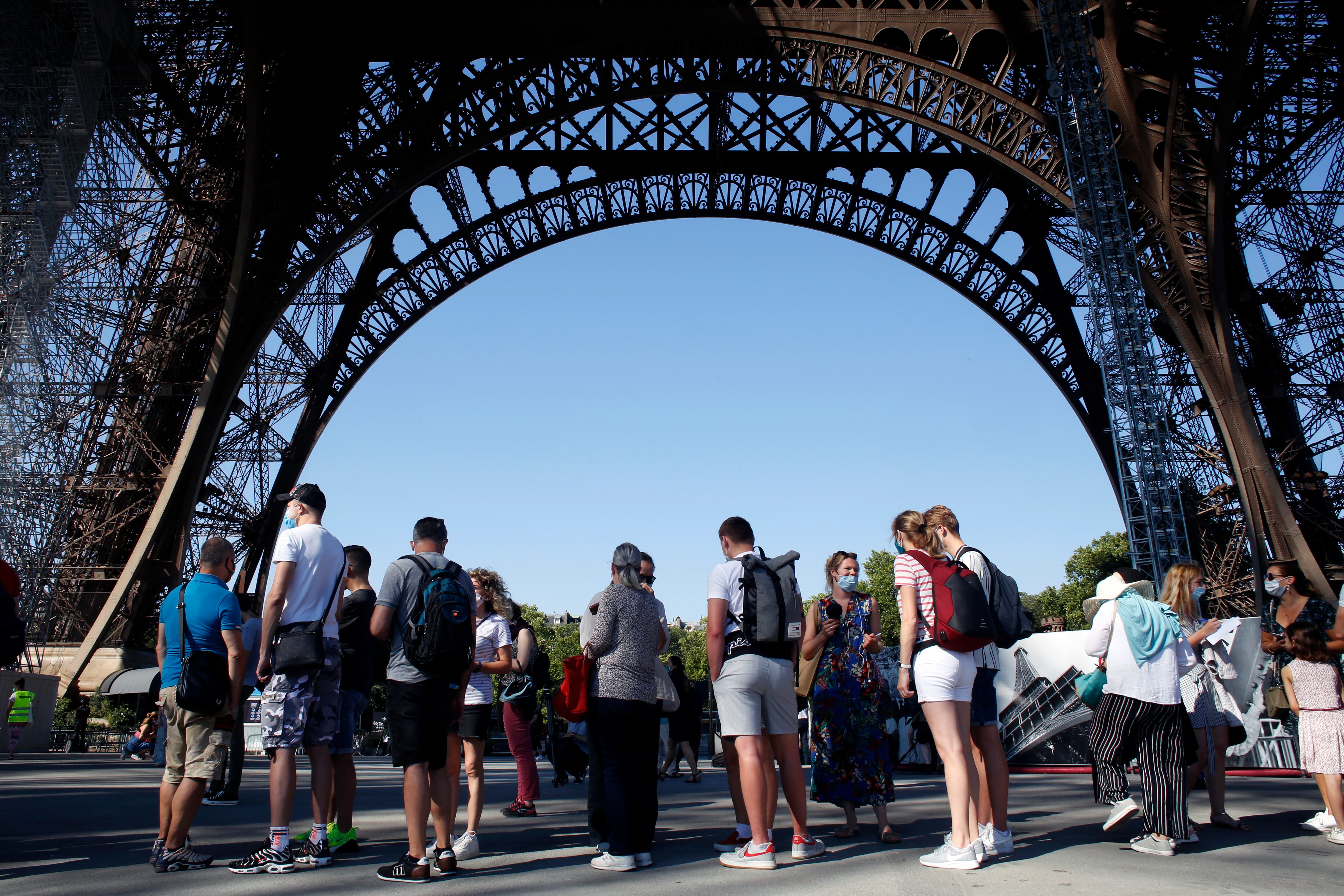
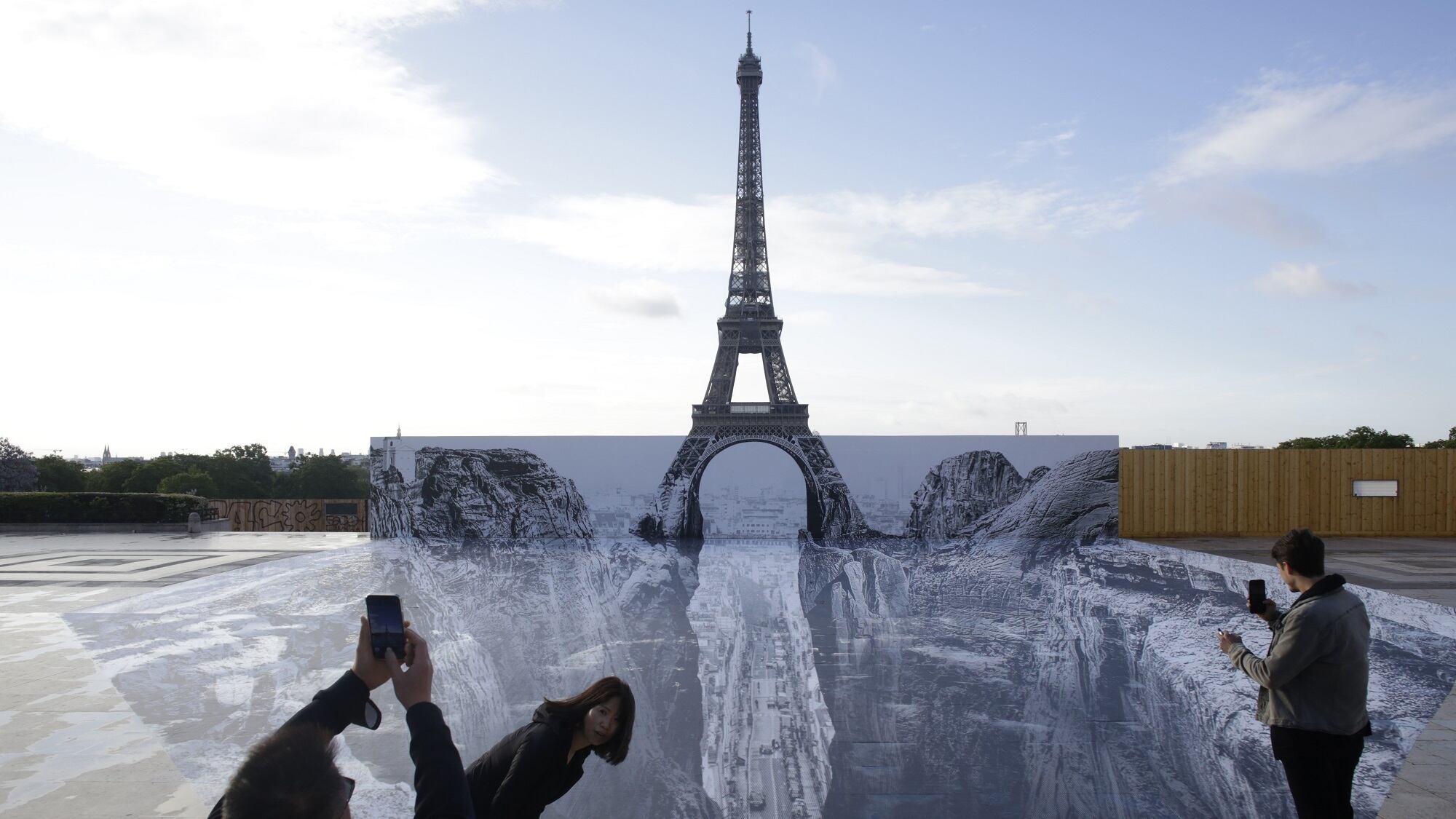
People queue up prior to visit the Eiffel Tower, in Paris, Thursday, June 25, 2020. The Eiffel Tower reopens after the coronavirus pandemic led to the iconic Paris landmark's longest closure since World War II. (AP Photo/Thibault Camus)
By Masha Macpherson
Marking another milestone in France's recovery from coronavirus lockdown, the Eiffel Tower reopened to visitors Thursday after its longest-ever closure in peace time: 104 days.
Tourists who are trickling back to Paris were delighted to find the landmark open when some other attractions in the French capital remain closed. The Louvre Museum isn't reopening until July 6.
"It's very special, very special because it's only the Paris people," said Annelies Bouwhuis, a 43-year-old visitor from the Netherlands. "We've seen a lot Paris people enjoying their city, enjoying their parks without all the tourists."
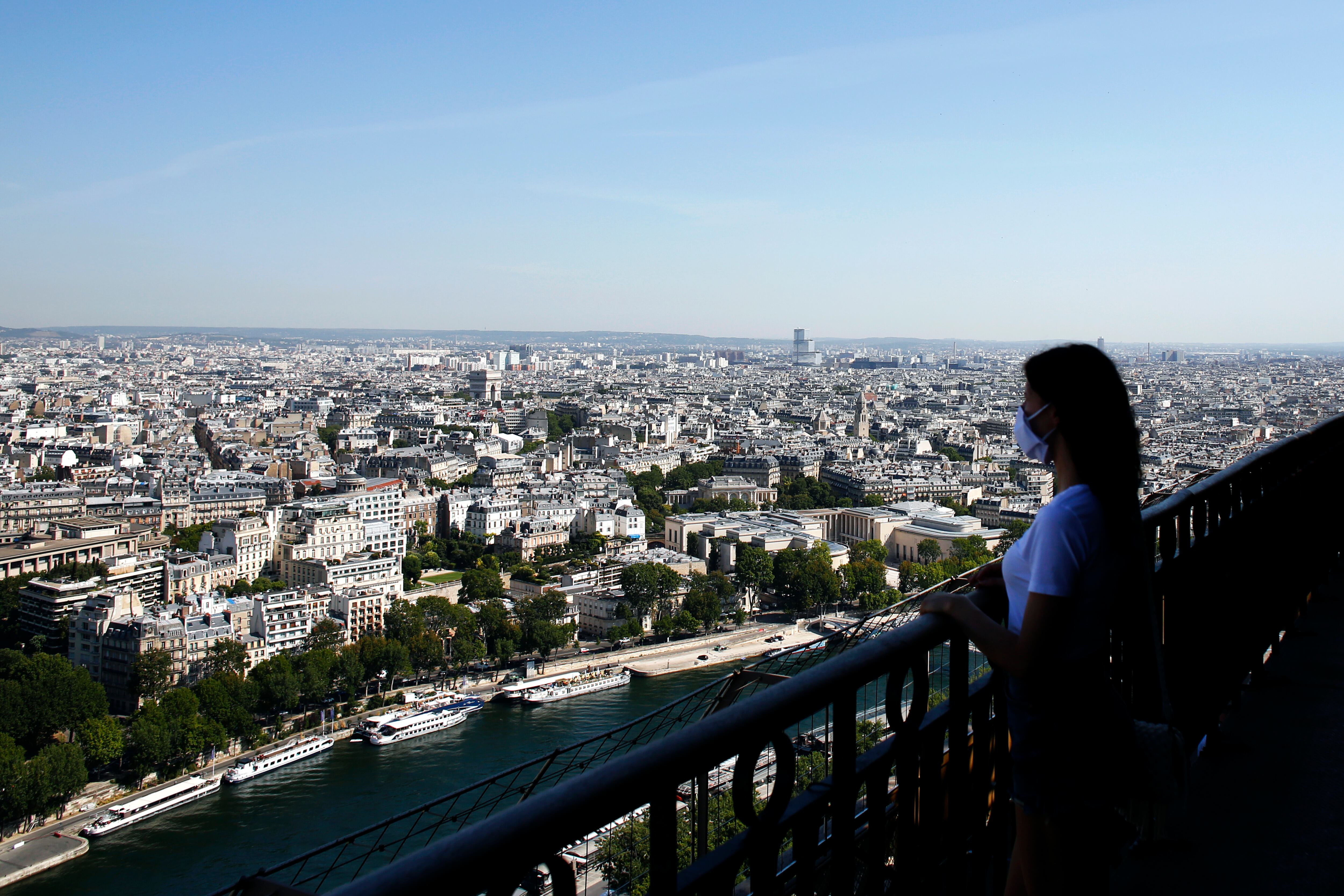
A visitor looks at the view from the Eiffel Tower, in Paris, Thursday, June 25, 2020. The Eiffel Tower reopens after the coronavirus pandemic led to the iconic Paris landmark's longest closure since World War II. (AP Photo/Thibault Camus)
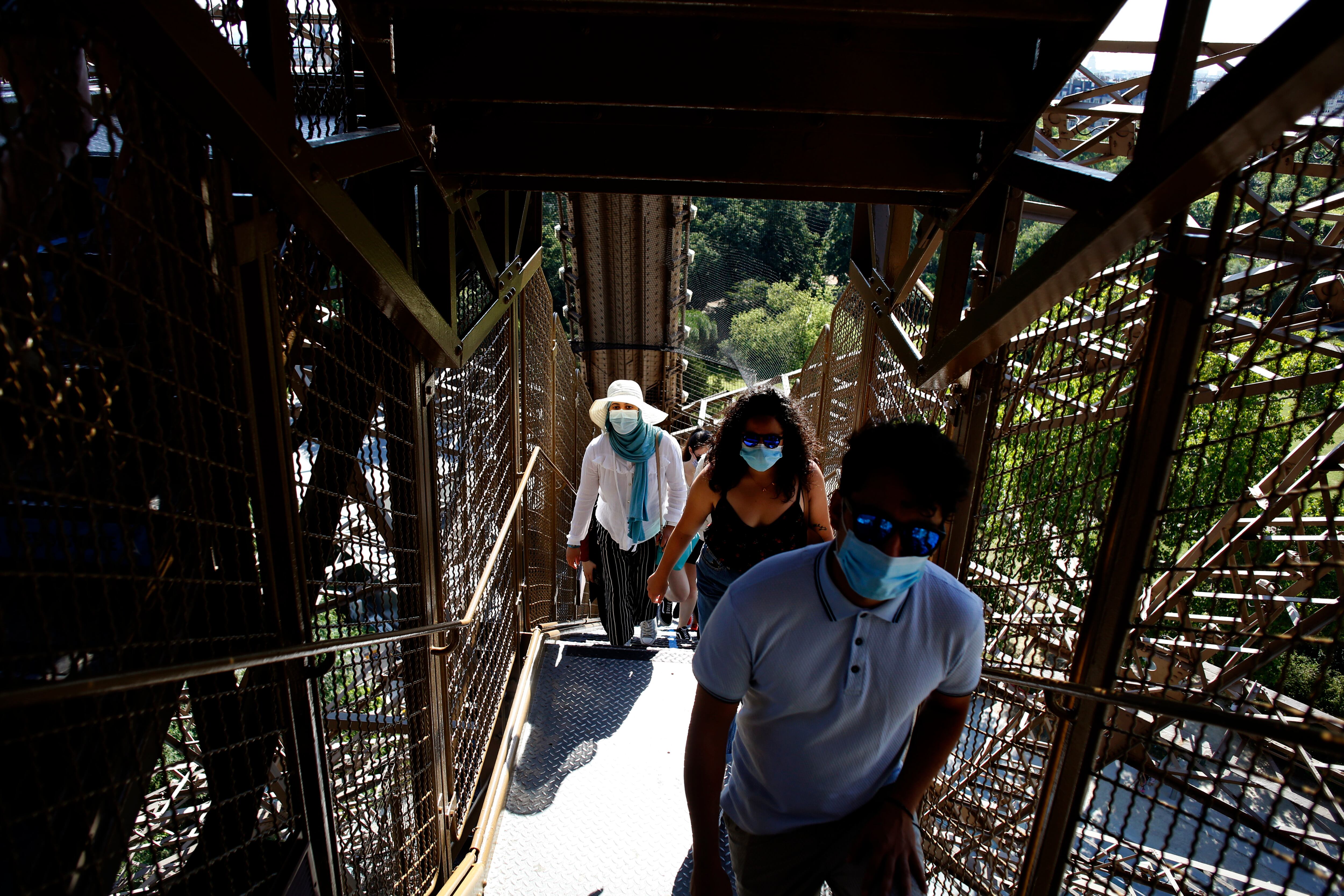
Lifts that usually whisk visitors up the 324-meter (1,063-foot) tall wrought-iron Eiffel Tower remain closed, so for now people have to take the stairs.
Of the tower's three decks, only the first two reopened. Those who climbed the 674 steps Thursday were rewarded with far-away views and a light breeze in scorching summer weather. Masks are obligatory for all visitors ages 11 and up.
"I booked the first slot because afterward, it will be very hot," said Sabine Peaufils, a 57-year-old Parisian. "This is a real pleasure."
People climb stairs as they visit the Eiffel Tower, in Paris, Thursday, June 25, 2020. The Eiffel Tower reopens after the coronavirus pandemic led to the iconic Paris landmark's longest closure since World War II. (AP Photo/Thibault Camus)
The tower lost 27 million euros ($30 million) from the lockdown that started in March, according to its director general, Patrick Branco Ruivo.
France and other European countries with big tourism sectors are starting to coax back visitors, with mixed results.
The Louvre is bracing for a precipitous drop in visitor numbers when it reopens.
Visitor numbers are down at the Versailles Palace since the former royal residence west of Paris reopened June 6.
The palace has capped visits at a maximum of 4,500 people per day, spread out through the day. That is way down from the 20,000 people per day the palace previously got in the busy summer season.
A fragile truce between Israel and Gaza appears to be holding, vaccine boosters on the way, taking a look at Ford's 'Cybertruck killer,' the worst plastic polluters, and more news and insight from the week.
Anyone who gets vaccinated at select state-run vaccination sites in New York next week will receive a lottery scratch ticket with prizes potentially worth millions, as the state tries to boost slowing vaccination rates.
The number of Americans seeking unemployment aid fell last week to 444,000, a new pandemic low and a sign that the job market keeps strengthening as consumers spend freely again, viral infections drop and business restrictions ease.
Jill and Carlo talk about the EU's plan to open borders and fantasize about what a national summer holiday would look like. Plus, a troubling rise of anti-Semitism as signs emerge of a possible ceasefire in Gaza, and how a band of curious 5-year-olds foiled a hijacking in progress.
The European Union has taken a step toward relaxing travel for visitors from outside the bloc, with EU ambassadors agreeing on measures to make it easier for fully vaccinated visitors to get in.
New York dives back into normalcy, strong vax uptake among teens, latest from Gaza, Americans go shopping and Jill talks about the trials of modern parenting.
NY Gov. Andrew Cuomo has disclosed that he was paid a $3.1 million advance to write his COVID-19 leadership book last year and will make another $2 million on the memoir over the next two years.
Biden dips into the vax supply to donate abroad, no signs of a ceasefire in Gaza, the media industry getting smaller, and the biggest complaint from Starbucks baristas.