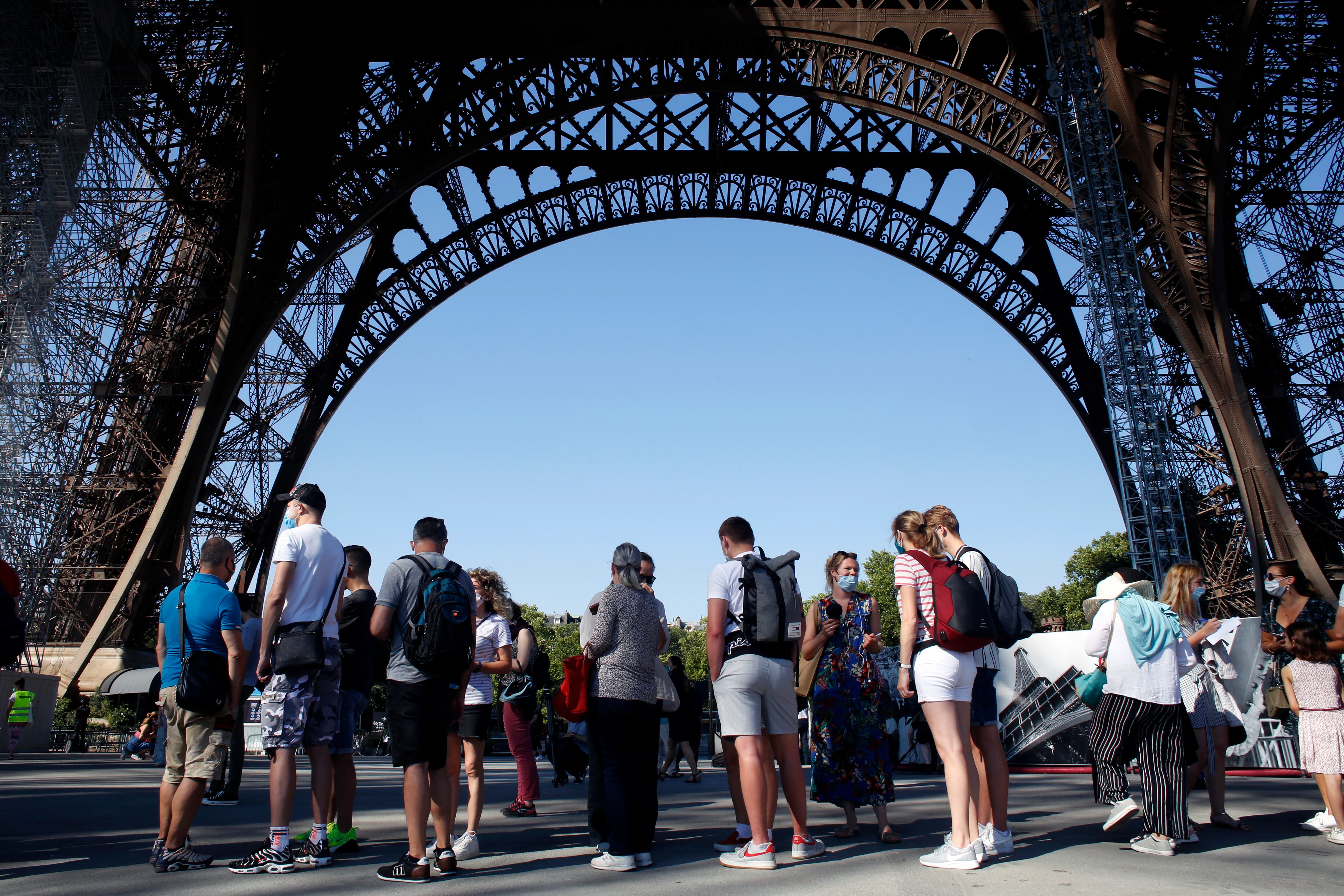
People queue up prior to visit the Eiffel Tower, in Paris, Thursday, June 25, 2020. The Eiffel Tower reopens after the coronavirus pandemic led to the iconic Paris landmark's longest closure since World War II. (AP Photo/Thibault Camus)
By Masha Macpherson
Marking another milestone in France's recovery from coronavirus lockdown, the Eiffel Tower reopened to visitors Thursday after its longest-ever closure in peace time: 104 days.
Tourists who are trickling back to Paris were delighted to find the landmark open when some other attractions in the French capital remain closed. The Louvre Museum isn't reopening until July 6.
"It's very special, very special because it's only the Paris people," said Annelies Bouwhuis, a 43-year-old visitor from the Netherlands. "We've seen a lot Paris people enjoying their city, enjoying their parks without all the tourists."
A visitor looks at the view from the Eiffel Tower, in Paris, Thursday, June 25, 2020. The Eiffel Tower reopens after the coronavirus pandemic led to the iconic Paris landmark's longest closure since World War II. (AP Photo/Thibault Camus)
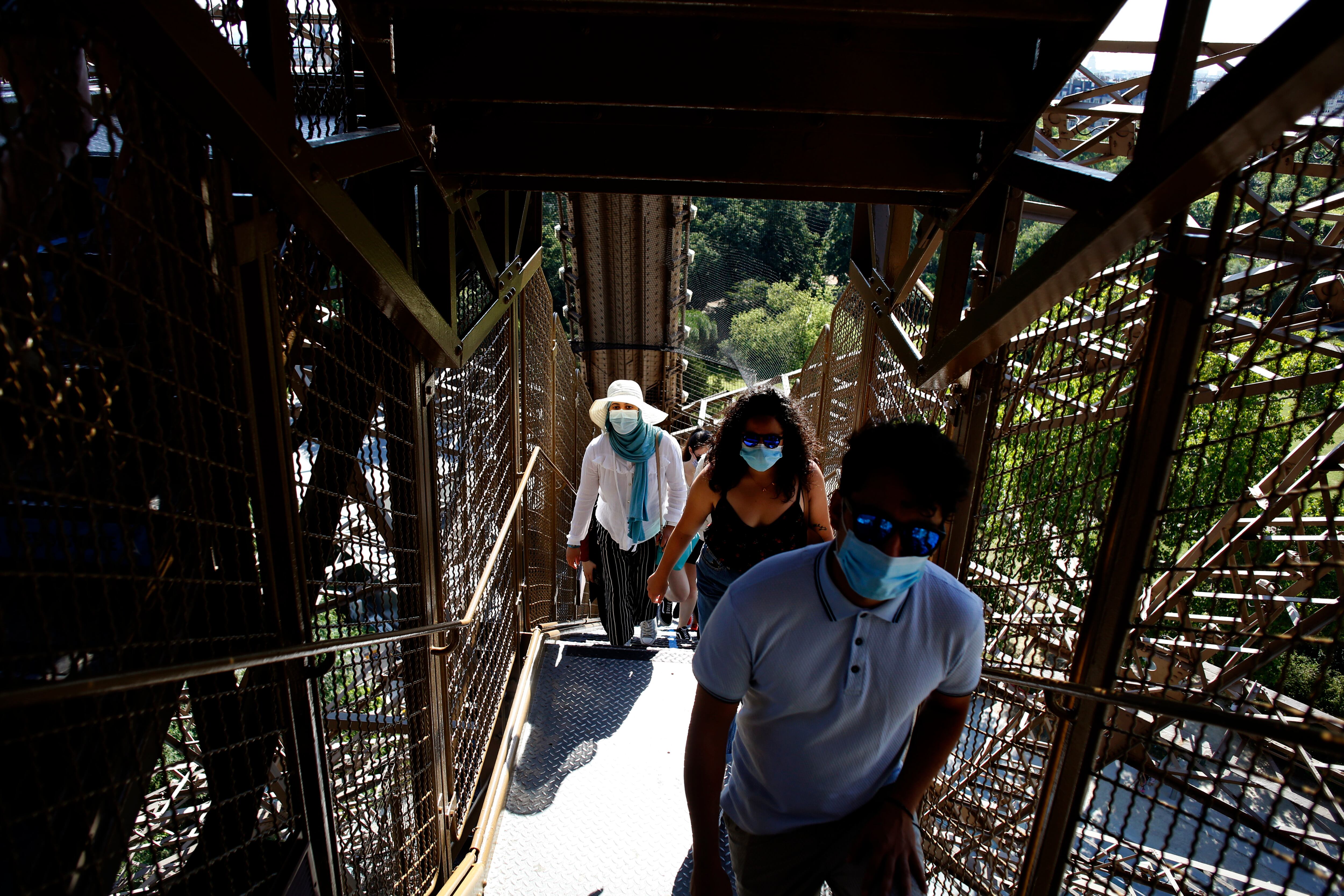
Lifts that usually whisk visitors up the 324-meter (1,063-foot) tall wrought-iron Eiffel Tower remain closed, so for now people have to take the stairs.
Of the tower's three decks, only the first two reopened. Those who climbed the 674 steps Thursday were rewarded with far-away views and a light breeze in scorching summer weather. Masks are obligatory for all visitors ages 11 and up.
"I booked the first slot because afterward, it will be very hot," said Sabine Peaufils, a 57-year-old Parisian. "This is a real pleasure."
People climb stairs as they visit the Eiffel Tower, in Paris, Thursday, June 25, 2020. The Eiffel Tower reopens after the coronavirus pandemic led to the iconic Paris landmark's longest closure since World War II. (AP Photo/Thibault Camus)
The tower lost 27 million euros ($30 million) from the lockdown that started in March, according to its director general, Patrick Branco Ruivo.
France and other European countries with big tourism sectors are starting to coax back visitors, with mixed results.
The Louvre is bracing for a precipitous drop in visitor numbers when it reopens.
Visitor numbers are down at the Versailles Palace since the former royal residence west of Paris reopened June 6.
The palace has capped visits at a maximum of 4,500 people per day, spread out through the day. That is way down from the 20,000 people per day the palace previously got in the busy summer season.
The number of Americans seeking unemployment benefits fell for a third straight time last week, the latest sign that employers are laying off fewer people as they struggle to fill a record number of open jobs and meet a surge in consumer demand.
California will be the first state to impose a 'vax or test' rule for teachers. Heatwaves and Tropical Storm Fred highlight the extreme weather woes. And Alex Trebek has TWO replacements. These are the headlines you need to know.
Animals have been important co-workers for humanity in keeping environmental checks for millennia. Michelle Castillo reports on how some species are helping to keep down some invasive nuisances.
Eight months after the death of beloved “Jeopardy!” host Alex Trebek, the daily syndicated quiz show chose its executive producer Mike Richards as Trebek’s successor.
Jill and Carlo discuss the fallout from Gov. Andrew Cuomo's resignation and what's next for the Empire State. Plus, what Will Smith has to do with a prominent anti-vaccine meme and why NASA is delaying its return the moon.
An elephant herd that made a yearlong journey into urbanized southwest China, raiding farms and even a retirement home for food, appears finally to be headed home.
The COVID overflow tents are going back up in Texas, infrastructure vote today, Cuomo's not the other governor at risk of losing his job, and why is everyone driving like they're in the Fast & Furious movies?
Facebook already asks for your thoughts. Now it wants your prayers. The social media giant has rolled out a new prayer request feature, a tool embraced by some religious leaders as a cutting-edge way to engage the faithful online.