Despite President Donald Trump’s call to put the economy back to work by Easter, one Johns Hopkins physician says there may have to be “variability” in when states and cities restart their economies.
“The best time to start opening up businesses is when we see that the numbers in an area start to stabilize,” said Dr. Juan Dumois, an infectious diseases physician at Johns Hopkins All Children’s Hospital in St. Petersburg, Florida. “What really may be a practical thing to consider is different recommendations in different areas of the country, depending upon the disease activity in those areas.”
That could mean variability at the state level or local level, as the virus peaks at different times in its steady spread across the country.
In what has become the conventional wisdom of the medical community, Dumois reiterated that a combination of social distancing and testing is still the best option for halting the disease.
“The virus is spreading. It will continue to spread, but if we can slow it, we can try to manage the cases that come into the hospitals so that the hospitals are not overloaded,” he said.
Absent these measures, the doctor said hospitals will inevitably become overwhelmed.
“Eventually, some patients won’t be able to get the care they need,” he added.
But when or if this will happen in a given area is hard to determine as official projections change.
“We’re seeing changes by the week, and even by the day,” Dumois said.
The head of Russia’s space program says the future of the ISS hangs in the balance after the U.S., EU, and Canadian space agencies missed a deadline to meet Russian demands for lifting sanctions on Russian enterprises and hardware.
President Joe Biden called for a war crimes trial against Russian President Vladimir Putin and said he’d seek more sanctions after reported atrocities in Ukraine.
Catching you up on what you need to know on April 4, 2022, with reports of Russian war crimes in Ukraine, a weekend shooting in Sacramento killing six and injuring 12, Mexico ending its gas subsidization for U.S. drivers, and the University of South Carolina winning the women's NCAA basketball championship, and more.
Peter Zalzal, associate vice president for clean air strategies at the Environmental Defense Fund, a nonprofit environmental advocacy group, joined Cheddar to discuss the Biden Administration's unveiling of stricter fuel-efficiency standards for new automobiles. "The administration estimated that these rules will reduce about 2.5 billion tons of climate pollution by 2050, and using less fuel also means that we have to go to the gas pump less often. And so it means we save money, thousands of dollars in avoided fuel costs each year for consumers," he noted.
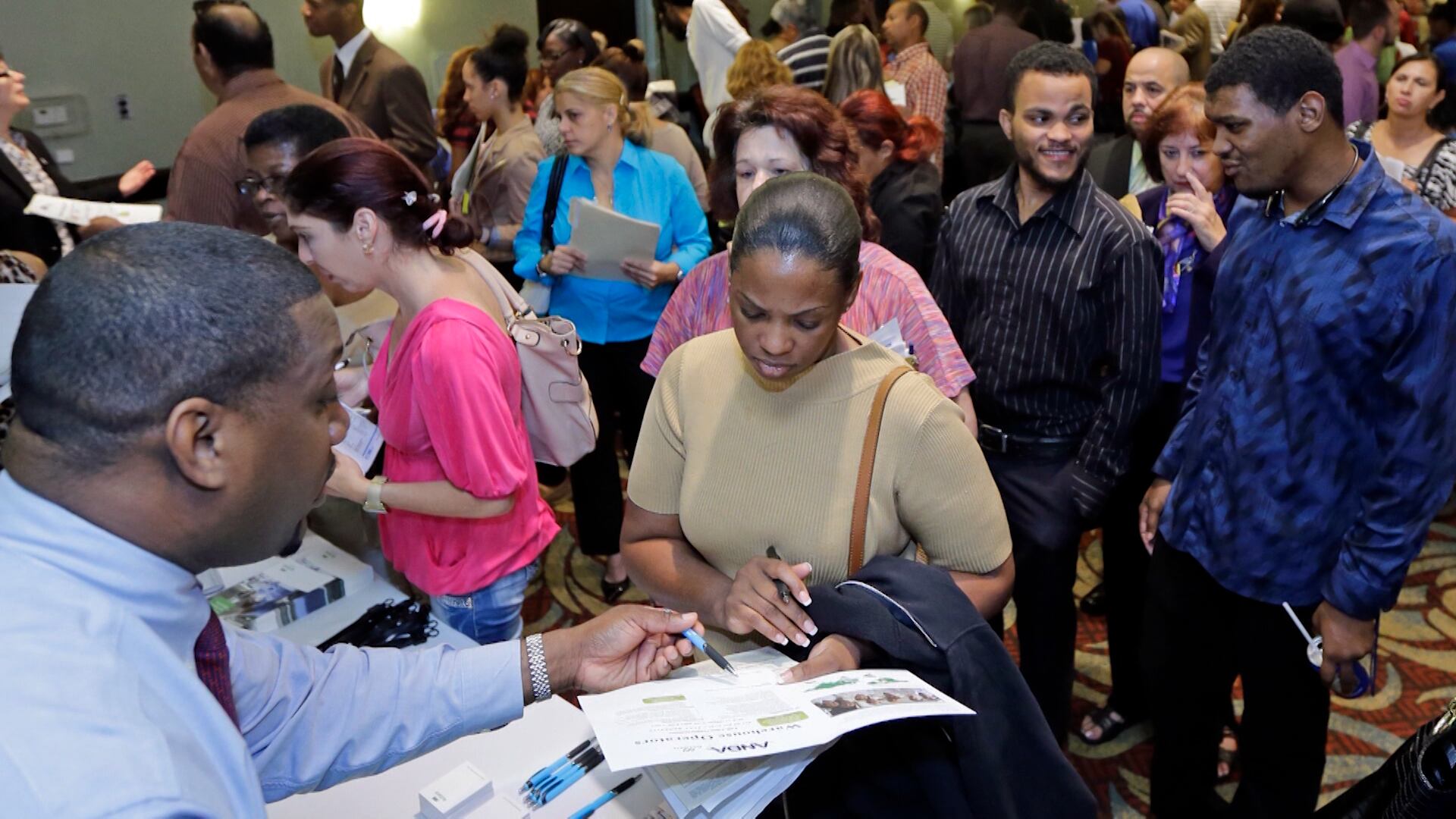
The relatively robust March jobs report showed that despite the low unemployment rate, Black, Hispanic, and women job seekers are still having difficulty finding work. William M. Rodgers III, the vice president and director of the Institute for Economic Equity at the Federal Reserve Bank of St. Louis noted that participation rates in the labor force ticked up for minorities, adding to other positive signs of growth. He also spoke to Cheddar News to discuss further the jobs figures, the state of the labor market, and rising inflation.
U.S. markets opened higher to kick off the second quarter, despite a miss on the March Jobs Report. The economy added $431,000 in the month, slightly lower than the $490,000 analysts had expected. The unemployment rate also ticked down to 3.6% from 3.8%. Kevin Simpson, Founder & Chief Investment Officer, Capital Wealth Planning joined Cheddar's Opening Bell to discuss.
President Biden is going after billionaires in his 2023 budget request to congress. The proposal would establish a 20% minimum tax rate on all households worth more than $100 million, as well as raise the corporate tax rate from 21% to 28%. Rhett Buttle, Small Business for America's Future Senior Advisor, Business Policy Expert & Biden Campaign Business Advisor, breaks down the proposal, what it aims to accomplish, and how small businesses might feel about it.
The Biden administration has announced the U.S. will accept up to 100,000 refugees fleeing the war in Ukraine and provide more than 1 billion dollars in new funding for the growing humanitarian crisis. The move comes as President Biden meets with his western counterparts in Europe to demonstrate a united front against Russia and show support for Ukraine. Altagracia Pierre-Outerbridge, Immigration Attorney for Outerbridge Law, explains how this is going to work.