Despite President Donald Trump’s call to put the economy back to work by Easter, one Johns Hopkins physician says there may have to be “variability” in when states and cities restart their economies.
“The best time to start opening up businesses is when we see that the numbers in an area start to stabilize,” said Dr. Juan Dumois, an infectious diseases physician at Johns Hopkins All Children’s Hospital in St. Petersburg, Florida. “What really may be a practical thing to consider is different recommendations in different areas of the country, depending upon the disease activity in those areas.”
That could mean variability at the state level or local level, as the virus peaks at different times in its steady spread across the country.
In what has become the conventional wisdom of the medical community, Dumois reiterated that a combination of social distancing and testing is still the best option for halting the disease.
“The virus is spreading. It will continue to spread, but if we can slow it, we can try to manage the cases that come into the hospitals so that the hospitals are not overloaded,” he said.
Absent these measures, the doctor said hospitals will inevitably become overwhelmed.
“Eventually, some patients won’t be able to get the care they need,” he added.
But when or if this will happen in a given area is hard to determine as official projections change.
“We’re seeing changes by the week, and even by the day,” Dumois said.
After a devastating mass shooting in Sacramento over the weekend that killed six people and wounded a dozen more, arguments about gun reform are also resurfacing. David Pucino, deputy chief counsel at Giffords Law Center to Prevent Gun Violence, joined Cheddar News to talk about efforts to curb gun violence such as community intervention programs — and the more that needs to be done by lawmakers. "One thing that would be really important is at the federal level closing the loopholes that allow for private sales to go forward without a background check," he noted.
Christopher Wolfe, CIO at First Republic Private Wealth Management, joins Cheddar News' Closing Bell, where he says he is surprised that the first quarter was the first down period in a long time, but adds that the second quarter could be difficult with a lot of volatility expected.
Jeffrey Small, President of Arbor Financial, joins Chedar News' Closing Bell, where he breaks down why stocks closed near session lows on Wednesday and tells viewers what to expect ahead of next earnings season.
Uber and Lyft drivers are cruising in Washington State, the first U.S. state to set an earnings standard for drivers for the ride-hailing companies. Governor Jay Inslee signed the new minimum pay standard into law Thursday, which also gives drivers access to perks like paid sick time and family medical leave. John Logan, Director of Labor and Employment Studies at San Francisco State University, joins Cheddar News' Closing Bell to discuss.
Jeremy Berke, senior reporter on the cannabis industry for Business Insider, joins Cheddar Politics to discuss developments in cannabis legalization at the federal level. He helps break down the bill and what legalization efforts might look like in the Senate.
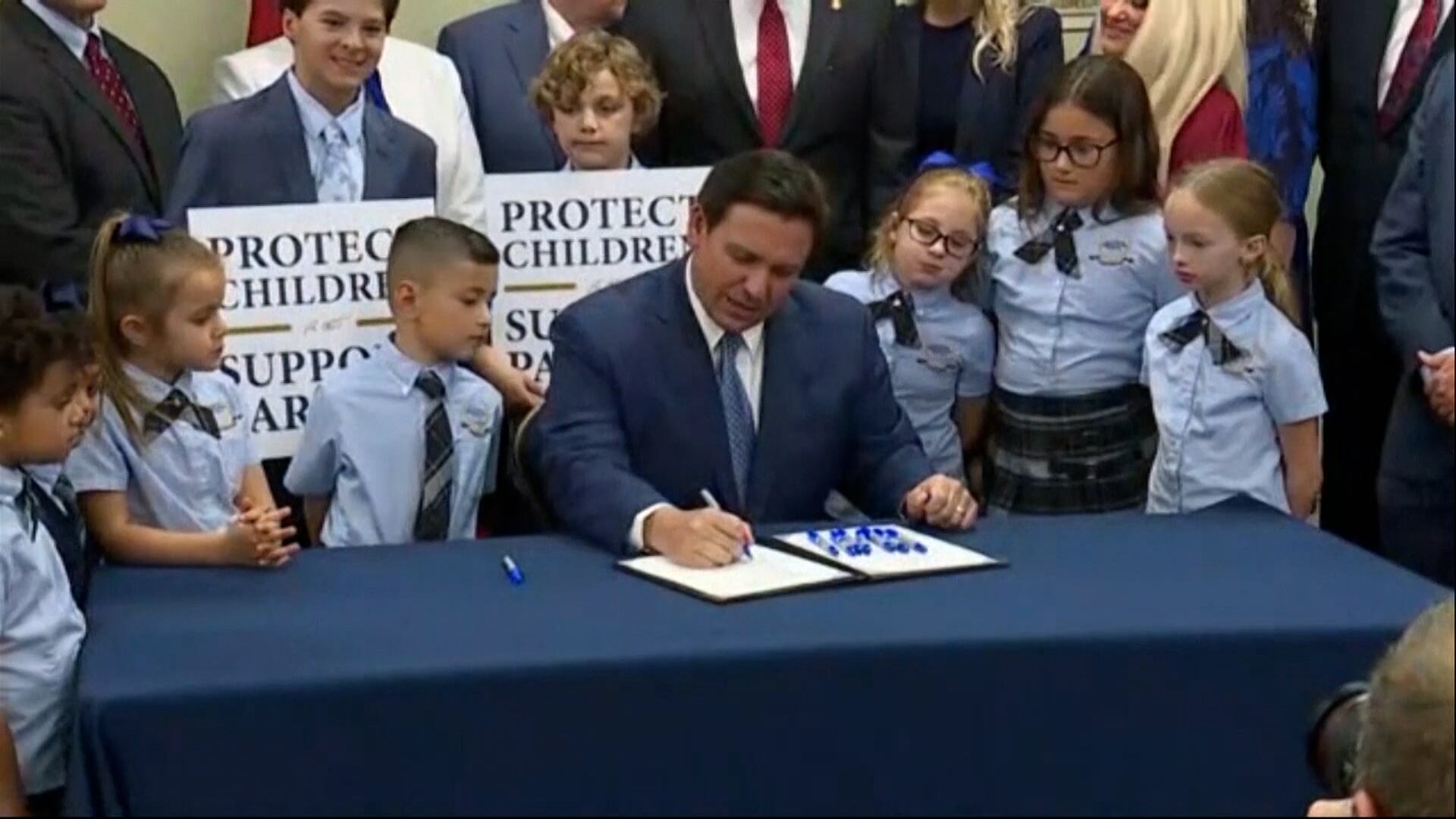
Selene San Felice, Tampa Bay reporter for Axios Local, and Jennifer Levi, director of the Transgender Rights Project at GLBTQ Legal Advocates & Defenders (GLAD) join Cheddar Politics to discuss the impact of the new law targeting LGBTQ communities in Florida schools.
Ryan Barber, justice correspondent at Insider, joins Cheddar Politics to discuss the latest developments in the January 6 investigation, including texts between Ginni Thomas, the wife of Supreme Court Justice Clarence Thomas, and former White House Chief of Staff Mark Meadows.
Joel Rubin, former Deputy Assistant Secretary of State and president of the Washington Strategy Group, joins Cheddar Politics to discuss the latest developments in the Russian invasion of Ukraine.