Volunteer Nicolle Eagan plays the violin for dogs being cared for at the ASPCA animal recovery center, Friday, April 21, 2023, in New York. Many nonprofits use images of suffering and need to motivate people to give, but a recent study from economists found there may be other effective strategies for prompting acts of generosity. (AP Photo/Mary Altaffer, File)
Those ads showing caged dogs and desperate looking cats while Canadian singer Sarah McLachlan's “Angel” played in the background have been not just effective at making viewers sad, but also remarkably successful at raising money for the American Society for the Prevention of Cruelty to Animals since 2007.
However, a new study shows other strategies may also be effective at motivating people to give, apart from all that “ sadvertising.” Maybe try “Hakuna Matata.”
The study from Nathan Chan, assistant professor at the University of Massachusetts Amherst, and Casey Wichman, assistant professor at the Georgia Institute of Technology, found that people in good moods are more likely to donate to a charitable cause.
The study gathered posts made to Twitter, the social media platform now called X, from people who gave to Wikipedia and posted a hashtag acknowledging the donation. The researchers analyzed the posts from before and after the users made a donation and found that it improved shortly before they gave.
“It suggests that rather than this conventional notion that people give because it makes them feel good about themselves for doing the right thing, we found that people were in a good mood prior to donating, and that’s potentially the causal factor for why they decided to give," Wichman said.
The findings indicate charities may want to improve a potential donor's mood before making the ask, Wichman said.
Their study isn't the first to find a connection between well-being and generosity, said Lara Aknin, professor of social psychology at Simon Fraser University, but it does a provide a valuable look at a person's specific feeling at a specific moment in a real world example. One takeaway could be that it would be beneficial to reach people at times when they are already feeling good, like on holidays or a loved one's birthday, she said.
But people give for many reasons and many levers motivate that generosity, Aknin said, including showing how a potential donor can make a meaningful impact on other people, animals or causes they care about. She also warned that people are very attuned to ulterior motives attached to requests for help.
“If people feel that they’re insincerely being fattened up before the request, then that could that could really spoil giving,” she said, “which I think for many people is truly a pretty wonderful experience when they get to give in ways that they care about and feel like they’ve chosen to do so.”
The researchers used natural language processing tools to analyze the sentiments of a person's tweets and identify their mood based on their posts.
They also designed a second experiment to test their findings where they asked online volunteers to decide how to split $50 between themselves and a charity. They showed some a clip of “Hakuna Matata” from from “The Lion King,” while others watched a science video about microbes. Those who watched the dancing warthog gave a little more to charity and were more likely to give the whole amount, though the results are less conclusive because of a small sample size.
While nonprofits always want to attract additional donations, many feel a particularly acute need right now. Human service, arts and educational organizations among others were profoundly stretched and stressed by the pandemic. Many continue to report increased demand for their services at the same time, economic conditions like inflation and major declines in the stock market impacted philanthropic giving. Last year, the overall amount of donations dropped for only the fourth time in four decades, according to Giving USA.
The trend also continued of fewer donors giving more, and so Michael Thatcher, CEO of Charity Navigator, encouraged nonprofits to experiment carefully and keeping true to an organization's mission.
"I think we need to be trying new things right now because there is donor fatigue," he said. But also, he added, “Don't try every new fad.”
Tire manufacturer Michelin is partnering with the popular video game "The Sims FreePlay" in order to meet teens where they are to promote driving safety. Michelin North America Chairman and President Alexis Garcin joined Cheddar News to discuss how the #GoldenGauge program integrates with the game. "If you're a gamer yourself or your kids, then while you're driving and moving on the application, you will find a Michelin billboard, and if you engage with that billboard, then you will get some advice about how tires are critical for your safety on the road," Garcin explained. *Updated with the full title of 'The Sims FreePlay' and a typo fix in the name of Alexis Garcin.*
The video game industry has come a long way from the first commercialized 3D video game in 1980, but it still has a long way to go. Video game creators have recently been called out for not having realistic Black hairstyles in their games and graphic artists are now taking matters into their own hands by creating The Open Source Afro Hair Library. Jovan Wilson, 3D artist and resident for The Open Source Afro Hair Library, joined All Hands to discuss.
Neil Young has come up with an ultimatum for Spotify: his music or Joe Rogan’s podcast. This comes over concerns that the podcast is spreading COVID-19 vaccine misinformation to its listeners. "The Joe Rogan Experience," which is exclusive to Spotify, is currently the number one streamed podcast on the platform.
The American Federation Teachers Union has announced its latest partnership with NewsGuard in efforts to help educators play a greater role in deciphering facts from fiction that students see online. They say the goal is to help students build critical-thinking skills while also teaching them the importance of media literacy. Executive Vice President of Partnerships at NewsGuard, Sarah Bandt, joined Cheddar to talk more.
Doctor Caroline Leaf has created a 21-day program, consisting of five simple, but mindful, steps designed to rid our minds of toxic thoughts, anxiety, and depression. This brain detox is scientifically proven to impact one's happiness and success. Doctor Caroling Leaf, neuroscientist, author, and speaker at Switch Your Brain, joins Cheddar News to discuss.
The memoir, "COMPROMISED: Counterintelligence and the Threat of Donald J. Trump", tells a familiar story from a bit of a different source: Peter Strzok himself, former FBI Counterintelligence Agents and Agency Veteran who spent most of his very long career investigating some of the most controversial inquiries, most notably in recent American history. Those inquiries were Hillary Clinton's email to even Trump Russia investigations. Former FBI Agent and Author of "Compromised" Peter Strzok, joined Cheddar to discuss more.
Foodable Labs data shows restaurants that started offering vegan options saw a 13% increase in traffic. According to this 2018 study, 51% of U.S. restaurants now offer vegan options, and we can expect that number to keep rising. This week, one plant-based, fast-casual restaurant celebrates the grand opening of their first brick-and-mortar store in New York City: PLNT Burger. Ben Kaplan, CEO of PLNT Burger, joins Cheddar News to discuss.
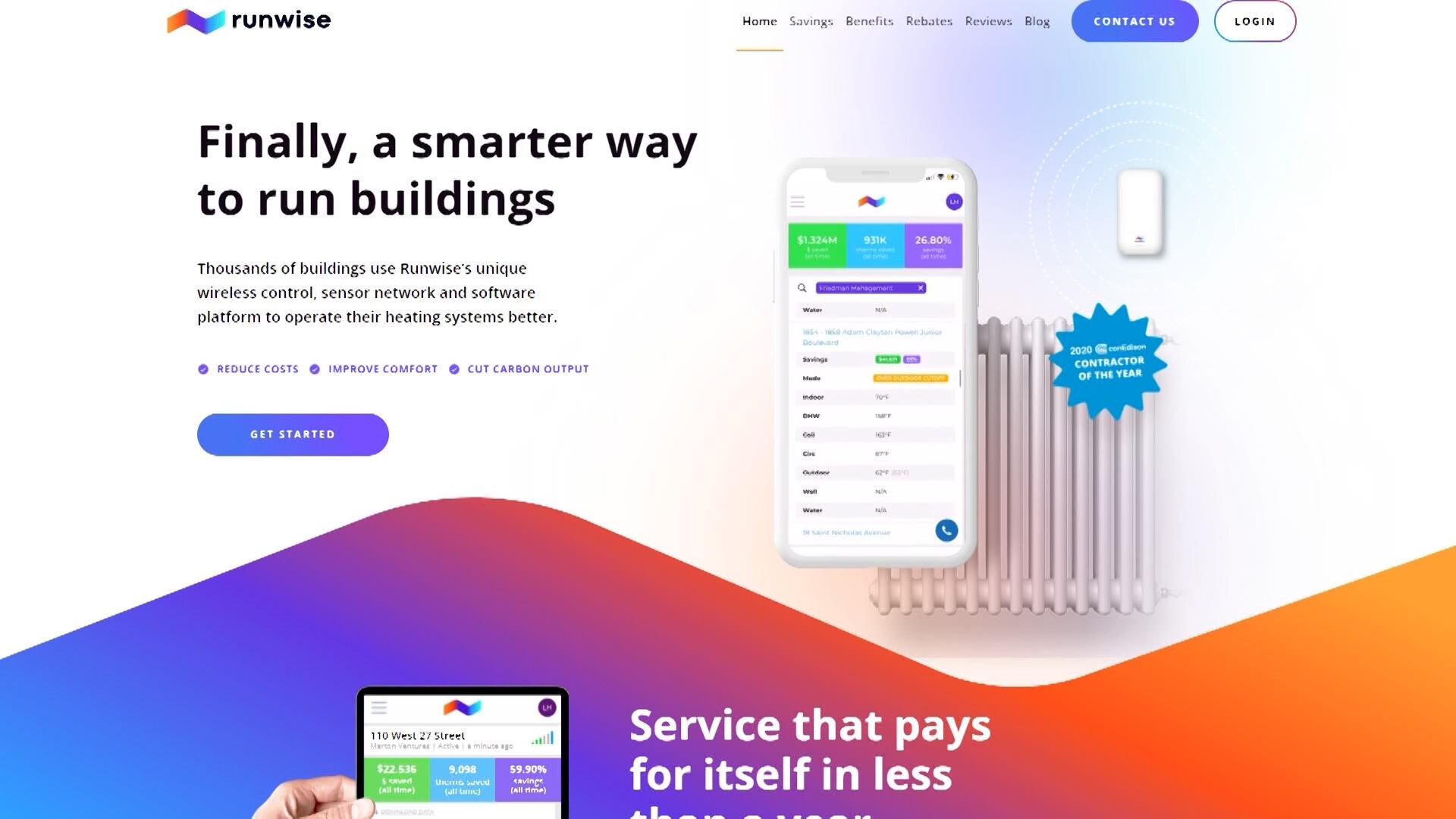
Commercial and residential buildings account for 13% of carbon emissions in the U.S., according to the EPA, and one company says it has a solution. Runwise says it has updated the boiler and heating systems of thousands of buildings, and that its technology not only lowers carbon output but also saves landlords money. Lee Hoffman, Co-Founder and COO of Runwise, joined Cheddar Climate to discuss.
Kirsten Jordan, real estate broker and star of 'Million Dollar Listing New York,' joins Cheddar News to talk about the state of New York City real estate, tips for homebuyers, and season 9 of the Bravo show.
No. 2 pencils or Scantron bubble sheets are a thing of the past for the SATs. Priscilla Rodriguez, head of college readiness assessment for the College Board, joined Cheddar News Wrap to talk about the modern overhaul of the college entrance exam. On top of the change to an all-digital format and shorter time limit, the latest iteration will feature updates to help with flexibility and security. "As we've built our own digital testing platform, the app the students will do this on, we built this with security at the core," Rodriguez said. "And, in going digital we can do something we can't do today, which is, give every student who's taking the SAT, let's say in a given day, even in a given room in a school, a different version of the SAT."