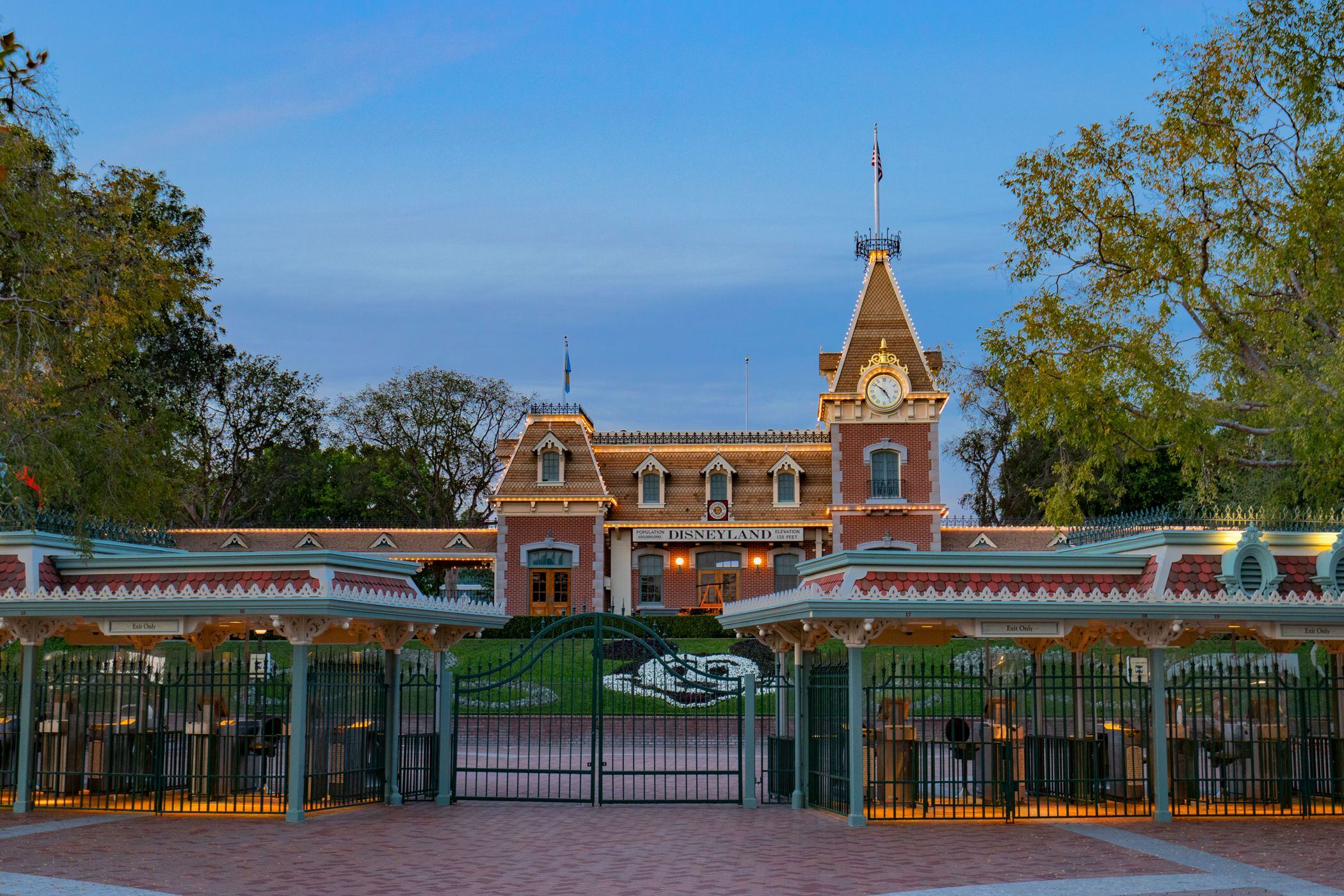
General views of the Disneyland theme park, still closed due to COVID-19 on November 21, 2020 in Anaheim, California. (Photo by AaronP/Bauer-Griffin/GC Images)
The Walt Disney Co. announced plans to lay off 4,000 more workers in its theme parks division in California and Florida due to the COVID-19 pandemic's effect on the industry.
The announcement by the company was made in a U.S. Securities and Exchange Commission filing earlier this week, saying 32,000 employees will be terminated in the first half of fiscal year 2021, which began last month. In late September, the company had already announced plans to terminate 28,000 theme park workers.
In the SEC document filed on the eve of Thanksgiving Day, the company said it also put 37,000 employees not scheduled for termination on furlough as a result of the pandemic.
“Due to the current climate, including COVID-19 impacts, and changing environment in which we are operating, the company has generated efficiencies in its staffing, including limiting hiring to critical business roles, furloughs, and reductions-in-force,” the document said.
The company also said they may make more cuts in spending such as reducing film and television content investments and additional furloughs and layoffs.
In Florida, the company has been limiting attendance at its parks and changing protocols to allow for social distancing by limiting characters' meet and greets.
The company has not specified the number of workers that would be affected in its Orlando theme parks.
Disney’s parks closed in March as the pandemic started spreading in the U.S. The Florida parks reopened in the summer, but the California parks have yet to reopen pending state and local government approvals.
Accrue CEO and founder Michael Hershfield explains why Americans' credit card delinquencies are on the rise, advice on what can help, and the key difference between Boomers and Gen Z when it comes to money.
Senior Economist at Morning Consult Kayla Bruun shares thoughts on what to expect from the Fed's January meeting and where monetary policy is headed, as well as how consumers are faring.
Former Medtronic CEO and author of 'True North' Bill George explains the steps Boeing leadership must take to regain client and consumer trust after 737 Max 9 production was stopped.
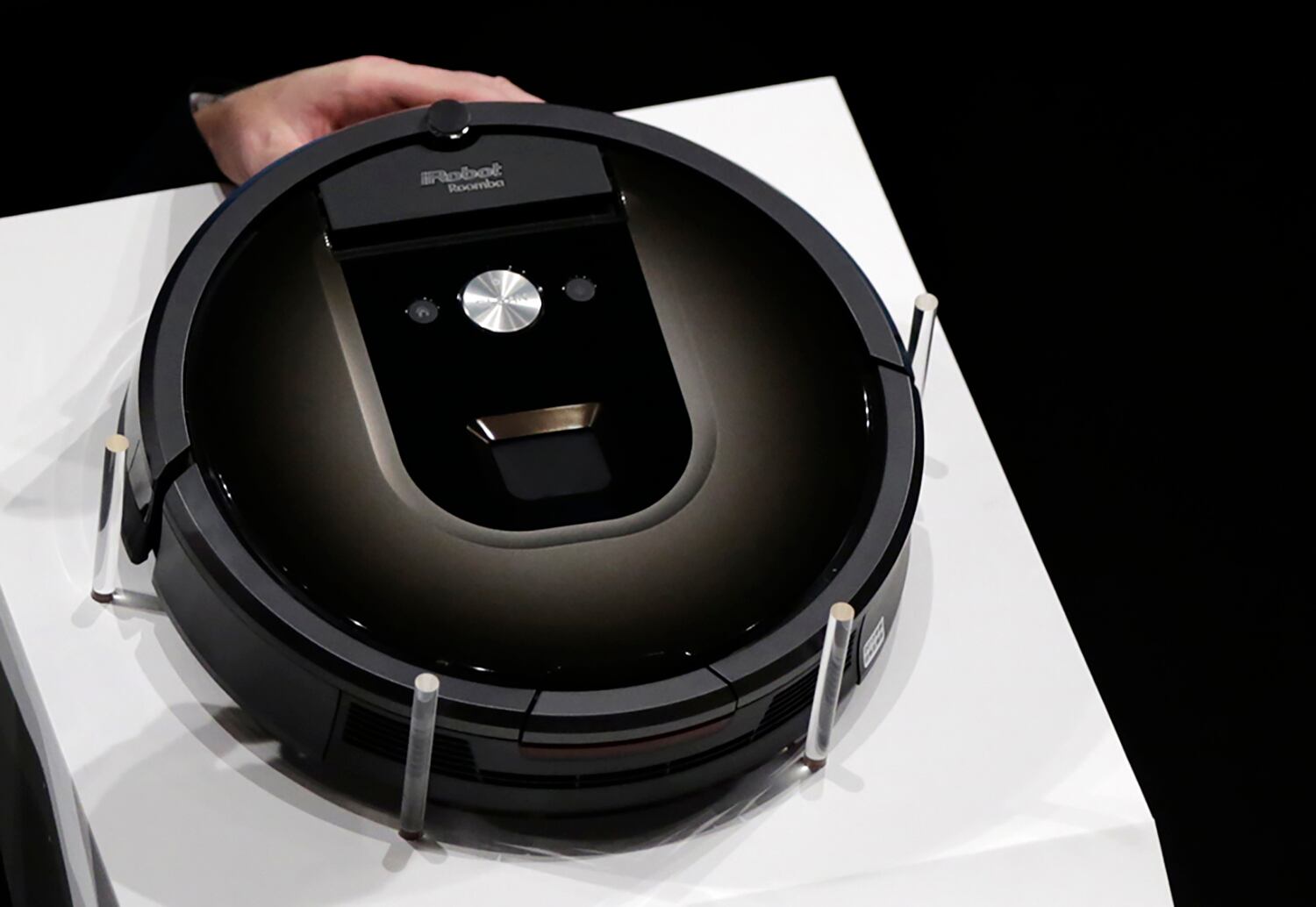
Amazon blamed "regulatory hurdles" for calling off its proposed acquisition of robot vacuum maker iRobot. Not even a Roomba could clean up the deal's antitrust scrutiny.
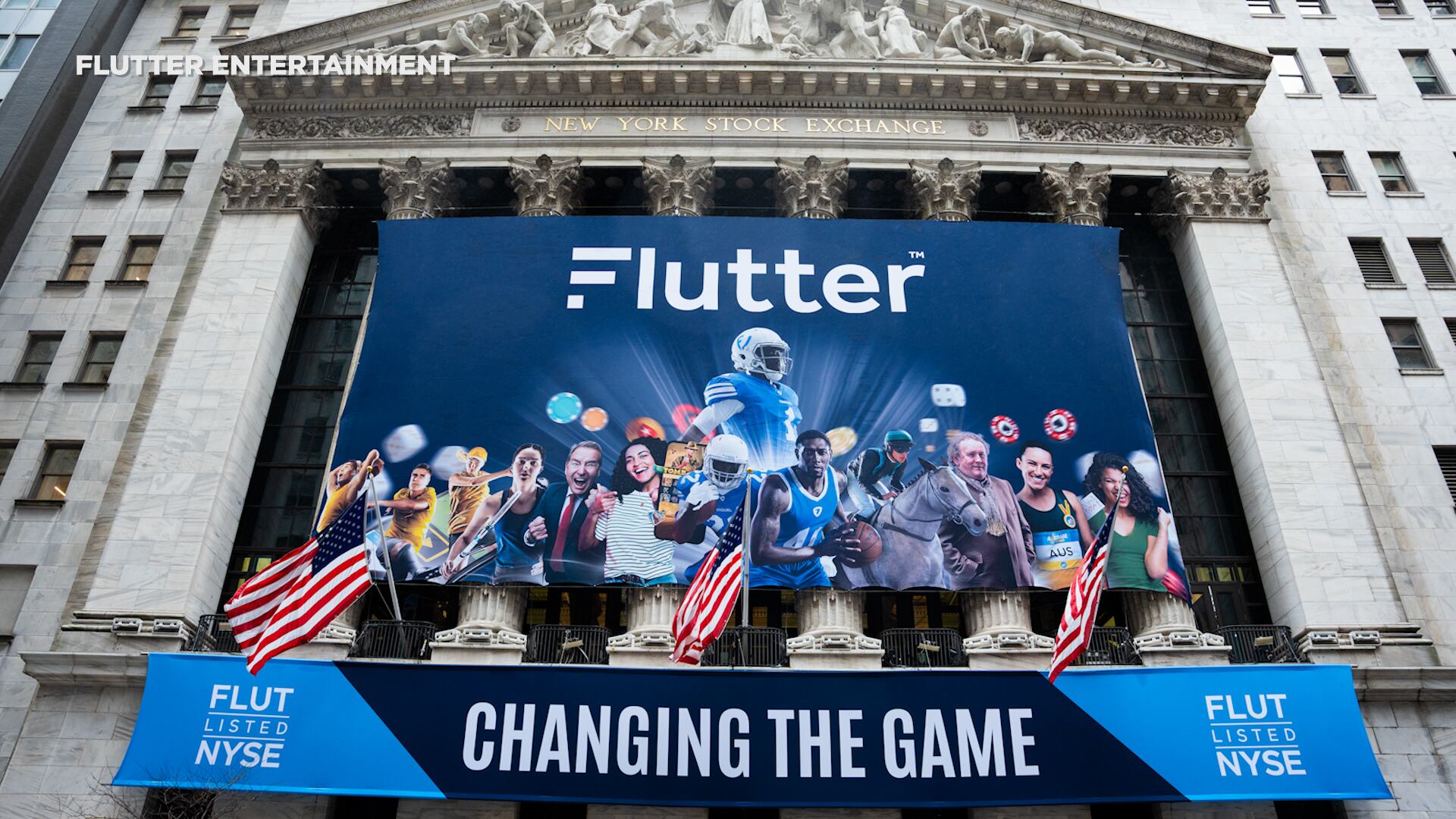
To celebrate Flutter Entertainment's debut on the NYSE, FanDuel CEO Amy Howe shares her thoughts on the company's plans for growth, the future of online sportsbetting, and Super Bowl Sunday.
Investopedia's Caleb Silver shares thoughts on the upcoming Fed meeting, why individual investors are still slightly skeptical, and what he's looking for from mega cap tech earnings.
Season's greetings! Tax season, that is. January 29 is the first day you can file your tax return. We walk you through each step — plus a checklist you can download.
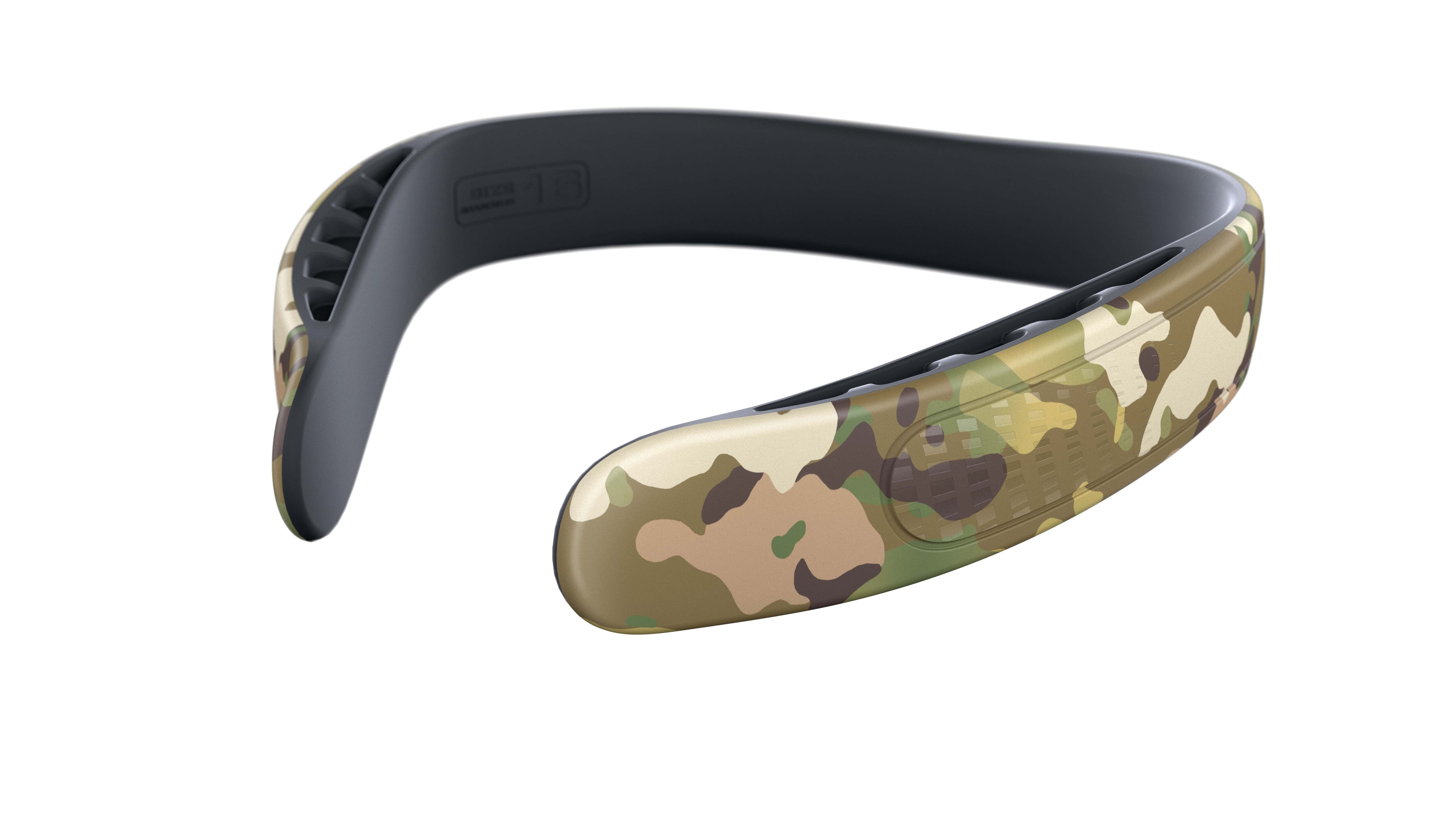
The Q-Collar helps protect athletes from impact-related concussions. Now, the U.S. Army is evaluating if the device could help reduce traumatic brain injury cased by blast weapons.