By Anthony Izaguirre
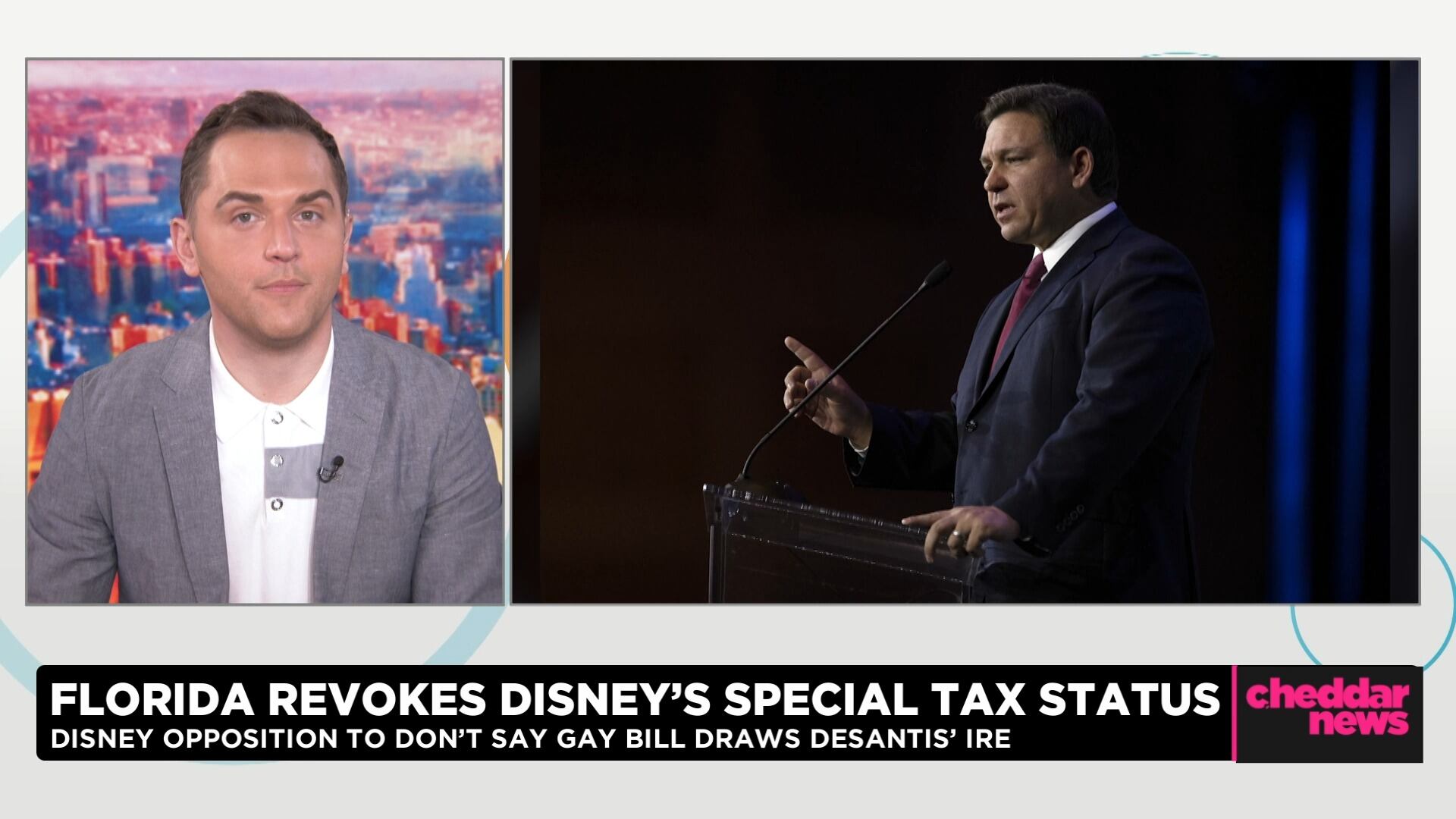
Florida Gov. Ron DeSantis signed a bill on Friday to dissolve the private government Walt Disney World controls on its property in the state, punishing the entertainment giant for opposing a new law that critics call “Don’t Say Gay.”
The move is expected to have huge tax implications for Disney and further sour the relationship between the Republican-led government and a major political player whose theme parks have transformed Orlando into one of the world's most popular tourist destinations.
For DeSantis, the attack on Disney is the latest front in a culture war waged over policies involving race, gender and the coronavirus, battles he has harnessed to make himself one of the most popular Republicans in the country and a likely 2024 presidential candidate.
The law would eliminate the Reedy Creek Improvement District, as the 55-year-old Disney government is known, as well as a handful of other similar districts by June 2023. The measure does allow for the districts to be reestablished, leaving an avenue to renegotiate the future of the deal that allows the company to provide services such as zoning, fire protection, utilities and infrastructure.
DeSantis said Friday that the company would end up paying more taxes than it currently does and that the law isn't expected to cause tax increases for residents around Disney. He gave no additional details.
The dispute began with Disney’s criticism of a new law barring instruction on sexual orientation and gender identity in kindergarten through third grade as well as instruction that is not “age appropriate or developmentally appropriate.” DeSantis and his fellow Republicans have defended the law as reasonable, saying that parents, not teachers, should be discussing such topics with children.
Under mounting pressure, Disney eventually said it would suspend political donations in the state and that it would support organizations working to oppose the new law.
“You're a corporation based in Burbank, California, and you're gonna marshal your economic might to attack the parents of my state,” DeSantis said Friday before signing the bill into law at a ceremony in Hialeah Gardens. “We view that as a provocation, and we're going to fight back against that."
The governor has hammered Disney for coming out against the bill, portraying the company as a purveyor of “woke” ideology that injects inappropriate subjects into children's entertainment. In a fundraising pitch sent out this week, DeSantis told supporters, “It took a look under the hood to see what Disney has become to truly understand their inappropriate influence.”
Republican Rep. Randy Fine, sponsor of the bill to eliminate the Disney district, has said Disney is a guest in the state and that Floridians are not interested in the company's California values.
“You kick the hornet’s nest, things come up,” Fine told lawmakers in the GOP-controlled statehouse this week.
Democrats have slammed the Disney measure as petty retaliation, warning that homeowners could face tax bills if they have to absorb costs from the company, though details are far from clear.
“The devil is in the details and we don’t yet today have the details,” said Orange County Mayor Jerry Demings, whose county is partially home to Disney World. He added it would be “catastrophic for our budget” if the county had to assume the costs for public safety at the theme park resort.
Disney is one of Florida’s biggest private employers, last year saying it had more than 60,000 workers in the state. It is not immediately clear how the company or local governments around its properties would be affected if the district was dissolved.
The creation of the Reedy Creek Improvement District, and the control it gave Disney over 27,000 acres (11,000 hectares) in Florida, was a crucial element in the company’s plans to build near Orlando in the 1960s. Company officials said they needed autonomy to plan a futuristic city along with the theme park. The city never materialized, however; instead, it morphed into the Epcot theme park.
The company is a major political player in Florida, as well as the rest of the country. The Walt Disney Co. and its affiliates made more than $20 million in political contributions to both Republicans and Democrats in the 2020 campaign cycle, the most recent year for which figures are available, according to the Center for Responsive Politics, which tracks such spending.
That same year, Disney-related entities funneled $10.5 million to the America First Action committee, which supports Republican former President Donald Trump. Disney also contributed $1.2 million to support Democratic President Joe Biden’s campaign.
Updated on April 22, 2022, at 5:45 p.m. ET with additional details.