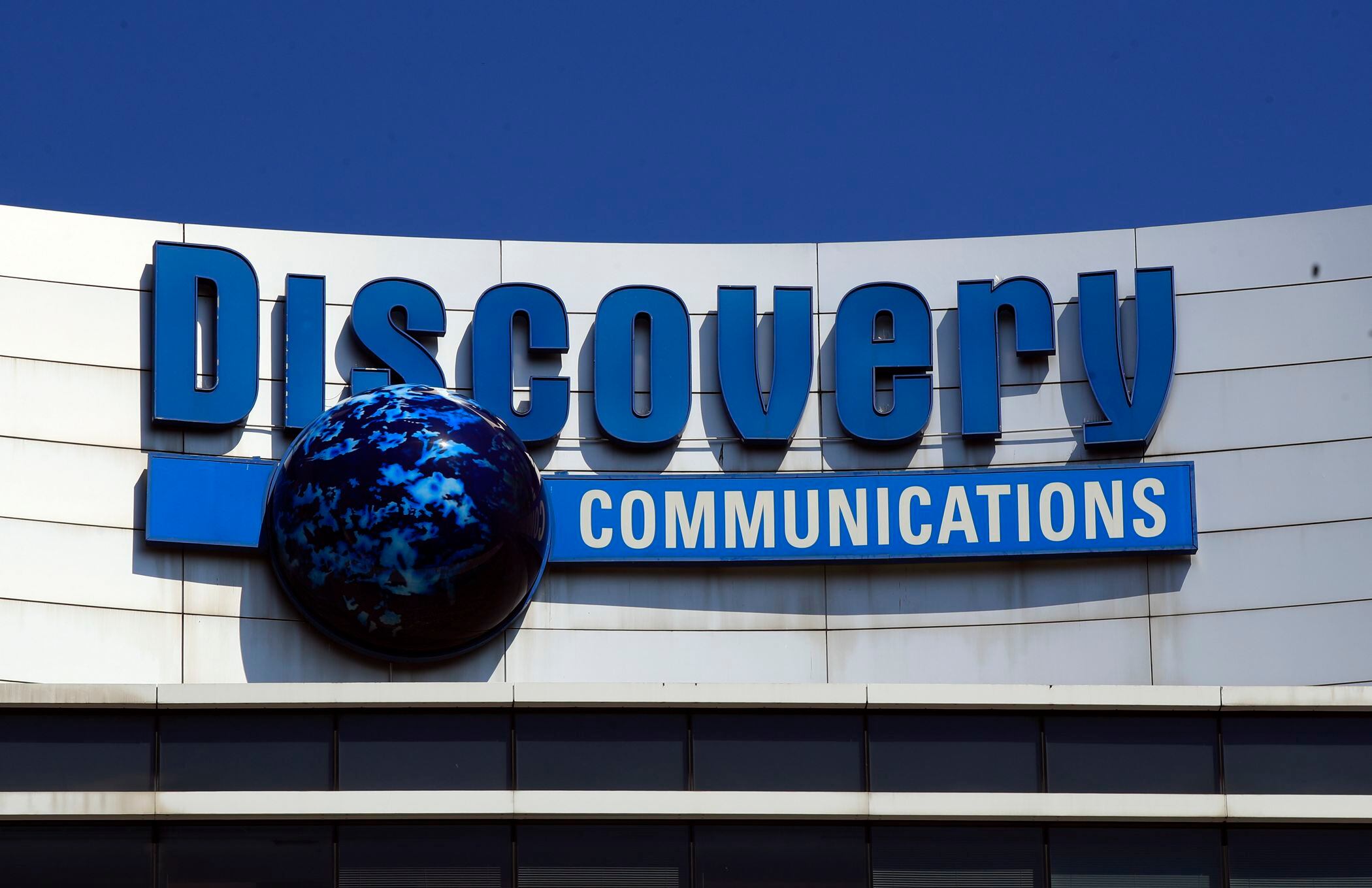
In this July 31, 2017, file photo, the Discovery Communications logo sits atop its headquarters in Silver Spring, Md. Discovery is joining the increasingly crowded streaming fray with its own reality-focused service Discovery Plus that will include shows from the Food Network, HGTV, TLC and its other networks. It launches Jan 4. (AP Photo/Manuel Balce Ceneta, File)
Discovery is joining the increasingly crowded streaming fray with its own reality-focused service Discovery Plus that will include shows from the Food Network, HGTV, TLC, and its other networks. It launches January 4.
The service will cost $5 a month with ads and $7 a month without ads. By comparison, the ad-free Disney Plus costs $7 a month and Netflix's most popular plan costs $14 a month.
Each account will include up to five user profiles and support four concurrent streams. Discovery said the service will be available on “major platforms," connected TVs, web, mobile, and tablets, but it didn't specify which services would carry it.
Discovery CEO David Zaslav first announced the streaming service in late 2019 but did not provide details until now.
Discovery has built a reality-TV empire with popular channels that feature reality programming, including the Discovery Channel, HGTV, Food Network, TLC, Investigation Discovery, and others. Hit shows have included TLC's “90-Day Fiance," HGTV's “Fixer-Upper" and Guy Fieri's “Diners, Drive-Ins and Dives" on the Food Network.
The service will offer some originals like “90-Day Fiance” spinoff “90-Day Diaries” and “Long Island Medium” spinoff “Long Island Medium: There in Spirit.”
Verizon customers will get a year free of the service, similar to the deal that Verizon did when Disney Plus launched in late 2019.
Discovery Plus joins a slew of new streaming services started to challenge traditional TV providers and dominant streaming services like Hulu and Netflix over the past year, including Disney Plus, Apple TV Plus, HBO Max, and Comcast’s Peacock service. CBS recently rebranded its CBS All Access service as Paramount Plus, relaunching in 2021.
The service will roll out in 25 countries in 2021 including Italy, Spain, UK, and Ireland as well as India.
Upflex Co-founder and CEO Christophe Garnier discusses how his company is working with WeWork to establish the future of work and elaborates on how his startup will use $30 in new funding.
Dan Ives, Managing Director of Equity Research at Wedbush Securities, joins Cheddar News' Closing Bell, where he provides his insight on what Elon Musk's presence means for Twitter, as well as how recent allegations against the Tesla CEO could impact both the social media platform and the EV giant.
Anthony Bartolacci, VP of Financial Institutions at Sensor Tower, joined Closing Bell to discuss the factors dragging down Snap and other social media and tech stocks.
David Stryzewski, CEO of Sound Planning Group, joins Cheddar News' Closing Bell, where he says that rate hikes are driving the market right now and outlines what must be in place for a stock rally.
Andrew Arons, Founder and Partner at Synergy Advisory Management Group, joins Cheddar News' Closing Bell, where he breaks down Tuesday's market action and provides his insight on Snap's historic slide after the comments made by CEO Evan Spiegel.
Peter Andersen, CIO at Andersen Capital Management, joins Cheddar News' Closing Bell, where he breaks down Monday's trading action and discusses whether this could be the start of a new rally or a blip in an otherwise disappointing stretch.
The crypto industry is still reeling from Terra's recent crash. The company's blockchain was temporarily halted earlier this month after the collapse of its cryptocurrency Luna (LUNA) and its stablecoin TerraUSD (UST), which led to almost $45 billion being wiped from the tokens' market caps within a week. Now, many are left wondering what Terra's struggles mean for the broader crypto market. Reeve Collins, CEO of the NFT platform BLOCKv, joins Cheddar News' Closing Bell from Davos 2022 to discuss.
China's largest ride-hailing company will no longer be listed on the world's largest stock exchange. Didi shareholders voted on Monday to delist from the New York Stock Exchange, less than a year after launching a $4.4 billion IPO with the most significant U.S. share offering by a Chinese company since Alibaba debuted in 2014. Since going public in June of last year, around $70 billion has been wiped from Didi's market value and shares of the company have dropped nearly 90%. Now, Didi is expected to begin preparations to list in Hong Kong. Kevin T. Carter, founder and Chief Investment Officer of EMQQ Global, joins Cheddar News' Closing Bell to discuss.