Digital Payment Service Zelle Looks to Close Loopholes
*By Conor White*
Digital payment service Zelle is expected to grow its user base by 73 percent in 2018, and overtake rival Venmo in the process, according to a new forecast from eMarketer. But the growth has little to do with user preferences or word of mouth ー rather, it's because Zelle is readily available inside the apps of more than 30 U.S. banks.
With such wide availability, though, comes the risk of fraud.
"Any financial product is confronted with these kinds of fraud issues," explained Ravi Loganathan, head of business intelligence at Early Warning Services, the company that created the Zelle app. "On the fraud side, we are well below any industry benchmarks out there."
But according to an April report by the New York Times, Zelle is especially vulnerable thanks to aspects of its design: all someone needs is a phone number or email address, and the user is not always notified when money is transferred into or out of an account.
In an interview Wednesday on Cheddar, Loganathan insisted Early Warning Services is fixing the loopholes being exploited by hackers.
"What we are doing is working actively with the financial institutions to strengthen and to do the education and training that is needed for consumers to better understand how to use the service and then how to also detect fraudsters."
The improvements come at a crucial time. According to a new study from Zelle, 75 percent of millennials have used a digital peer-to-peer payment service at least once, and 49 percent use one weekly.
For the full segment, [click here.](https://cheddar.com/videos/zelle-examines-consumer-payment-tech-and-behavior)
This year, the games market will generate total revenues of $180.3 billion dollars, a significant increase from 2020. While the industry continues to grow and expand into new spaces, such as the metaverse, there is still plenty of room for growth and reform in this male-dominated market. Katie Robinson, content creator, joins Cheddar News to discuss.
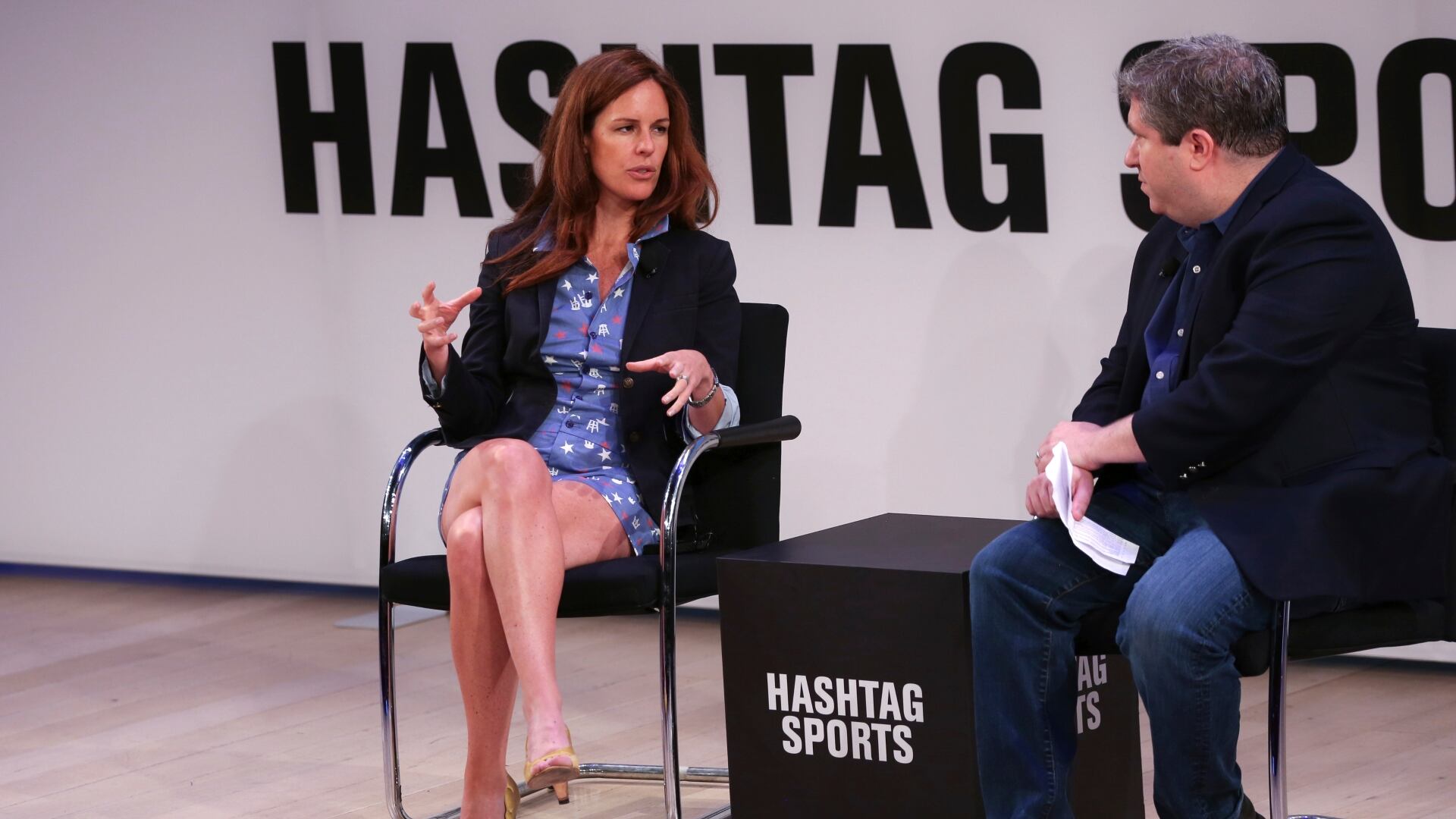
Barstool Sports CEO Erika Nardini joined Cheddar's Kristen Scholer to discuss plans for the future even as COVID-19 upended Barstool's sponsorship of the Arizona Bowl featuring the Boise State Broncos and the Central Michigan Chippewas due to the spreading omicron variant. "In our case as a company, coronavirus has been a big boom for us," she noted. "We've been able to create a lot of new programming, launch a lot of different personalities, and frankly take share from traditional media, and that's what we've done the entire pandemic." While she admitted to taking a hit on the canceled Bowl game, live events aren't completely off the table for Barstool in 2022. Nardini also talked about potential sports betting expansion following its partnership with Penn National Gaming.
Interest in the concept of the metaverse is heating up as more companies get on board, and Cathy Hackl, CEO of Futures Intelligence Group, a metaverse-focused consultancy, joined Cheddar to talk about trends to watch out for in 2022 and what it will take for it to be more than just a buzzword. Hackl noted that businesses likely will have to consider big technology upgrades in the upcoming year in order to keep up. "We're going to need new levels of computing power to be able to enable shared virtual experiences, both in VR but also in augmented reality," she said.
Ron Gutman, Co-CEO of Intrivo, joins Cheddar News to discuss how the company is creating a test and tech solution for Covid testing called 2Gather, and how it's using data-driven digital diagnostics to make these tests widely available and affordable.
The metaverse took the world by storm in 2021 and it is just the beginning of the virtual universe. Consumers are jumping on board and companies like Meta and Roblox are already taking advantage. Entrepreneur Andrew Duplessie joined Cheddar to discuss how the metaverse will impact the future of socialization and business. "If I'm doing anything right now, I'm building an app, I'm jumping into that ecosystem, and I'm testing it. I'm seeing what people think," he said.