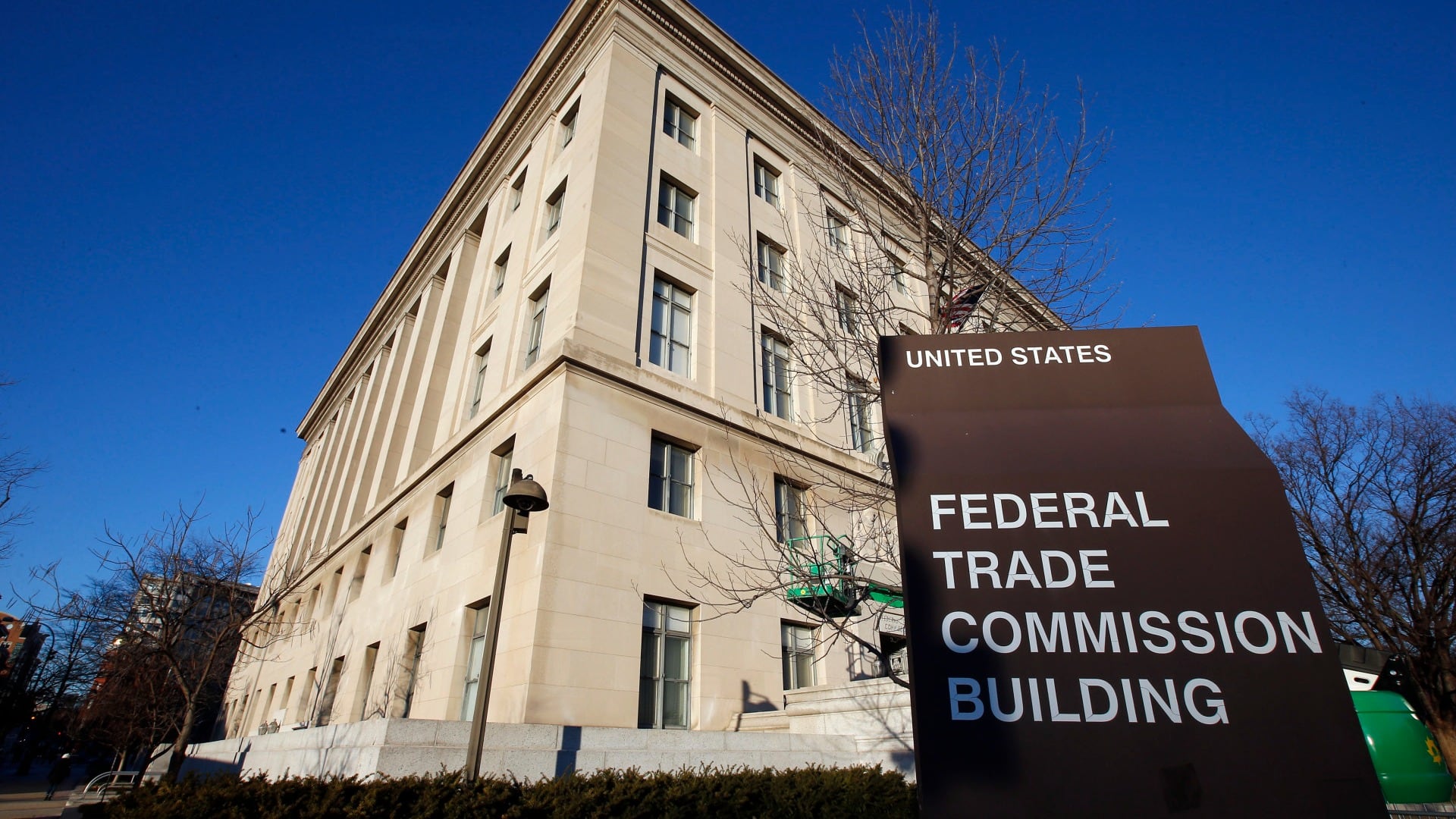
The Federal Trade Commission building in Washington is pictured on Jan. 28, 2015. The Federal Trade Commission is proposing a new rule that would prevent employers from imposing noncompete clauses on their workers. (AP Photo/Alex Brandon, File)
Parents whose kids bought virtual gear without their knowledge on the popular Fortnite video game could soon be able to get a refund.
U.S. regulators are starting to notify more than 37 million people by email that they may be eligible for compensation as part of a legal settlement with Fortnite's maker, Epic Games Inc.
The Federal Trade Commission announced late last year that Epic Games would pay $520 million in penalties and refunds to settle complaints revolving around children’s privacy and its payment methods that tricked players into making unintended purchases.
Part of that $520 million consists of $245 million in customer refunds, as part of a settlement finalized in March. It's meant to cover some of the costs of unwanted V-Bucks, the game's in-game currency, or virtual items such as outfits or cartoonish purple llama loot crates.
Consumers have until Jan. 17 to submit a claim.
Epic Games had also agreed to pay a $275 million fine for allegedly collecting personal information on Fortnite players under the age of 13 without informing their parents or getting their consent. It was the biggest penalty ever imposed for breaking an FTC rule.
According to the FTC, those eligible for refunds include Fortnite users charged in-game currency for items they didn’t want between January 2017 and September 2022; those whose child made charges to their credit card without their knowledge between January 2017 and November 2018; and those whose account was locked after they complained to their credit card company about wrongful charges.
Epic Games said after settling the case in December that it implemented additional safeguards to prevent unintended purchases. In an updated statement Tuesday, it referred people to the FTC’s page.
This story has been updated to clarify that Epic Games agreed to pay a fine for allegedly collecting personal information on Fortnite players under the age of 13 without informing their parents or getting their consent.
Wealthfront’s CFO Alan Iberman talks the $2.05B IPO and the major moment for robo banking as the company bets on AI, automation, and “self-driving money."
A rare magnum of Dom Pérignon Vintage 1961 champagne that was specially produced for the 1981 wedding of Prince Charles and Lady Diana has failed to sell during an auction. Danish auction house Bruun Rasmussen handled the bidding Thursday. The auction's house website lists the bottle as not sold. It was expected to fetch up to around $93,000. It is one of 12 bottles made to celebrate the royal wedding. Little was revealed about the seller. The auction house says the bids did not receive the desired minimum price.
The New York Times and President Donald Trump are fighting again. The news outlet said Wednesday it won't be deterred by Trump's “false and inflammatory language” from writing about the 79-year-old president's health. The Times has done a handful of stories on that topic recently, including an opinion column that said Trump is “starting to give President Joe Biden vibes.” In a Truth Social post, Trump said it might be treasonous for outlets like the Times to do “FAKE” reports about his health and "we should do something about it.” The Republican president already has a pending lawsuit against the newspaper for its past reports on his finances.
OpenAI has appointed Slack CEO Denise Dresser as its first chief of revenue. Dresser will oversee global revenue strategy and help businesses integrate AI into daily operations. OpenAI CEO Sam Altman recently emphasized improving ChatGPT, which now has over 800 million weekly users. Despite its success, OpenAI faces competition from companies like Google and concerns about profitability. The company earns money from premium ChatGPT subscriptions but hasn't ventured into advertising. Altman had recently announced delays in developing new products like AI agents and a personal assistant.
President Donald Trump says he will allow Nvidia to sell its H200 computer chip used in the development of artificial intelligence to “approved customers” in China. Trump said Monday on his social media site that he had informed China’s leader Xi Jinping and “President Xi responded positively!” There had been concerns about allowing advanced computer chips into China as it could help them to compete against the U.S. in building out AI capabilities. But there has also been a desire to develop the AI ecosystem with American companies such as chipmaker Nvidia.