There's a phenomenon on the internet called the "Streisand Effect," whereby a person's attempt to suppress information ends up widely publicizing that very same information. It was named after a 2003 incident when Barbra Streisand tried to keep images of her Malibu mansion off the web and inadvertently drew massive amounts of attention to it. And it's why Devin Nunes' mom was trending on Twitter Tuesday morning.
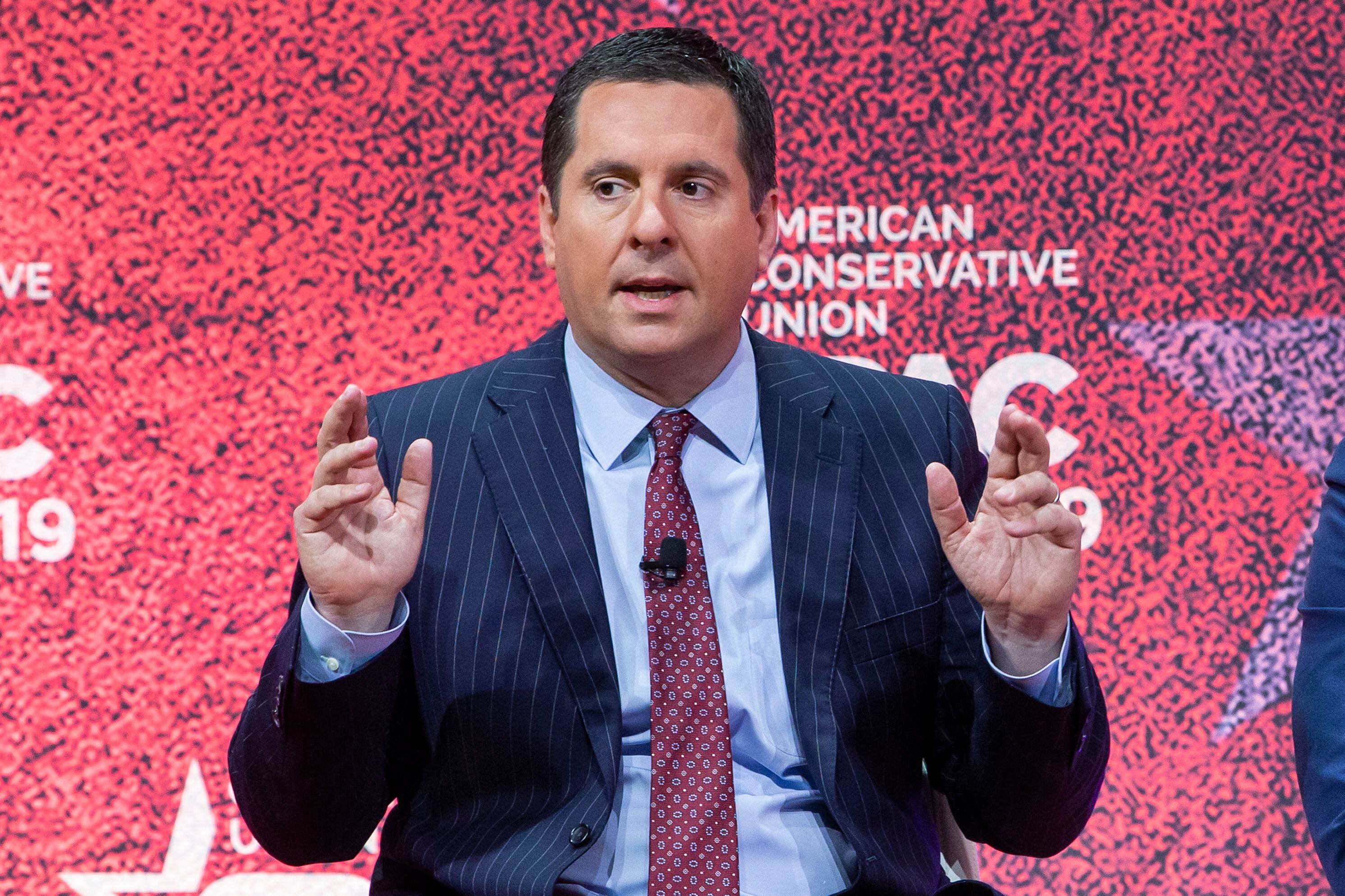
Nunes, the Republican congressman from California, said he was filing a lawsuit against Twitter and three specific Twitter users, seeking $250 million in damages. Nunes argues that the users defamed him and that Twitter “knowingly acted as a vessel for opposition research" and allowed defamatory statements against prominent conservatives to spread.
Two of the users named in the suit, which has not been yet been filed but was obtained by some news outlets, go by the usernames "Devin Nunes' Mom" and "Devin Nunes Cow." The former account was suspended, while the latter has spent the last two years calling Nunes names like "udder-ly worthless" and a "treasonous cowpoke."
The cow had about 1,200 followers before the lawsuit made headlines. It now counts 89,000 followers as of midday Tuesday.
Speaking to Fox News Monday night, Nunes called those accounts part of an "orchestrated effort" to target him for his allegiance to President Trump and his investigation, as the former chair of the House Intelligence Committee, into Hillary Clinton's 2016 campaign. He called the suit "the first of many."
The lawsuit seeks to tie those obvious parody accounts to a larger issue that has become a grievance among some conservatives on Twitter, in which they claim that the social network actively censors their tweets through "shadow banning" their accounts to make them harder to find. Twitter has denied those allegations.
As a public official, Nunes' lawsuit would have to show "actual malice," the standard set by the landmark Supreme Court case NY Times v. Sullivan to prove libel against public figures. Hyperbole and satire are generally protected as free speech, and similar lawsuits have failed in the courts. The Sullivan decision recently generated headlines when conservative Justice Clarence Thomas publicly called for it to be reconsidered.
While Nunes' lawsuit may seem doomed legally, it did have the effect, unintended or not, of gaining him publicity, which has in the past burnished conservatives' reputations in the eyes of their boss.
Two years ago, Nunes seemed to have a different perspective on litigation: he was a co-sponsor of the "Discouraging Frivolous Lawsuits Act."
President Joe Biden announced Friday that along with the European Union and the Group of Seven countries, the U.S. will revoke “most favored nation” trade status for Russia over its invasion of Ukraine.
The consumer price index jumped 7.9 percent in February, marking a 40-year high for inflation in the U.S. This report comes less than a week ahead of the Fed's all important meeting. Kayla Bruun, Economic Analyst, Morning Consult, joined Cheddar's Opening Bell to discuss.
Markets opened lower amid hotter-than-expected inflation data, which surged to its highest level in nearly 40 years. Lisa Erickson, Senior Vice President and Co-Head, Public Markets Group, U.S. Bank joined Cheddar's Opening Bell to discuss the significance of this figure ahead of the Federal Reserve's FOMC meeting.
As the Russia-Ukraine war disrupts the global economy, sending markets on a roller coaster ride, gold remains hovering around $2,000 an ounce. Often seen as a safe haven in times of economic crisis, Jason Cozens, founder and CEO of gold-as-currency platform Glint Pay, joined Cheddar’s Opening Bell to discuss the latest gold rush, how the war is impacting prices, and how people can use Glint to trade in the precious metal. “You know the stock markets and cryptocurrencies are risky investments," he stated. "Whereas gold is just reliable money. It's no one else's liability if you own."
As Western sanctions weigh on Russia's economy, the country is at the risk of defaulting on its debt. Fitch ratings agency has downgraded Russia's debt for the second time in a week, warning a "sovereign default is imminent." Jesse Wheeler, Economic Analyst at Morning Consult, explains what that means, and how it could have ripple effects across the global economy.
Uber Lyft and Doordash are all set to spend $1 million dollars on a campaign and efforts to stop lawmakers from classifying their gig workers as employees. The campaign features TV and online ads highlighting Washington area workers who say they prefer the flexibility of being an independent contractor rather than following the model of a company employee. Professor at NYU. Stern School of Business and author of the sharing economy, Arun Sundararajan, joined Cheddar to discuss more.
President Biden is looking at unlikely partners to buy oil, after banning all Russian energy imports. Among them is Venezuela, a regime that has been sanctioned by the U.S. since 2019. Ariel Cohen of the Atlantic Council explains to Cheddar News why that might not be a bad choice.