WarnerMedia's new streaming service HBO Max is already leading the pack — in terms of price.
Though viewers will need to shell out more for the service than its competitors, the price might actually be a bargain. HBO customers already pay $14.99 a month. With HBO Max, people will pay the same amount but get more bespoke programming and 10,000 hours of previously released movies and television shows.
WarnerMedia held an investor day for its new streaming service on Tuesday, unveiling more details about the highly anticipated platform. HBO Max will be half focused on younger millennial programming, with the other half focused on entertainment for children and adults.
The service, slated to launch in May 2020, will be the home for exclusive shows based on top properties including the Game of Thrones prequel House of Targaryen and a Gossip Girl" sequel. It will also have a rebooted version of *The Boondocks and a musical series set in the Grease 1950s universe, as well as *Sesame Street" and spin-offs from the franchise.
WarnerMedia also has a goal of HBO Max reaching 50 million users by 2025. It already has a head start, given that HBO already has 37 million domestic subscribers and standalone HBO Now customers will get HBO Max for the same price.
While the service does cost three times the price of the upcoming Apple TV+, which is set to launch on November 1 at $4.99, HBO Max will come with a large library of shows and movies. Customers will also be able to find TV series including South Park, Friends, The Fresh Prince of Bel-Air, and The Big Bang Theory. DC movies including Joker will be available at launch, among other titles.
In order to run some of this content exclusively, WarnerMedia has pulled some of the high-profile content from competitors like Netflix and Hulu. That should give HBO Max a competitive boost, considering that many of these shows are proven hits and household names.
In addition, HBO Max gets benefits from the strong HBO brand. Many consumers equate HBO with quality and award-winning programming. WarnerMedia plans to double its annual spend on HBO content to $2 billion in 2020. It's still a fraction of the $15 billion Netflix is set to spend on shows and movies this year. Even with the smaller budget, HBO dominated at the Emmys this year, taking home 34 top honors. Netflix nabbed 27, while Amazon had 15.
Still, it's not all smooth sailing ahead for HBO Max. The company could potentially dilute the brand name if it expands to shows and movies that aren't up to the same standard loyal HBO audiences are used to.
It's also the late entrant to a marketplace that will already have Apple and Disney's new streaming platforms, as well as Netflix, Hulu, and the myriad of hyperspecific streaming services that cater to niche tastes. While the $15 price point isn't unreasonable, viewers may be checking their wallets by next May to see if they have enough left in the budget to add HBO Max.
Rent the Runway is making its trading debut on the NASDAQ. The fashion company has struggled since the onset of the pandemic, not having turned a profit since 2019. Crunchbase reporter Sophia Kunthara explains how Rent the Runway has had to make necessary changes to its business model in order to keep itself afloat.
As negotiations drag on in Washington, DC over President Biden's social spending bills, Senate Democrats have introduced a new idea to fund Biden's plans: taxing the unrealized capital gains held by billionaires. Barron's reporter Sabrina Escobar joins Cheddar News' Closing Bell, where she explains what's in the billionaire tax proposal, who it will impact, and why it's on the table.
GM exceeded earnings expectations, yet still felt the chip shortage squeeze. Baron's Senior Writer Al Root discussed GM's segue into the electric car car world despite its struggles.
Jay Jacobs, SVP and Head of Research & Strategy, at Global X ETFs, joins Cheddar News' Closing Bell, where he explains why the Dow and S&P fell from their recent records during Wednesday's session. Jacobs also broke down the numbers in Ford's Q3 earnings as the results rolled in.
Two recent studies by Conference Board, ESGauge, and Spencer Stuart find that the number of Black directors at S&P 500 companies is growing, but more needs to be done in order to see real gains in the boardroom. Jerusha Stewart, CEO of Take Your Seat joins Cheddar News to discuss what more needs to be done for a more inclusive workplace.
The freight industry has its newest unicorn. Flock Freight recently reached the $1 billion mark after recently raising $215 million dollars. It comes during a watershed moment for the global shipping and freight industry, with the pandemic and other issues leading to the ongoing supply chain crisis.
Flock Freight and its shared truckload service may be a solution. Flock Freight CEO Oren Zaslansky joined Cheddar News' Closing Bell to discuss.
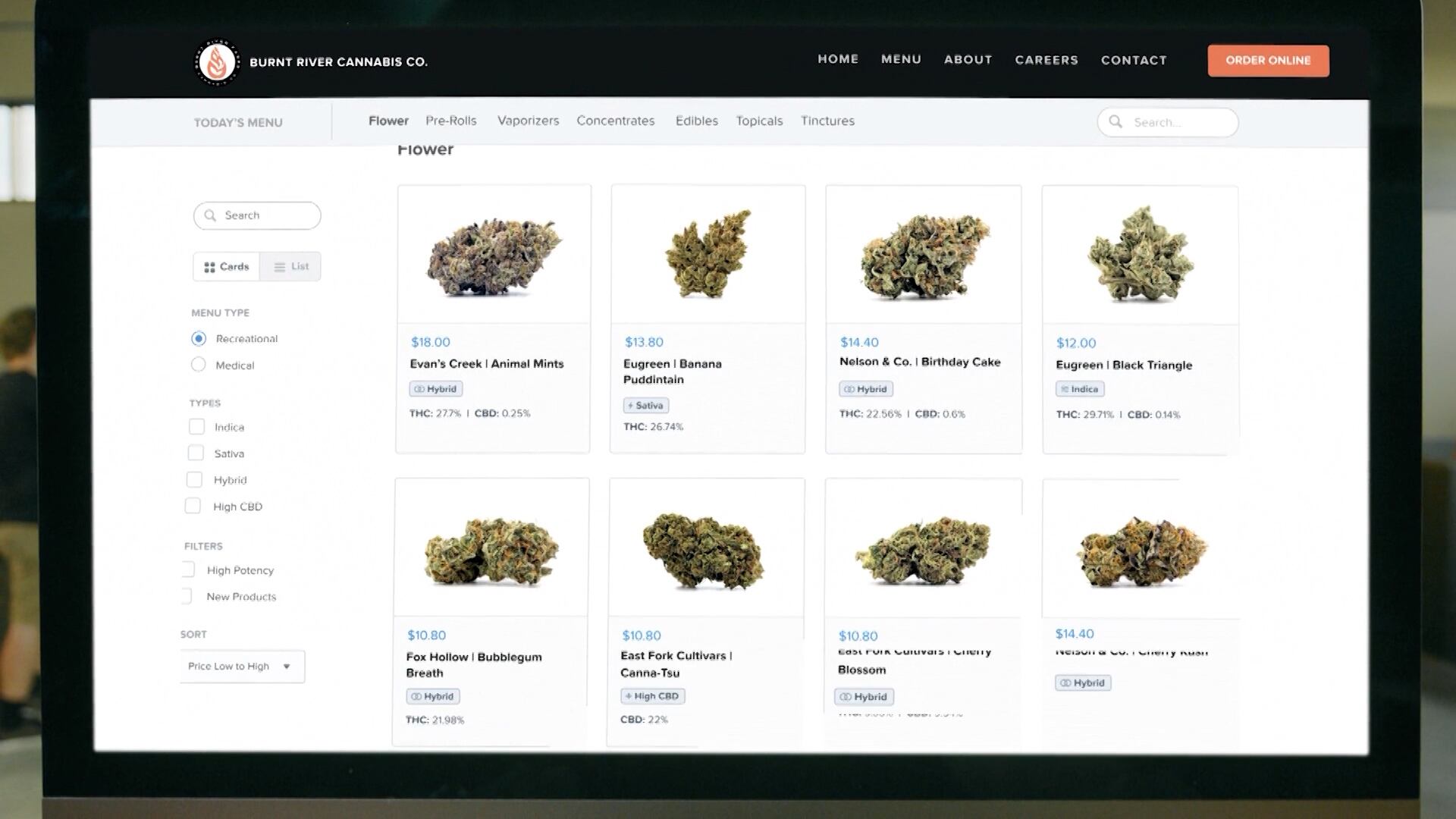
Cannabis tech company Dutchie raised $350 million in Series D Funding in October, and Ross Lipson, CEO and co-founder, joined Cheddar's "Closing Bell" to talk about how the funds will be used to grow the business. He noted that attracting the best talent, research and development, and expanding the brand's international reach are among the top priorities with this latest round of funding. Lipson also provided a breakdown of how his company "powers a dispensaries operations" through point of sales and e-commerce transactions.
Cloud data management company Informatica made its market debut on the New York Stock Exchange today under the ticker symbol INFA. Shares ending the day even after opening at $27.55. with shares priced at $29 apiece.
This is the second time the company has gone public after being founded back in 1993. Informatica then went private in a $5 billion deal in 2015. Now, the company is reentering public markets as a subscription business with a push to the cloud. Cheddar News welcomes CEO of Informatica, Amit Walia, to discuss.