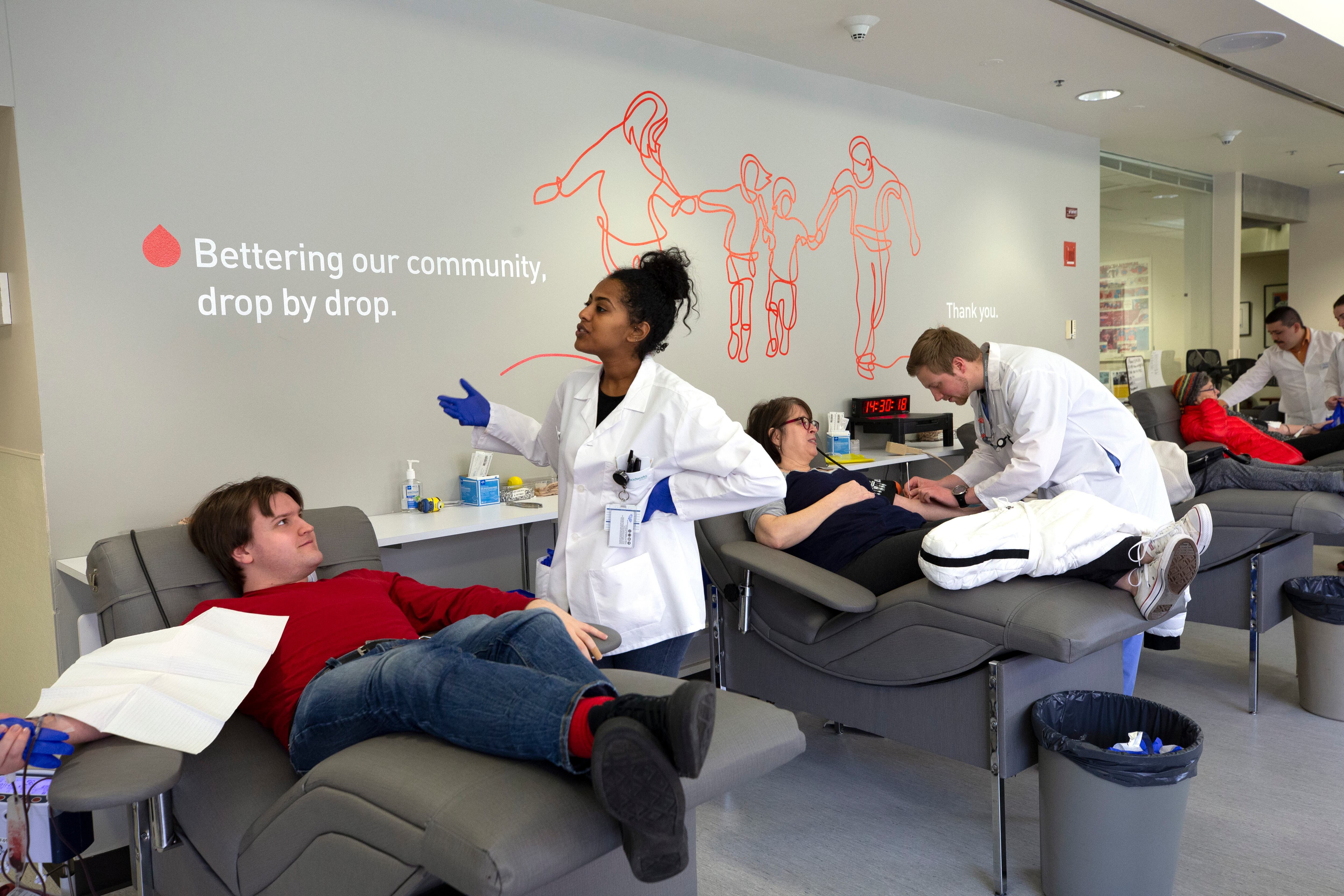
Alex Vance (L) speaks with medical assistant Lydia Rezene as he donates blood at Bloodworks Northwest on March 17, 2020 in Seattle, Washington. Schools provide 25 percent of local blood donations and their closing due to the coronavirus (COVID-19) outbreak has officials worried the region could see a shortage. (Photo by Karen Ducey/Getty Images)
Americans capable, willing, and able to donate blood are encouraged to do so during an era of social distancing.
"Social distancing doesn't have to mean social disengagement," U.S. Surgeon General Dr. Jerome Adams said during the Coronavirus Task Force briefing on Thursday, warning of blood shortages.
American Red Cross Senior Vice President Paul Sullivan told Cheddar he's concerned about an already low blood supply in the U.S., compounded by a recent wave of coronavirus-inspired blood drive cancellations, numbering more than 5,000 drives resulting in some 170,000 fewer donations.
Sullivan said he still plans to continue donating.
However, the Red Cross is changing its normal precautions in response to coronavirus concerns. Sullivan told Cheddar those new precautions include temperature checks before entering the donation space and changing gloves between each collection.
Surgeon General Adams also explained beds are six feet apart and staff members are disinfecting surfaces more often.
"So give blood today. You'll feel good about it, and you'll be helping your country and community during this crisis. And you might even save a life," he said.
Red blood cells only have a shelf life of 42 days and platelets just 5 days, so blood donations must continue in order to continue vital medical procedures to keep people alive.
"As this progresses, the way it will challenge our healthcare system … it will be just that — it will be very challenging," Sullivan warned. "No one gets a transfusion if they don't need it. We don't want to put the medical community in a situation where they have to pick who gets blood and who doesn't."
On this episode of Cheddar Innovates: Kemtai Co-Founder breaks down how computer vision and artificial intelligence can improve your workout form; Wove Co-Founder explains how it's creating a one-of-a-kind engagement ring design process; A look at Curiosity Stream's 'History By The Numbers.'
Andrew Wolgemuth, Co-Founder at Wove, joins Cheddar Innovates to discuss Wove's unique engagement ring design process, which includes 3D printing replica rings, and the latest trends in the engagement ring industry.
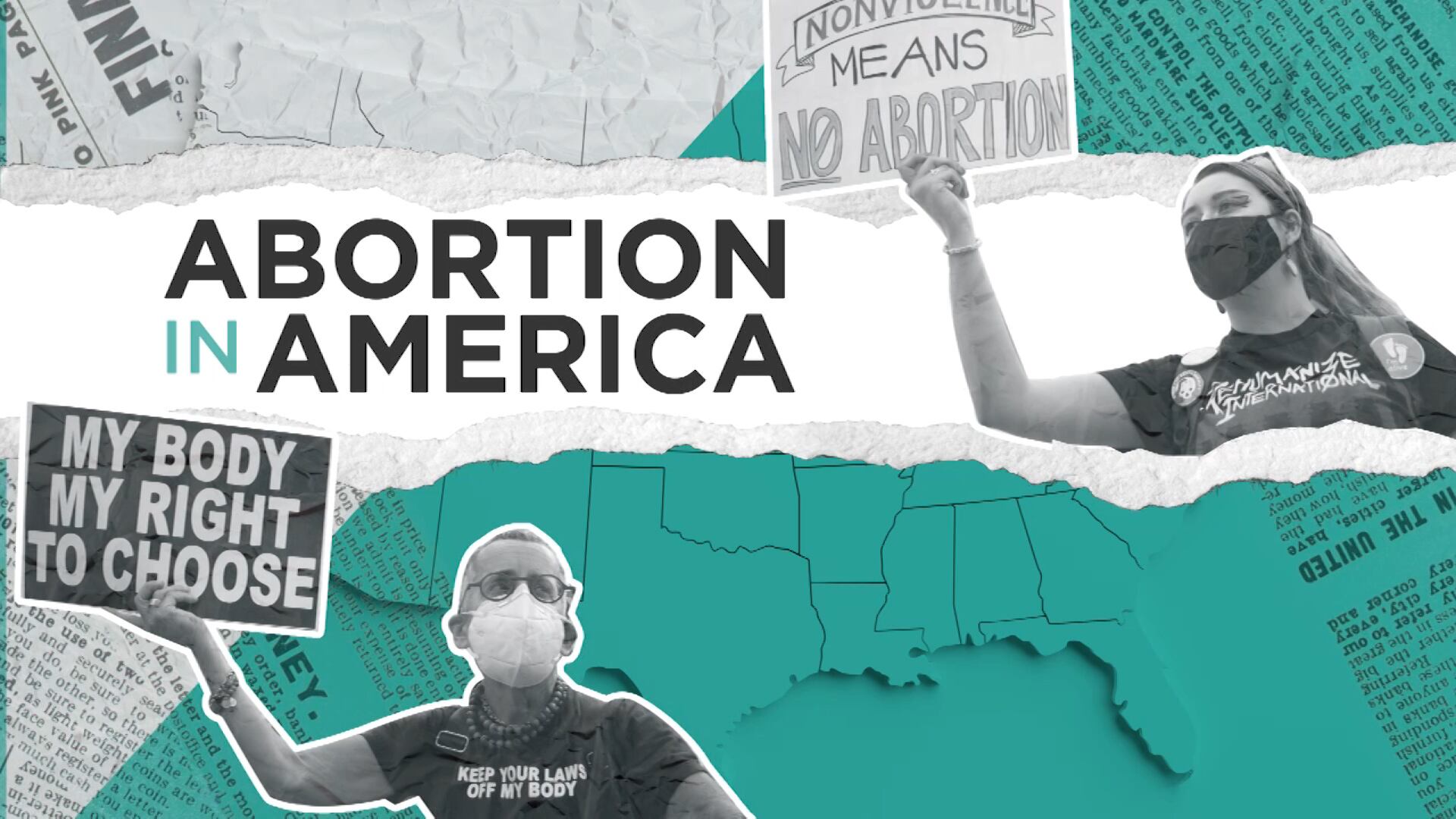
Cheddar News explores perhaps the most divisive topic in American politics: abortion. The Supreme Court may change access in America with not just one but two major cases on its current docket so we traveled across the country to get viewpoints from both sides. Check out what we found as Megan Pratz hosts this full episode of 'Abortion in America.'
Jill and Carlo discuss what appears to be the beginning of the end of Roe v. Wade, another victim dies following the school shooting in Michigan, Omicron in the U.S., Trump's Covid chronology and more.
Wave Neuroscience announced a new collaboration with Wounded Warrior Project (WWP) to provide Braincare services to Active-Duty Service Members and Veterans. Operation Synchrony is a one-month, outpatient program focused on restoring and optimizing neuronal function utilizing individualized neuromodulation. Dr. Erik Won, president & chief medical officer of Wave Neuroscience and Alex Balbir, director of independence services at Wounded Warrior Project joins Cheddar News to discuss.
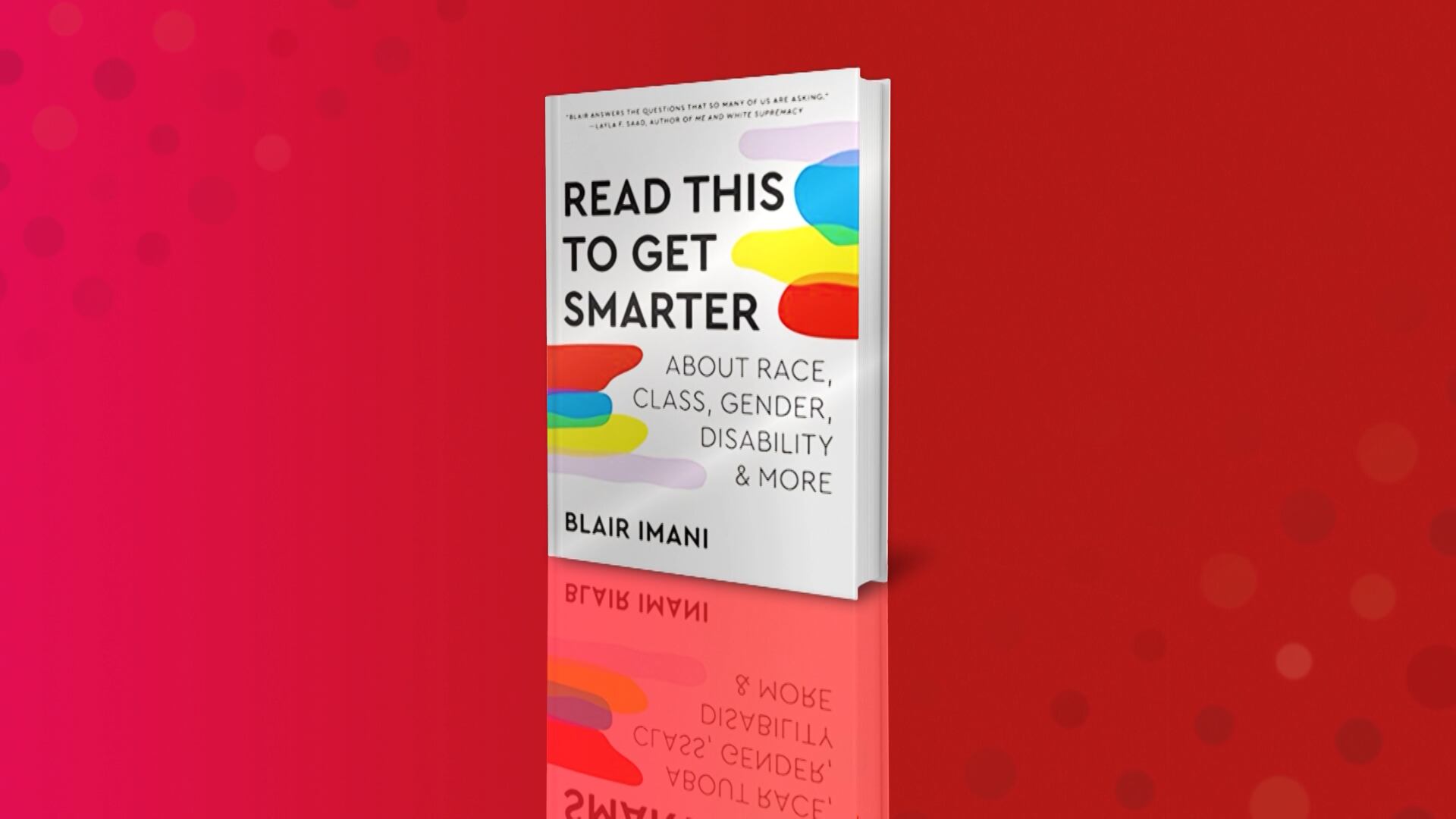
A new book is looking to help people talk about race by educating them on the appropriate way to do it. 'Read This to Get Smarter: About Race, Class, Gender, Disability and More' is a non-judgmental guide structured in a way for readers who are just starting their journey or those already versed in social justice to follow. Blair Imani, author of 'Read This to Get Smarter joins Cheddar News to discuss the book.
Lauren Brody, author and founder of The Fifth Trimester joins Cheddar News to discuss the state of working mothers in America and how many women are feeling the pressure this pandemic has caused.
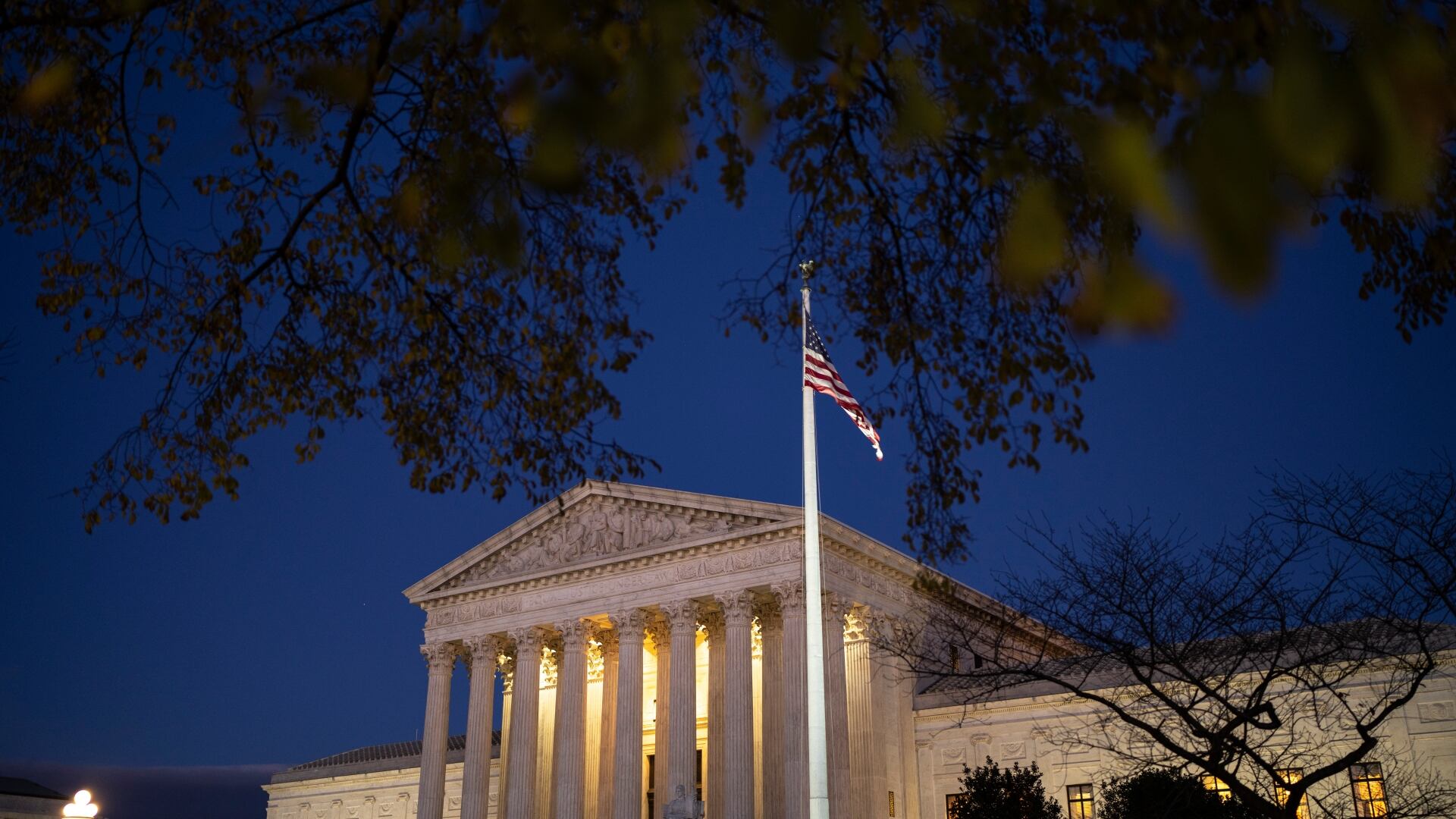
The nine justices heard arguments Wednesday, around a Mississippi abortion law that bans the procedure after 15 weeks and appeared to lean toward upholding the law, while leaving uncertainty about the landmark precedent, Roe v. Wade. Kristin Ford, vice president of communications and research at NARAL Pro-Choice America joins Cheddar News to discuss.