By Jill Colvin and Steve Peoples
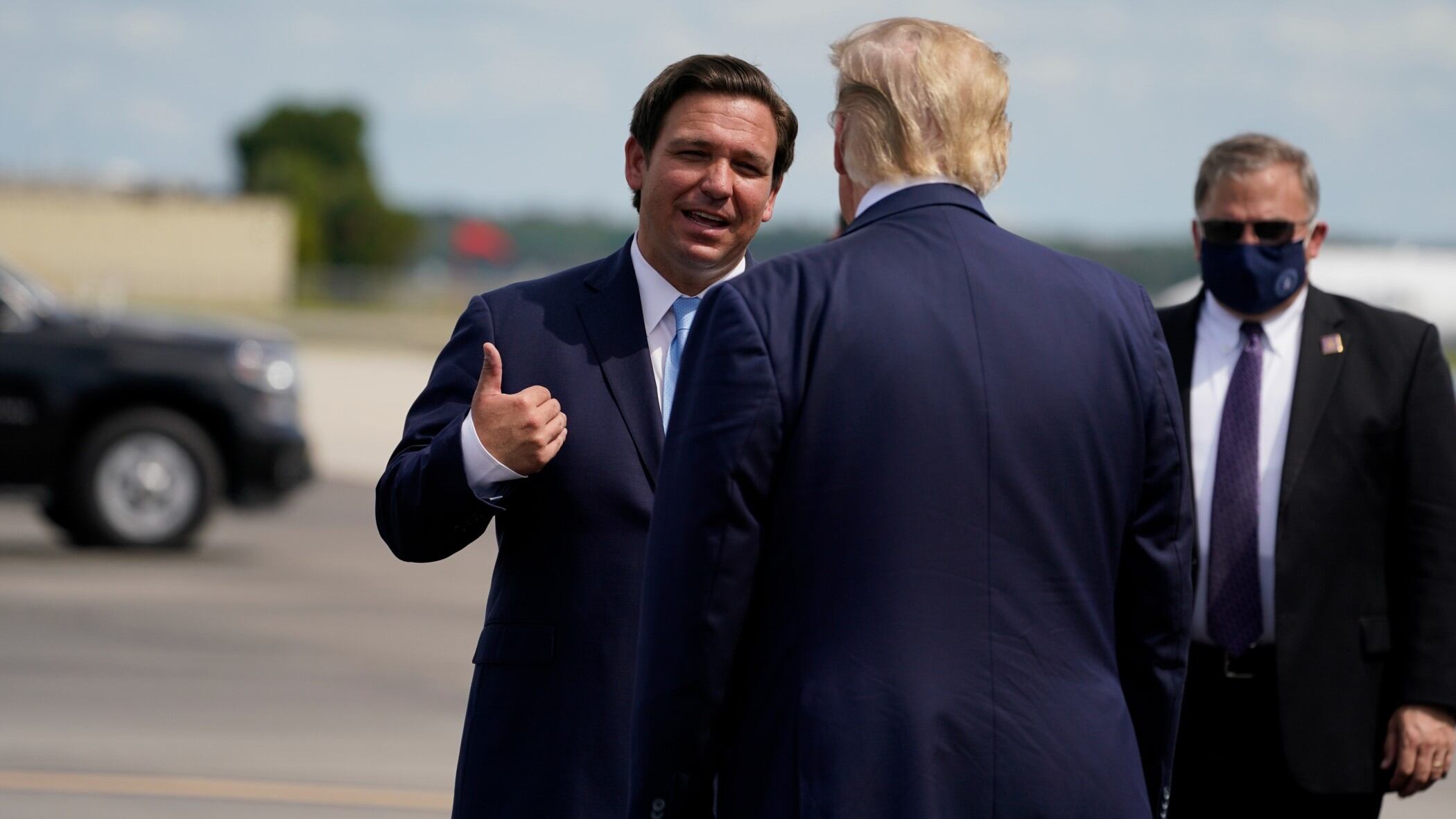
Ron DeSantis ’ entry into the 2024 White House race against former President Donald Trump sets up a clash of the Republican Party’s two leading figures as the Florida governor attempts to topple a man who has dominated the GOP for the last seven years.
Trump, who has established himself as the clear front-runner for the Republican nomination, has spent the months since he launched his own campaign working to hobble the once-ascendant DeSantis, whom he and his team have long viewed as his most serious challenger. DeSantis so far has tried to remain above the fray, ignoring Trump's escalating attacks on everything from his record to his personality.
“The campaign is about to get a lot more intense. He can't just lay low in Tallahassee signing bills," said GOP strategist Alex Conant of DeSantis' strategy. “Now he has to hit the campaign trail, take media questions and punch back at his opponents.”
But DeSantis, during a series of events Wednesday night launching his campaign, took only veiled swipes at his chief rival without mentioning him by name. It is a strategy reminiscent of 2016, when Trump’s army of Republican rivals failed to go after the candidate directly for fear of alienating his supporters and assumed — wrongly — that he would flame out on his own.
“There is no substitute for victory. We must end the culture of losing that has infected the Republican Party in recent years," DeSantis said on a Twitter Spaces debut that was plagued by technical difficulties. "We must look forward, not backwards,” he added.
In an interview later with Fox News, he said he believed all candidates should participate in the planned GOP primary debates, which Trump has threatened to boycott. “Nobody’s entitled to anything in this world," he said.
The rollout made clear that, at least for the time being, DeSantis intends to leave the dirty work of attacking Trump to his allies, who see openings that they plan to exploit, particularly on policy.
Now that he’s officially in the race, DeSantis' well-funded super PAC is poised to intensify its attacks against the former president. His team plans to focus on policy differences between the two Republicans, making the case that Trump has “lurched left” on some issues — most notably, abortion.
“We’re going to amplify him and his voice, and when necessary, contrast with the former president. But right now that contrast is really one is lurching left and one is fighting,” said David Polyansky, senior adviser to the pro-DeSantis super PAC Never Back Down.
DeSantis’ team believes Trump is particularly vulnerable with Republican primary voters on abortion. Although the former president appointed the Supreme Court justices who overturned Roe v. Wade, he has drawn the ire of anti-abortion activists by refusing to say whether he supports a federal ban on the procedure.
While Trump has openly suggested that Republican candidates’ hard-line stances led to GOP losses in last fall’s midterms, DeSantis has leaned in even further on the issue, signing a six-week abortion ban in Florida — before most women know they are pregnant.
DeSantis and his backers must tread carefully: In order to win the nomination, he will need to assemble a coalition that includes both Trump critics and supporters. DeSantis risks alienating a large swath of the party if he goes after Trump too forcefully.
Acknowledging the challenge, DeSantis' super PAC plans to steer clear of criticism directly related to Trump’s many legal entanglements. The Florida governor himself was stung earlier in the spring when he took a swipe at Trump, instead of defending him, following his New York indictment.
Trump, meanwhile, has spent months relentlessly attacking DeSantis, nicknaming him “Ron DeSanctimonious” and subjecting him to a daily onslaught of criticism on his Truth Social app and in ads.
Trump has repeatedly called out the Florida governor's votes to cut Social Security and Medicare when he served in Congress, arguing his record will make him unelectable in a general election. He has tried to undermine DeSantis' success as governor of Florida, claiming the state was “doing GREAT long before Ron DeSanctus got there." And he has pointed to the crime rate in some of the state's large cities and criticized DeSantis' handling of the COVID-19 pandemic — the issue that made DeSantis a conservative star.
Beyond policy, Trump has attacked DeSantis' character — accusing him of being “disloyal” after Trump helped DeSantis win his 2018 gubernatorial primary — and saying he "desperately needs a personality transplant and, to the best of my knowledge, they are not medically available yet.”
Trump has also veered into deeply personal attacks, suggesting that DeSantis "might face allegations from “a woman, even classmates that are ‘underage’ (or possibly a man!)”
Trump's allied super PAC, Make America Great Again Inc., has already spent millions on anti-DeSantis ads, and the group has no plans to change its strategy, given the fact that it has been treating DeSantis like a candidate for months already.
"Ron DeSantis’ failed campaign launch is just another example that he’s not ready for this critical moment," said spokesperson Alex Pfeiffer. “Voters don’t yet know Ron DeSantis, but they’ll find out he has a record of targeting Social Security, trying to raise taxes, and voting against border wall funding.”
So far the effort appears to have paid off. Polls suggest Trump's support has only grown since earlier this year, while the appetite for DeSantis as an alternative has faded.
DeSantis’ team largely dismisses Trump's early polling advantage given that the Florida governor only just became an official candidate. DeSantis said Wednesday he was prepared for the onslaught he faces.
“You can call me whatever you want. Just call me a winner,” DeSantis said on Fox News. “There will be slings and arrows. I’m a big boy. I can take it.”
Republican donor Dan Eberhart, who donated millions to Trump but is now supporting DeSantis, argued that Trump's continued attacks make clear the former president still sees DeSantis as a threat.
“Trump’s fixation with DeSantis is proof that the Florida governor is a serious contender,” he wrote in an email. "The former president spent more money attacking Gov. DeSantis before he was even a candidate than Trump did helping Republicans last cycle. Trump’s biggest fear just came true."
Some voters, meanwhile, continue to have trouble reconciling the feud between two men who were once allies.
Wina Fernandez, who lives in Miami, said she'd prefer DeSantis and Trump run together on the same ticket, with DeSantis serving four years as vice president and then running for president in 2028.
“I would just love them as president and vice president. That would be an amazing thing. I would go out to the street and dance," she said.
But if she had to choose, she said, she would choose Trump.
“There’s a lot of drama involving Trump. However, he started this movement. He started it all," she said. “DeSantis is young, and he still has time to work on things.”
Associated Press writers Jonathan J. Cooper in Phoenix and Adriana Gomez Licon in Miami contributed to this report.