Visitors walk along Main Street at The Magic Kingdom as Walt Disney World reopens following Hurricane Ian on September 30, 2022, in Orlando, Florida. (Photo by BRYAN R. SMITH/AFP via Getty Images)
By Mike Schneider
New supervisors leading Disney World’s revamped governing body said Wednesday that they had good intentions about collaborating with the company after they were appointed by Florida Gov. Ron DeSantis but felt betrayed when Disney signed agreements with their predecessors stripping them of most of their authority.
“Our board wanted to work with Disney, but Disney decided they didn’t want to work with us. It was Disney’s way or the highway,” Martin Garcia, chair of the Central Florida Tourism Oversight District, said at the start of a board meeting.
In response, he had a warning about what the DeSantis-appointed supervisors who now oversee Disney World’s vast Florida holdings might try to achieve in an evolving showdown between the governor and Disney: “Nothing is off the table at this point.”
Among the changes board members made Wednesday were eliminating a planning agency and making the board responsible for future planning. They also said that in the future, they might consider acquiring more land under eminent domain, monetizing the district’s assets, banning COVID-19 vaccine and mask mandates, asserting the board's “superior authority” over the district and exploring the construction of affordable housing for Disney workers on Disney World property.
Disney World required masks and had social distancing protocols in place in 2020 when it reopened after closing for several months in an effort to stop COVID-19's spread. DeSantis has been a fierce opponent of virus mask and vaccine mandates and has petitioned the state Supreme Court to convene a grand jury to investigate “any and all wrongdoing” with respect to the COVID-19 vaccines.
Wednesday's meeting continued a battle pitting prospective presidential candidate DeSantis and Republican state lawmakers against Disney that started last year when the entertainment giant publicly opposed what critics call the state’s “Don’t Say Gay” legislation barring school instruction on sexual orientation and gender identity in kindergarten through third grade. In retaliation, Florida lawmakers passed, and DeSantis signed, legislation reorganizing Disney World’s company-controlled government, allowing the governor to appoint the five members of the Board of Supervisors. Disney previously had controlled the board for its 55-year existence.
Last month, the new DeSantis-appointees claimed their Disney-controlled predecessors pulled a fast one by stripping the new board of most powers and giving Disney control over design and construction at the theme park resort before the new members could take their seats.
At Wednesday's meeting, Garcia said the new supervisors last week discovered another “11th-hour agreement” between Disney and the previous supervisors that allows the company to set its own utility rates.
DeSantis and state lawmakers ratcheted up the pressure on Disney on Monday by proposing upcoming legislation that would require state inspections of Disney rides, which would be an unprecedented move since Florida's largest theme park operators have been able to conduct their own inspections. The lawmakers also plan to consider legislation that would revoke the agreements between the previous board supervisors and Disney.
Republican state Sen. Blaise Ingoglia said he had a message for Disney: “You are not going to win this fight. This governor is.”
Disney has said all agreements made with the previous board were legal and approved in a public forum.
Disney CEO Bob Iger earlier this month said that any actions against the company that threaten jobs or expansion at its Florida resort was not only “anti-business" but "anti-Florida.”
The new supervisors have hired a team of high-powered lawyers that includes a former Florida Supreme Court justice to possibly challenge the agreements between Disney and the old board. At Wednesday's meeting, the attorneys outlined their arguments for why the deals were illegal, claiming they weren't properly noticed and were self-dealing. They also said a district can't confer governmental powers to a private entity.
“Disney engaged in a caper worthy of Scrooge McDuck,” said David Thompson, one of the attorneys.
Mona Zhang, states cannabis policy reporter at POLITICO Pro joins Cheddar News to discuss major factors that caused Canada's retail marijuana sales to drop last year.
The January 6 committee has asked Ivanka Trump to give voluntary testimony, saying there's evidence she was in "direct contact" with her father on the day of the capitol insurrection. I's unclear whether she will comply with the invitation, but it marks the first time the House committee has sought testimony from a member of the former president's family. Bradley Moss, national security attorney, joined Cheddar News to discuss what the committee hopes to learn from Ivanka and what the Supreme Court's decision on Trump's Jan. 6 materials means for the investigation.
Terrell Jermaine Starr, senior fellow with the Atlantic Council and host of the Black Diplomats podcast joins Cheddar News to discuss Russia's attempt to invade Ukraine.
With an increasing number of teachers and staff calling out sick by the day, the state of Oklahoma is turning to an unusual solution. Republican Governor Kevin Stitt has issued an executive order that permits state employees to work as substitute teachers. Shaily Baranwal, founder and CEO of Elevate K-12, joins Cheddar News to discuss.
On Thursday, Secretary of State Antony Blinken addressed the stance of the U.S. and its allies should Russia make any forays into Ukraine, a seeming response to President Biden's remarks that should Putin engage in something short of a full invasion, there might be some indecision among allied nations regarding what to do. Ariel Cohen, a senior fellow at the think tank Atlantic Council, joined Cheddar to discuss the difficulty faced by Blinken wrangling unity as tensions run high in the region. "There'll be a smaller incursion, and the president implied, there'll be a weaker response because our European allies have created this horrible situation where they are dependent on Moscow for their gas supply," Cohen explained.
During a nearly two-hour press conference on Wednesday, President Biden spoke on his accomplishments and challenges from the first year of his presidency, and what his administration hopes to accomplish in the coming year. However, his approval ratings are underwater as COVID remains a big concern for voters — as does inflation, noted Tom Bevan, co-founder and president of polling aggregator RealClearPolitics. "The public thinks [inflation] is priority number one, and the administration is concerned about it, they talk about it, but they're not spending enough time on it as far as the public is concerned," said Bevan.
The drama surrounding tennis star Novak Djokovic continues after he was deported from Australia over the weekend due to the nation's COVID-19 vaccine requirements. Djokovic was forced to leave the country on the eve of what was to be his first match in defense of his Australian Open title after three judges ruled in favor of his removal and revealed their reasoning for doing so. Adding to his woes, a law recently passed in France is putting his chances of defending his French Open title in jeopardy. The director of Marist's Center for Sports Communication, Jane McManus, joined Cheddar to discuss the ongoing fallout.
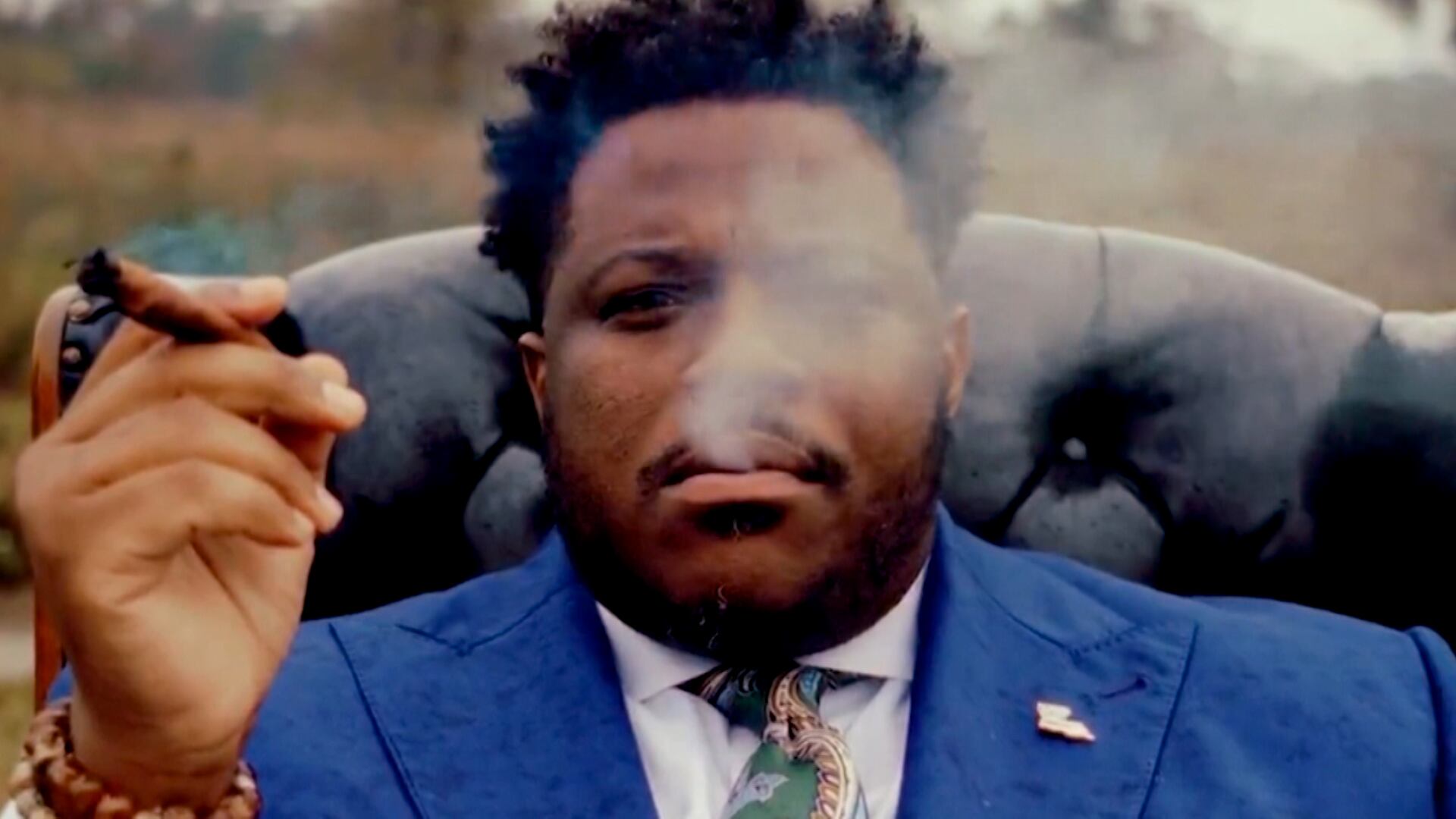
As the midterm elections get ever closer, candidates have been getting creative with their campaigns to stick out and to connect with voters. Gary Chambers, a Democratic candidate for the U.S. Senate from Louisiana, has definitely attracted attention with an advertisement featuring him smoking a blunt, making a point about the inequity of anti-cannabis laws. "We wanted to bring the seriousness of the moment," he said of the ad. "But we also wanted to make sure that people understand that there are 19 states that are legal right now but Black people and brown people are being over-incarcerated in mostly Southern and Midwestern states in America for cannabis possession."
If some members of Congress have their way, there might finally be a 'TLDR' on sites' terms of service, introduced by the terms-of-service labeling, design, and readability act – or TLDR for short. With this act, users will actually understand what they're agreeing to or the many ways in which their data is being used before pressing 'accept.' J.D. sat down with co-sponsor of the bill and Senator Bill Cassidy, to discuss.