By Farnoush Amiri
Democrats are deeply conflicted about the food aid requirements that President Joe Biden negotiated as part of the debt ceiling deal, fearing damage has been done to safety net programs that will be difficult to unravel in the years ahead as Republicans demand further cuts.
Bargaining over toughening work requirements for the Supplemental Nutrition Assistance Program, commonly known as food stamps, became the focal point for the White House and House Speaker Kevin McCarthy, R-Calif., up until the end. Negotiators from both sides made clear, publicly and privately, that it was the biggest area of disagreement and almost led to the talks breaking down several times.
In the end, Democrats warily accepted new requirements for some able-bodied recipients in exchange for food aid. Republicans agreed to drop some work requirements for veterans, homeless people and others.
The result of the tense back-and-forth was a deal that played to both sides, but one that many Democrats agonized over as they weighed whether to vote for the package that Biden signed Saturday. Many struggled to square cutting access to food for marginalized communities with an outcome that allowed the United States to avoid defaulting on its debt.
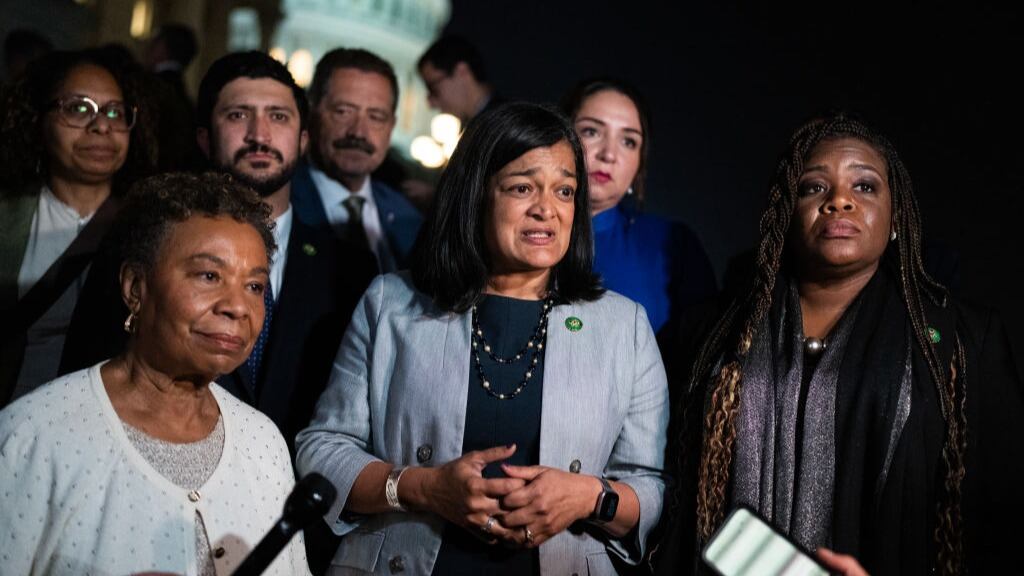
“In order for this country to not default on its bills, we then turned and made our most vulnerable communities default," said Rep. Cori Bush, D-Mo. Years before she came to Congress, Bush lived in a car with her then-husband and two young children after the family had been evicted from their rental home.
The federal aid program provides monthly funds — sometimes as little as $6 a day — to allow low-income individuals and families to buy groceries. It is the largest program in the country focused on fighting hunger, with 41 million people using benefits last year alone to purchase food, according to the Department of Agriculture’s Food and Nutrition Service, which administers the program.
By 2025, new requirements will apply to able-bodied adults from age 49 to 54 without dependents — an increase of five years. Those individuals will be required to work or attend training programs for at least 80 hours a month if they want to receive more than three months of SNAP benefits within a three-year period.
Republicans have tried for decades to expand work requirements for these government assistance programs, arguing they result in more people returning to the workforce, despite several studies that have found they have little impact on employment.
“We’re going to return these programs to being a life vest, not a lifestyle. A hand up, not a handout and that has always been the American way,” Rep. Mike Johnson of Louisiana, the vice chair of the House Republican conference, told reporters.
The White House countered that Republican proposition by getting GOP lawmakers to waive the work requirements for new groups — veterans, individuals who are homeless or facing housing instability and youth aging out of foster care — to balance out the number of people who would now be facing these new restrictions.
The end result could be more people receiving SNAP benefits overall. An estimate from the nonpartisan Congressional Budget Office released Tuesday said that the changes in the debt ceiling package would add almost 80,000 people to the rolls of SNAP in an average month.
But the trade-off of seemingly helping some groups while hurting others still left the left flank of the Democratic Party — lawmakers who have supported Biden and helped pass his agenda for the first two years of his term — frustrated by the outcome. That was especially the case as advocates, including the nonpartisan National Alliance to End Homelessness, warned of a disturbing trend across the country of an increase in the number of older adults who are becoming homeless, some for the first time.
“What we should not be playing is oppression Olympics,” Bush said. “Like which one gets to hurt today? Which one gets to get to that finish line to hurt today? That’s not where we should be as a society.”
Bush, a member of the Congressional Progressive Caucus, voted “no” on the debt limit deal on Wednesday night after she spent days hearing from advocate groups and constituents on the issue.
“I think it’s important that (Biden) understands that it’s good for us to have a strong, no vote because this isn’t a deal that he would have made if we hadn’t been held hostage,” Democratic Rep. Pramila Jayapal of Washington state, chair of the Progressive Caucus, told The Associated Press this past week.
They weren't alone. Several dozen Democrats in the House and a handful in the Senate voted against the compromise, arguing that the bill allowed for Republican hostage-taking and could open the door for future cuts to these government programs in the next several months.
“I did not agree to these SNAP restrictions, and I won’t give Republicans an opening to try and take food from more food insecure Americans in Farm Bill negotiations later this year," Sen. John Fetterman, D-Pa., said in a statement.
The White House and Democrats who ended up supporting the negotiated deal said they believe the issue of work requirements and risk posed by Republicans have been put to bed.
"The most important thing to me is the fact that this closes the door on that debate," said Democratic Sen. Debbie Stabenow of Michigan, who leads the Senate Agriculture, Nutrition and Forestry Committee and has been a longtime champion and defender of the SNAP program. “We are not going to bring it up again in the farm bill. This is not something that’s going to be renegotiated. It’s done.”
But advocates warn that could change because the debt limit bill was the most substantial change of the work rules for food aid and other government assistance programs since they were put into place in the 1996 welfare overhaul.
Some of the most conservative Republicans in Congress — part of the right flank whom McCarthy had to pacify to become speaker — have criticized the plan for being “weak” and are itching to go even further to clamp down on these programs.
“In this bill, we have temporary work requirements, but we’ve added permanent new exceptions,” said Texas Rep. Keith Self, a member of the ultra-conservative House Freedom Caucus that overwhelmingly rejected the bill. “That, ladies and gentlemen, is a sleight of hand.”
Associated Press writer Mary Clare Jalonick contributed to this report.