As 2020 presidential candidates prepare to take the stage at the fifth Democratic debate on Wednesday, the lower tier candidates continue their fight for a spot on the national stage. With a growing field of candidates, the ability to stand out in an already crowded field dwindles.
Former Congressman John Delaney was the first to throw his hat in the race in July of 2017, but that hasn't translated into a successful bid for the Democratic nomination.
Still, Delaney sees his moderate approach to universal healthcare as a way to stand out in a progressive field. "I'm more in the Warren and Sanders camp on the goal, which is to give everyone health care as a basic human right. I just have a very different way of implementing it," Delaney said.
Senator Michael Bennet's goal is to appeal to those in purple states by tackling issues such as healthcare with a more pragmatic approach.
"I don't want to fight a losing battle on Medicare for all over the next 10 years because it will strip from us the opportunity to deliver a better economic chance for most Americans," Bennet said.
The Colorado senator's ideals have not translated in polls, but Bennet has found a silver lining.
"My polling is never good except in one respect, which is that people that I expected to be 20 points ahead of me are like one point ahead of me or two points ahead of me," Bennet said.
Former Congressman Joe Sestak sees persistence as the key to winning over Iowa caucus-goers.
"It's tough to keep going at times, but that's what's most admired. I mean, in any kind of challenge," Sestak said.
Sestak has spent most of his time campaigning in early states, walking through New Hampshire and buying ads in Iowa.
Wednesday's debate marks the first time former HUD secretary Julián Castro will not be on the stage. Castro's campaign has consistently focused on marginalized communities in the U.S.
"I have been speaking up for the most vulnerable people in our country, whether it's people sleeping on the streets of Las Vegas or living in a trailer park in Iowa or in a D.C. jail serving time," Castro said.
With less than 100 days to go before the Iowa caucus and increasing requirements to qualify for the remaining primary debates, 2020 hopefuls remain optimistic that their tactics will prevail.
Updated November 20 to reflect that Bennet is not the only senator left in the race.
Carlo and Baker wrap up the week talking about the Biden economic boom that no one seems to notice, a verdict in the Jussie Smollett case, the first Starbucks union in America and the pleasures of the "dude nod."
A new bill in Congress shows just how bipartisan cannabis really is. Rep. David Joyce, a Republican from Ohio, teamed up with progressive Rep. Alexandria Ocasio-Cortez on a cannabis expungement bill. Cheddar cannabis reporter Chloe Aiello spoke with the congressman about the legislation.
The Congressional Progressive Caucus have lined up to support the Thirty-Two Hour Workweek Act introduced by Rep. Mark Takano (D-Calif. 41st District). The representative joined Cheddar to discuss how instituting a four-day workweek in the United States can be beneficial for both employees with the need of a work-life balance and employers looking both to retain talent amid a labor shortage and improve efficiency in their workforces. "We live in a different time than 90 years ago when we established a 40-hour workweek," he said. "We've had a lot of technological changes, the American worker is exponentially more productive than previous generations, so it's time to reexamine Americans and the way in which they relate to work."
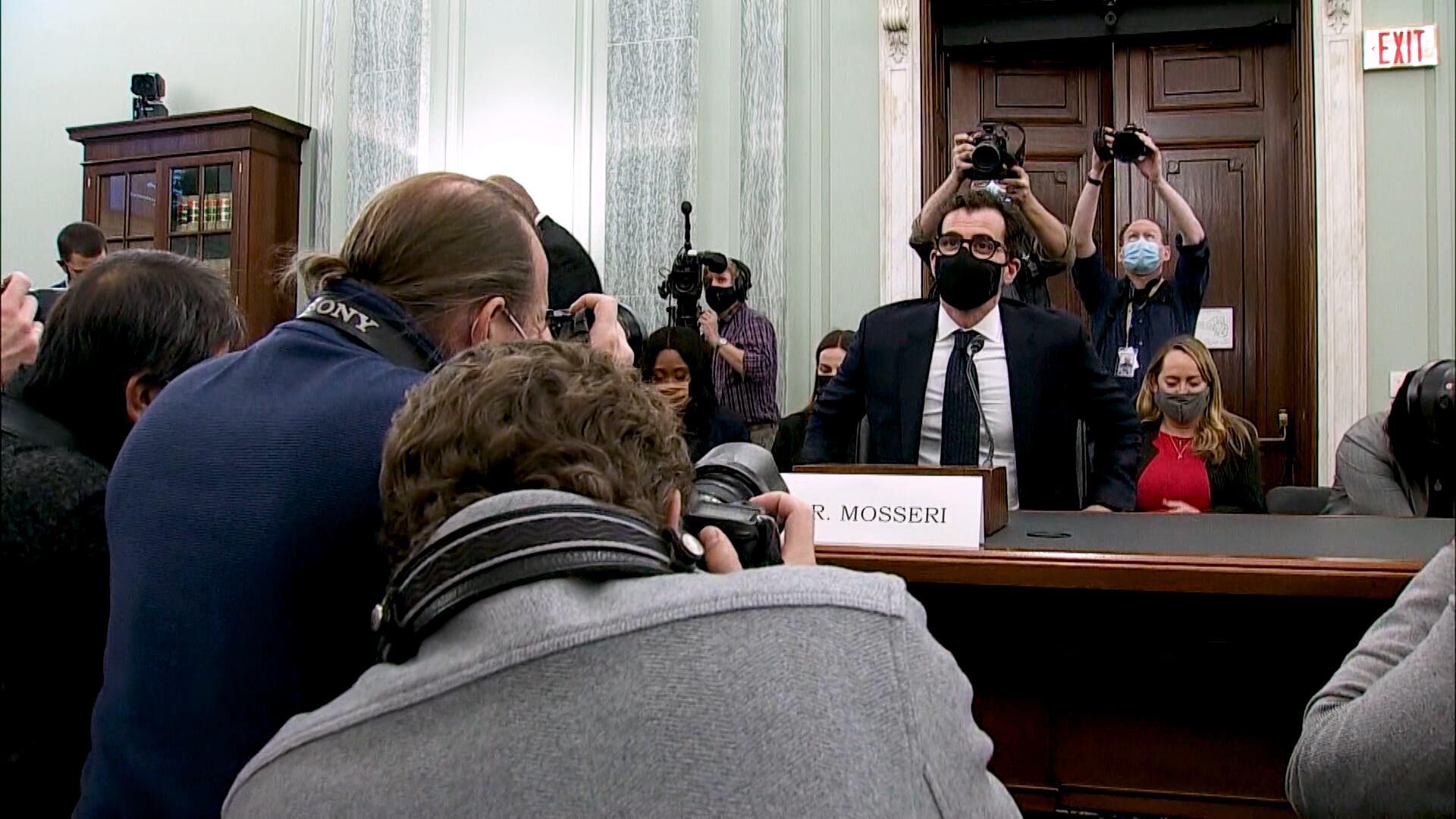
Instagram CEO Adam Mosseri faced a bipartisan Congressional grilling this week as the Senate inquired about safety practices for protecting the mental wellbeing of young people on the platform. Sen. Marsha Blackburn (R-Tenn.) joined Cheddar to talk about the hearing and how she was disappointed in Instagram coming unprepared with relevant information or documents. Blackburn also offered concern that the platform could continue with building a kids-only version despite having drawn significant opposition from the public.
The Great Resignation has shown some signs of slowing in October with the number of those who quit their jobs falling by 4.7 percent to 4.16 million. This comes as worker strikes and calls for unionization ramp up. Jane Oates, president at WorkingNation joined Cheddar's "Opening Bell" to discuss the implications.
U.S. markets opened lower despite positive jobs data, which saw weekly claims drop to a 52-year low. Kevin Nicholson, Co-CIO Global Fixed Income, RiverFront Investment Group joined Cheddar's Opening Bell to discuss the labor market, inflation, and the impact of the Omicron variant on global markets.
A packed Thursday pod: Carlo and Baker cover the latest developments in the Ghislaine Maxwell, Jussie Smollett and Elizabeth Holmes trials. Plus, Dems are losing the Hispanic vote, Boris Johnson in trouble again, and is it possible that Adele has peaked?
Jim Bruderman, Vice Chairman at 1879 Advisors, joins Cheddar News' Closing Bell, where he says investors experienced a 'panic attack' last week with the spread of the Omicron variant and the Fed's tapering plans. As a result, he says we're now seeing stocks climb due to a growing comfort level toward both developments.