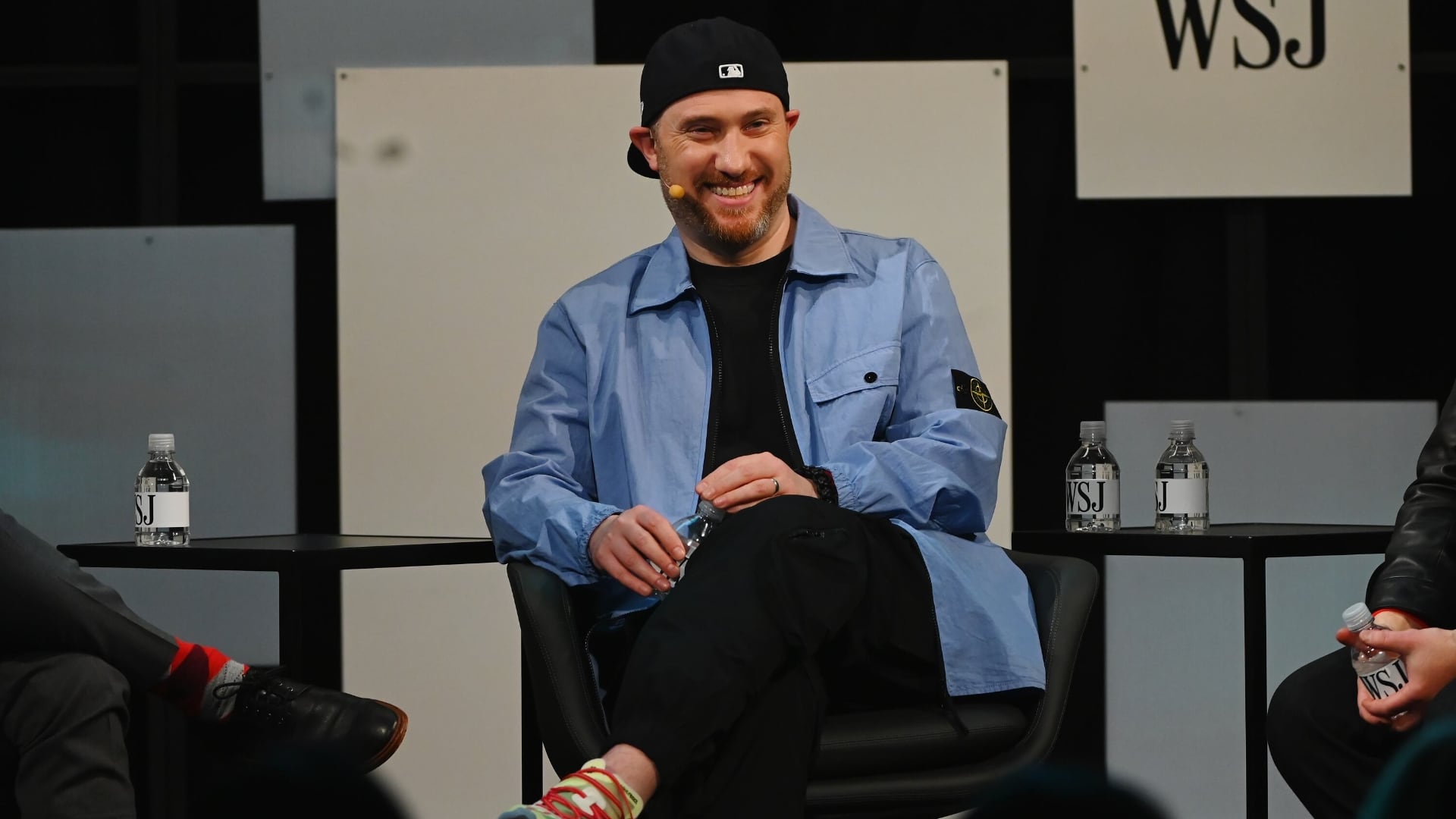
This week, Delta's Ed Bastian became the first-ever airline CEO to deliver the keynote address at CES. During his speech, he outlined a number of futuristic visions for the airline, from more binge-worthy in-flight entertainment to a venture into robotics.
The opening question posed to Bastian from the CEO of CES: “Why is your airline here?”
"[Airlines] have had a checkered past. We are about ready to enter our second century of operation, as an industry and as Delta, and we've never been stronger, we've never been better, the demand has never been more prevalent, the interest in travel has never been greater. We are making investments in the billions of dollars a year in airport, in ground, in digital technology, in infrastructure," Bastian later told Cheddar. "We wanted to give a vision of what travel in five years will be like on Delta."
While many innovations are happening in the skies, Delta's CEO explains there is a lot of room for improvement on the ground.
"The biggest challenge for us right now, and for our customers too, is the ground experience. We have done a lot to improve the flight experience," said Bastian. "In the last five years, we have completely replaced one third of our fleet.
"Now we have to replace the ground infrastructure. So we're building in LaGuardia. We're building in L.A. We're building in Seattle ー all the places where those airports haven't been touched in 50, 60, 70 years."
In order to update those ground settings, Delta is expanding partnerships with tech-forward companies. "We are bringing services into the infrastructure, such as Lyft, that can help de-stress the environment for customers to navigate," said the CEO. Delta currently partners with the rideshare company to allow customers to earn miles, which translate into rides.
"We want customers to have a great experience at all parts of the journey," he said. "We talked yesterday about what if we were able to pick your bag up at home and have it waiting for you when you arrive at your destination, or maybe already getting there before you. How cool would that be in terms of taking stress out of the process?" said the CEO.
Despite all this focus on the travel experience prior to boarding, Delta hasn't forgotten about the in-flight experience. Bastian reiterated that free on-board Wi-Fi is still on Delta's wish list and the airline is "investing aggressively in that goal."
"We're going to get it within the next two years."
"The in-flight experience has substantially improved. We've added a whole lot of new options for customers to fly, different products ー both international as well as domestic," said Bastian. "We are making certain we continue to add more and more seat-back screens onto our planes. Most airlines are actually taking seat-back screens off the planes. We're adding more on. The reason for it is we've got a product in-house that we've developed to make a wireless in-flight seat-back, and it's taking the box out from underneath the seat in front of you so you can actually have more leg room and actually it gives us an opportunity to update content more frequently."
Flight shaming, which became a trend in 2019, has carried over into 2020 and is top of mind for Delta. "It is a significant issue for the industry. I've talked about it as bring the extensional threat for us," said Bastian. "I'm critical of ourselves. We have been talking in a passive voice. We talk about things we should be doing less of." Instead, he said the industry should be talking about that it should do more of,
But the Delta CEO also said it's not only up to the airlines to reduce emissions.
"Every plane we are putting in the skies is 25 percent more fuel efficient than the ones we're taking off," said the CEO.
There are also things customers can do to make air travel more green by packing lighter.
"If you want to help reduce your carbon footprint carry less with you when you pack," he said. "There is a cost to that to the environment.
Overall, Bastian said that air travel remains important, and that, "The world needs more human connection to make a difference. The airlines, as well as customers, need to invest in the solutions for a sustainable planet."
Delta also has been closely following the problems that have befallen Boeing for more than a year, although the airline does not fly 737 Max jets.
"The Boeing situation clearly is troubling. First of all we need the Max to be back in the sky. We don't know yet when that's going to happen. Yes, Delta has had a marginal benefit from [its grounding], it's not a significant benefit," said Delta's CEO. "It's more important to us to see the aircraft flying so that our industry's not talking about this in such a negative vein."
As for the Wednesday's crash of Ukraine International Airline Flight 752 in Iran, a Boeing 737-800, Bastian added, "I can't provide any insight into what happened in Tehran other than our sympathy for the people impacted, tragic situation."
When asked whether Boeing would recover from its current corporate crisis, Bastian was confident, saying it's a "great American company."
"We will get through this. It's a tough time. We have to stand by them through this."