After voting to block witnesses, the Senate voted Friday to approve a resolution setting the final day of the president’s impeachment trial — and his likely acquittal — for Wednesday, after both the Iowa Caucuses and President Donald Trump's State of the Union address.
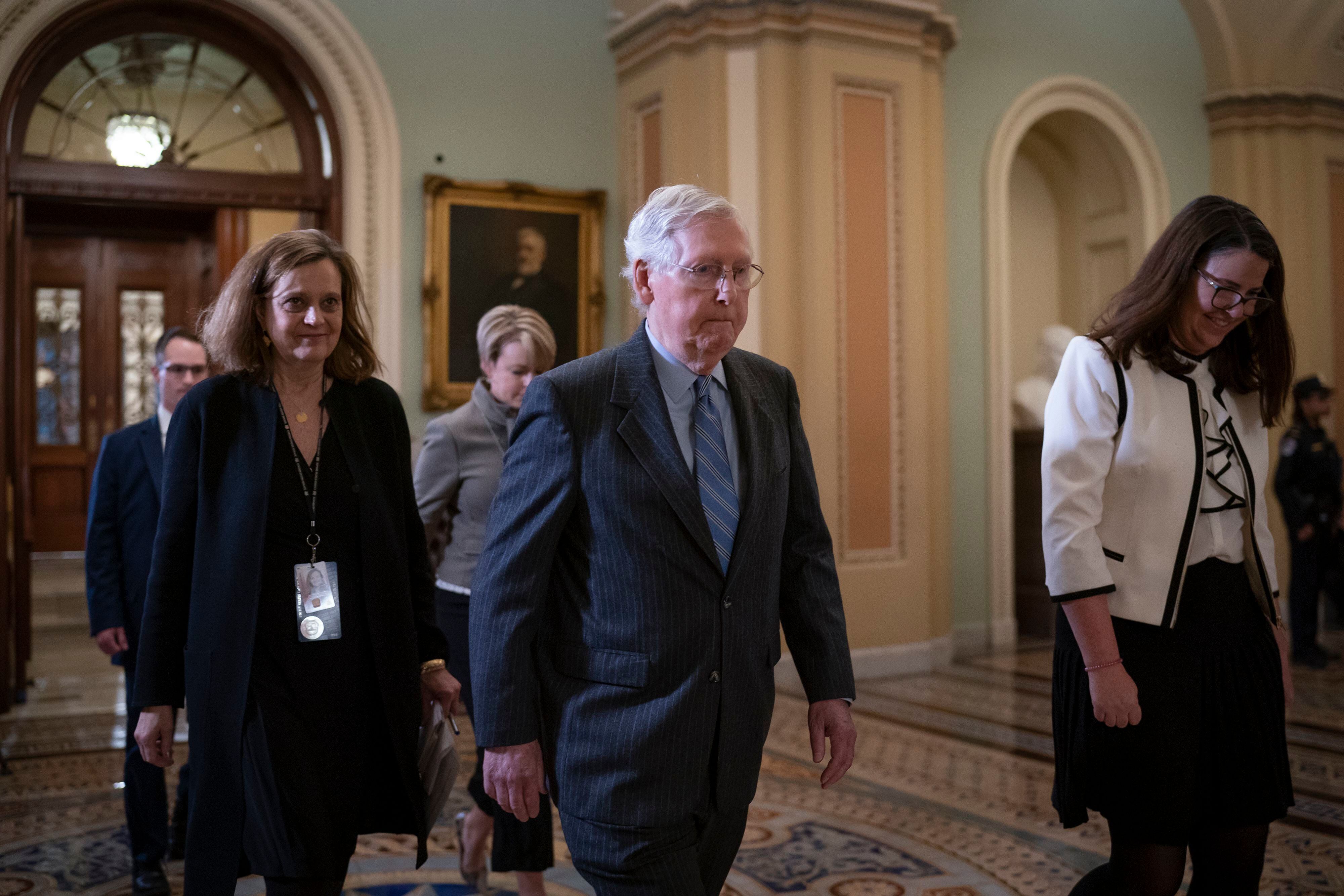
Senators debated on how to move forward during a recess after the witness vote’s conclusion. After nearly 90 minutes, it appeared that Senate leaders Mitch McConnell and Chuck Schumer had reached a deal that would pause the trial until Monday and provide each senator with 10 minutes to explain his or her decision on the president’s conviction or acquittal. The Senate voted on the organizing resolution and Democrats brought four amendments to the floor — all of which were defeated.
Chief Justice John Roberts answered a question from Schumer on whether he would cast a tie-breaking vote. Roberts said it would be “inappropriate for me” to break a 50-50 tie.
One of the amendments brought to the Senate floor tonight on impeachment rules would have required Roberts to rule on motions for evidence.
Sen. Roy Blunt (R-Mo.) had previously told reporters the expectation moving forward would not include closed deliberations. "I'm opposed to it and I believe we will not have any closed sessions," he said. The plan voted on did not include such a provision.
The new resolution provided a timetable for the end of the third impeachment trial of a sitting U.S. president. The Senate will recess for the weekend until Monday at 11 a.m. Then House Managers and the defense counsel will each have two hours to make closing arguments. Senators will be allowed to give floor speeches for parts of Monday, Tuesday, and Wednesday. The vote would be scheduled for 4 pm Wednesday.
Sen. Tim Scott (R-S.C.) said, upon leaving the GOP meeting, that "the process is important, so having the Democrats buy into this final arrangement, I think is more important than just shoving it down their throats because sooner or later the shoe will be on this foot."
Senators will vote on two articles of impeachment: abuse of power and obstruction of Congress related to allegations President Trump pressured Ukraine to announce investigations into his political rival, former Vice President Joe Biden, and his son Hunter by withholding nearly $400 million in security aid.
Democrats had been pushing to hear from new witnesses since the trial began nearly two weeks ago, especially after John Bolton, the former national security advisor, said he would testify and new evidence was reported by the New York Times indicated Bolton's unpublished manuscript contained details in which the president told advisors to withhold aid to Ukraine as early as last spring. Only two Republicans — Senators Mitt Romney (R-Utah) and Susan Collins (R-Maine) — voted with the Democrats.
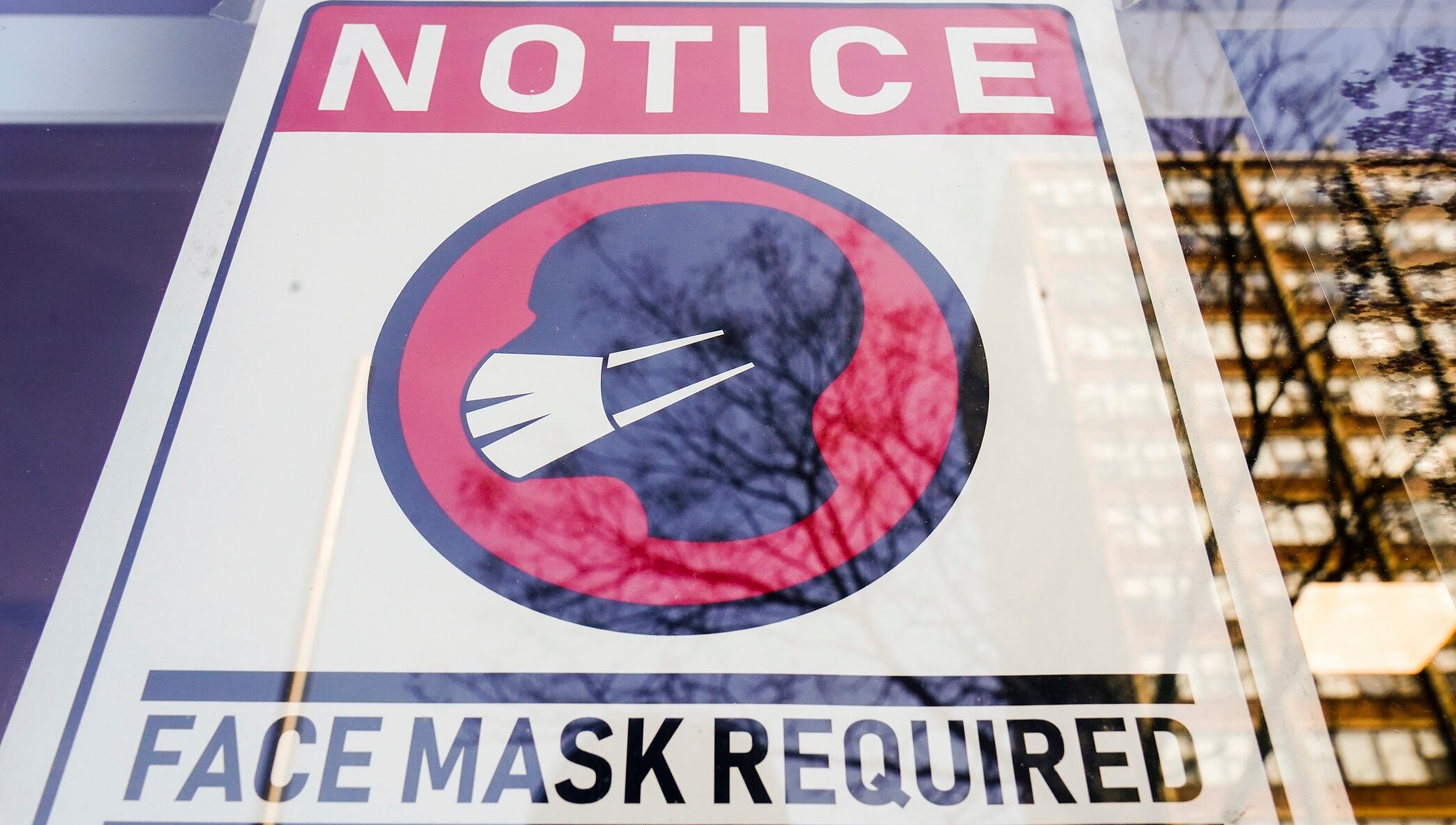
The Biden administration will significantly loosen federal mask-wearing guidelines to protect against COVID-19 transmission on Friday, according to two people familiar with the matter.
Russian President Vladimir Putin openly invaded the neighboring country of Ukraine on Thursday following weeks of overtures and discussions on keeping an incursion from happening. David Salvo, the deputy director for the Alliance for Securing Democracy, joined Cheddar to go into the Russian leader's motivations. "What I'm sure he understands is that his invasion of Ukraine in 2014 probably ended the discussion of Ukraine joining NATO, even if publicly we won't admit that, that's just the reality. And I'm sure that President Putin understands that," he said, noting that Putin could be using the taking of Ukraine territory as leverage to gain more security concessions from the West.
Following Russia's incursion into Ukraine, the U.S. is warning businesses and major banks to brace themselves for cyberattacks. Lester Munson, a senior fellow at the National Security Institute, joined Cheddar News to break down what this means for financial institutions “So we need to be concerned about not just intentional Russian hacks against American entities but also what Russia is doing in Ukraine. Those things can impact us as well," he said
After weeks of talks and posturing in hopes of staving off an attack, Russia invaded Ukraine on Thursday, an incident that has already impacted the global economy, including the U.S.. Jason McMann, head of geopolitical risk analysis for Morning Consult, joined Cheddar’s Closing Bell to break down what investors might do to prepare themselves as the crisis continues. "I think there are a few things that we have our eye on over at Morning Consult that could cause the situation to become a bit more severe or unstable as far as market outcomes would be concerned," McMann said. "One of those things would be if the U.S. and the EU kind of moved in concerted fashion to block Russia from the SWIFT transaction system. So, I would say that's one thing that would be worth keeping an eye on."
Alex Walker, candidate for Colorado's 3rd Congressional District, joins Cheddar News to discuss why he's running against Lauren Boebert and the inspiration behind his viral campaign ad.
Lisa Hagen, politics reporter for U.S. News and World Report, joins Cheddar News to preview what to expect from President Biden's State of the Union Address on March 1.