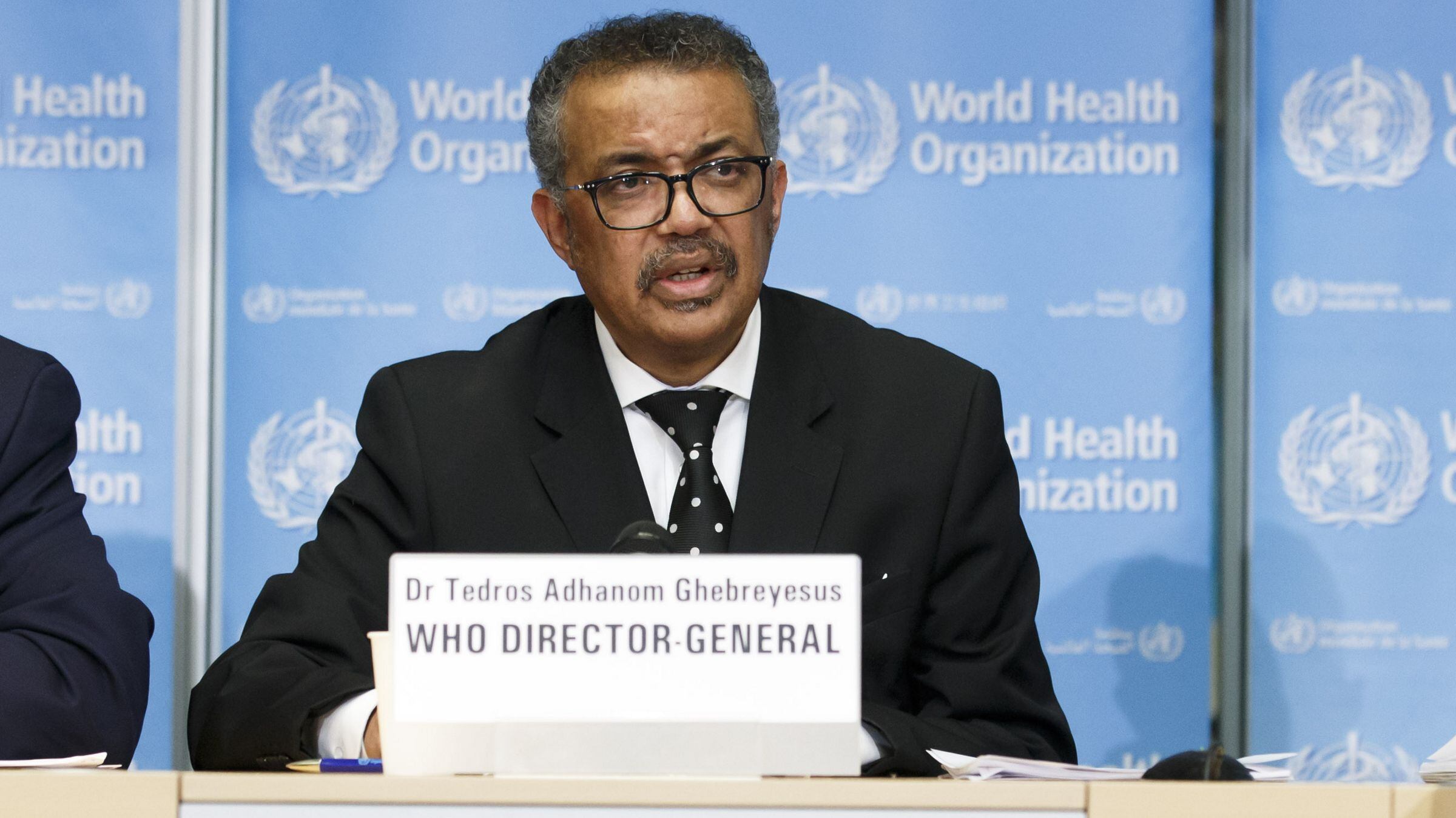
World Health Organization's leader Dr. Tedros Adhanom Ghebreyesus revealed the name of the disease currently afflicting China and other parts of the world: COVID-19 (a mashup of "Coronavirus Disease 2019"). With cases jumping from 200 cases in January to more than 42,000 as of this morning, the WHO also labeled the newly-named illness a "very great threat" during a two-day conference in Geneva to plan a response to the outbreak.
Ghebreyesus, who confirmed infections in China grew from about 40,000 yesterday to 42,638y, said the name was agreed upon because it is pronounceable and does not refer to a specific geographic location, individual, animal, or group of people. The body hopes the official desigation will "prevent the use of other names that can be inaccurate or stigmatizing."
Global researchers and scientists have mounted what one scientist called a "herculean effort" to jumpstart data analysis to figure out how to stop the spread of the disease.
But to conduct that research, nations need to support and provide funding, he said, noting that the new virus remained an emergency for China but could yet become one internationally.
"With 99 percent of cases in China, this remains very much an emergency for that country, but one that holds a very grave threat for the rest of the world," Ghebreyesus cautioned.
The World Health Organization initially held back from declaring the novel coronavirus a public health emergency in late January, and Ghebreyesus had praised China's attempts to confine the virus.
The goal of the current meeting is to produce a global research agenda and set priorities for steps to undertake, though a vaccine remains about 18 months away, according to the WHO.
"We shouldn't lose this opportunity. If we lose it, we will regret it," Ghebreyesus said. "The opportunity was created because of the serious measures China is taking in Wuhan and other provinces. I don't think this status can stay the same for long."
By the end of the day Monday, Chinese officials said 1,016 people had died from the virus, most of whom were in the Hubei Province.
Ghebreyesus warned if nations don't take advantage of this "window of opportunity," then "we could have far more cases and far higher costs on our hands," particularly if nations with weaker health systems start seeing cases. "If a virus hits a weaker health system, it will create havoc."