The famed Darwin's Arch in the Galapagos Islands has lost its top, and officials are blaming natural erosion of the stone.
Ecuador's Environment Ministry reported the collapse on its Facebook page on Monday.
The rock structure — 43 meters (141 feet) high, 70 meters (230 feet) long and 23 meters (75feet) wide — is less than 1 kilometer (about half a mile) from Darwin Island and it's a popular spot for scuba divers. It's not accessible by land.
“Obviously all the people from the Galapagos felt nostalgic because it’s something we’re familiar with since childhood, and to know that it has changed was a bit of a shock," said Washington Tapia, director of conservation at Galapagos Conservancy. "However, from a scientific point of view, it’s part of the natural process. The fall is surely due to exogenous processes such as weathering and erosion which are things that normally happen on our planet.”
The unique flora and fauna on remote islands, some 1,000 kilometers (600 miles) off the coast of mainland Ecuador are famed in part for inspiring Charles Darwin's thoughts on evolution.
British officials and space scientists said Tuesday they were disappointed but not deterred after the first attempt to launch satellites into orbit from the U.K. ended in failure.
The small coastal town of Montecito, California -- home to celebrities like Oprah Winfrey, Prince Harry and Meghan Markle and Rob Lowe -- has been evacuated as a result of extensive flooding in the area and surrounding canyons after more than eight inches of rain fell in just 12 hours on Monday.
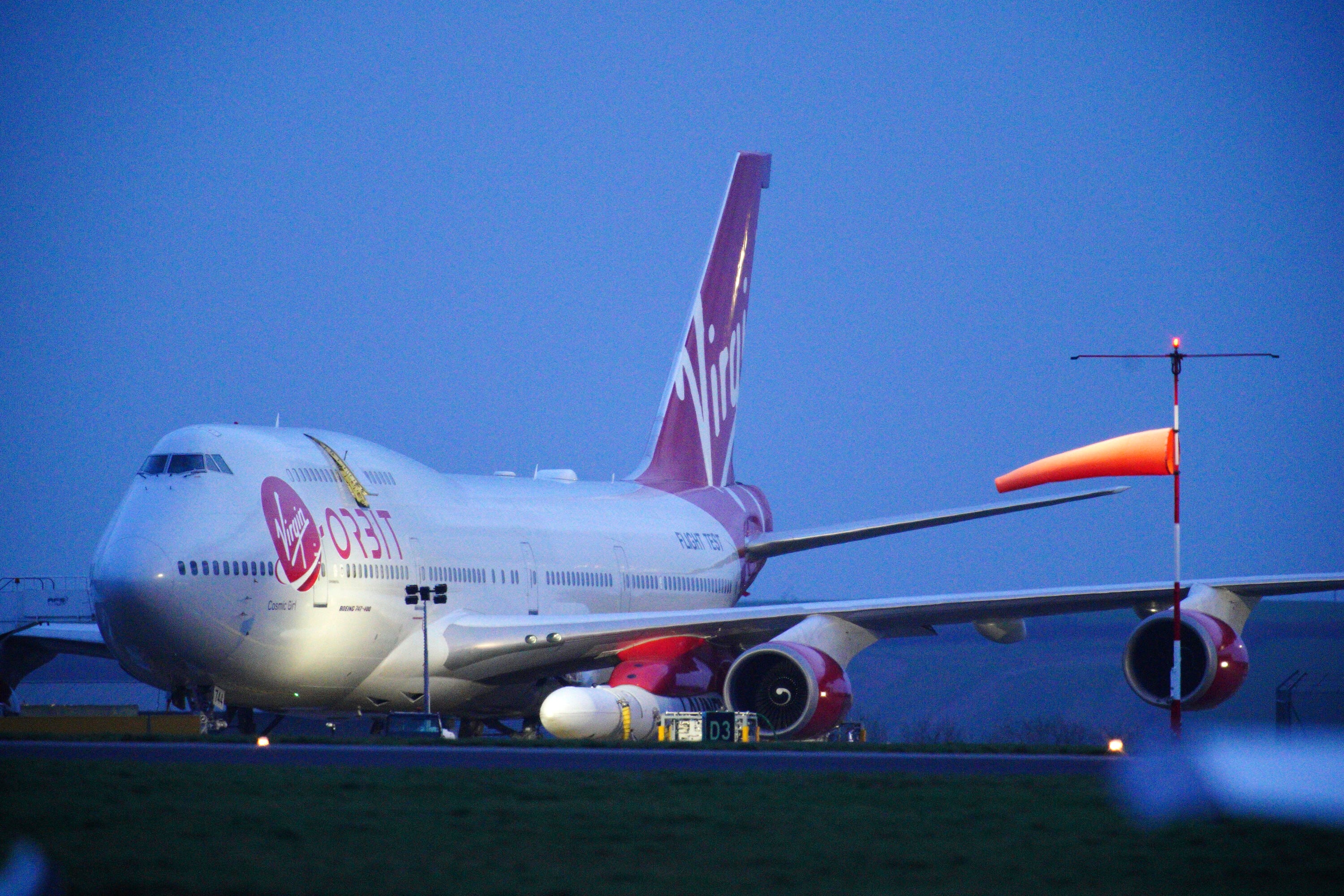
Virgin Orbit's "Cosmic Girl," a retrofitted Boeing 747 plane, is scheduled for a horizontal launch into orbit Monday night from the United Kingdom's Spaceport Cornwall.