'Dark Money' Documentary Follows the Money in Politics
*By Max Godnick*
Ever since Watergate, investigative journalists have been urged to ["follow the money"](https://www.youtube.com/watch?v=vETxuL7Ij3Q) to find the truth in politics. But how do you locate the funds that come from undisclosed donors?
"Dark Money" is a new documentary that aims to answer that very question. The film makes its national broadcast debut on PBS on Monday night, shining a detective's flashlight on mysterious corporate spending in politics.
"As a filmmaker, it was just a good mystery novel sort of spy thriller story that I knew we'd be able to tell," the film's director/producer Kimberly Reed told Cheddar on Monday.
The documentary extrapolates from a particular situation in Montana to explore a larger, more national problem in U.S. politics. Reed spends most of "Dark Money" tracking local journalist John S. Adams's attempt to uncover the truth about the funding behind her home state's tangled elections.
"I could see the storm brewing," Reed said. "It's a really good case study, because we can actually connect all of the dots."
Reed described "dark money" as any funding that "makes its way into an election, and you don't know where it's coming from."
Those contributions have been legally permitted ever since the 2010 landmark U.S. Supreme Court decision on *Citizens United v. FEC*, which established campaign spending as a form of First Amendment-protected political speech.
"That's just a recipe for corruption," Reed said. "I just think that our democracy was founded with the assumption that we're going to know who's trying to influence our politics."
She pointed to the hyper-centralization of dark money groups as the part of the problem that scares her most acutely. The unidentified financing stems from a small handful of groups, with just 15 organizations accounting for all dark money spending since 2010. The largest is Crossroads GPS, led by Bush-era political operative Karl Rove. The organization has since changed its name but still acts as the same entity.
Reed noted that the issue is non-partisan, with equal-opportunity offenders hailing from both sides of the aisle. But she did add that conservatives were the first to "weaponize" the funding tactic ー and the left has led the charge in finding legislative solutions.
With just weeks to go before the midterm elections, Reed cautioned voters and watchdogs alike to be mindful of this less-salacious corner of corruption and scandal ー the funding without high-profile names attached.
"Where we see big anonymous money going into elections, that's where we need to pay attention, especially if there's foreign influence behind it," she said.
For full interview [click here](https://cheddar.com/videos/shady-campaign-finance-stars-in-new-documentary).
Markets were pointing mostly lower to end the week as investors reacted to the threat of a Covid resurgence in Europe. Jeff Schulze, Investment Strategist at ClearBridge Investments joined Cheddar's Opening Bell to discuss Friday's pre-market activity.
A federal judge tossed out a lawsuit against financial services platform Robinhood following the meme stock saga that swept the investment world. The judge said it found no wrongdoing on Robinhood's part after the platform halted trading on popular meme stocks Gamestop and AMC.
Jill and Carlo are back to cover the latest in the Rittenhouse trial, new information on the origins of Covid, return-to-office and more.
JOIN US FOR THE YOUTUBE WATCH PARTY @ 9aET: http://www.youtube.com/cheddarnow
The U.S. Justice Department has filed a lawsuit against Uber after it was discovered that disabled people were being disproportionately affected by extra “wait time” fees. Attorney Jonathan Bell joined Cheddar to discuss.
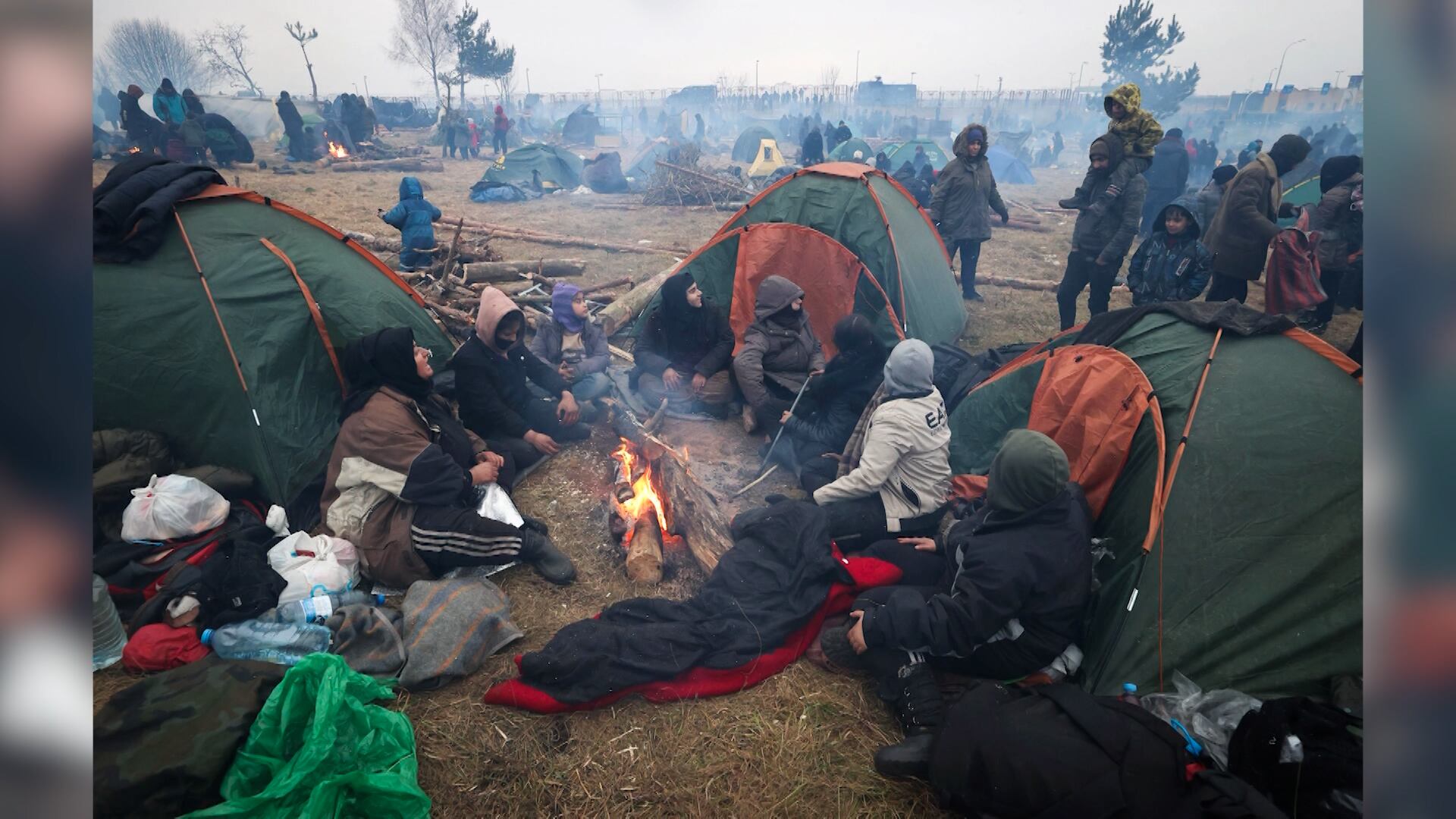
Belarus President Alexander Lukashenko has been accused by the EU of manufacturing a migration crisis along his border with Poland. But, even as tensions appear to be stabilizing at the moment, Ali Noorani, the president and CEO of National Immigration Forum and the host of the "Only in America" podcast spoke to Cheddar about the ongoing danger to the migrants who hail from countries like Iraq and Afghanistan. "What is going to happen to folks who are in Belarus who came from these countries? Is Lukashenko going to provide them asylum and protection in Belarus, or are they going to continue to be political pawns in a geopolitical battle," he said. "Real people's lives are being put at great risk."
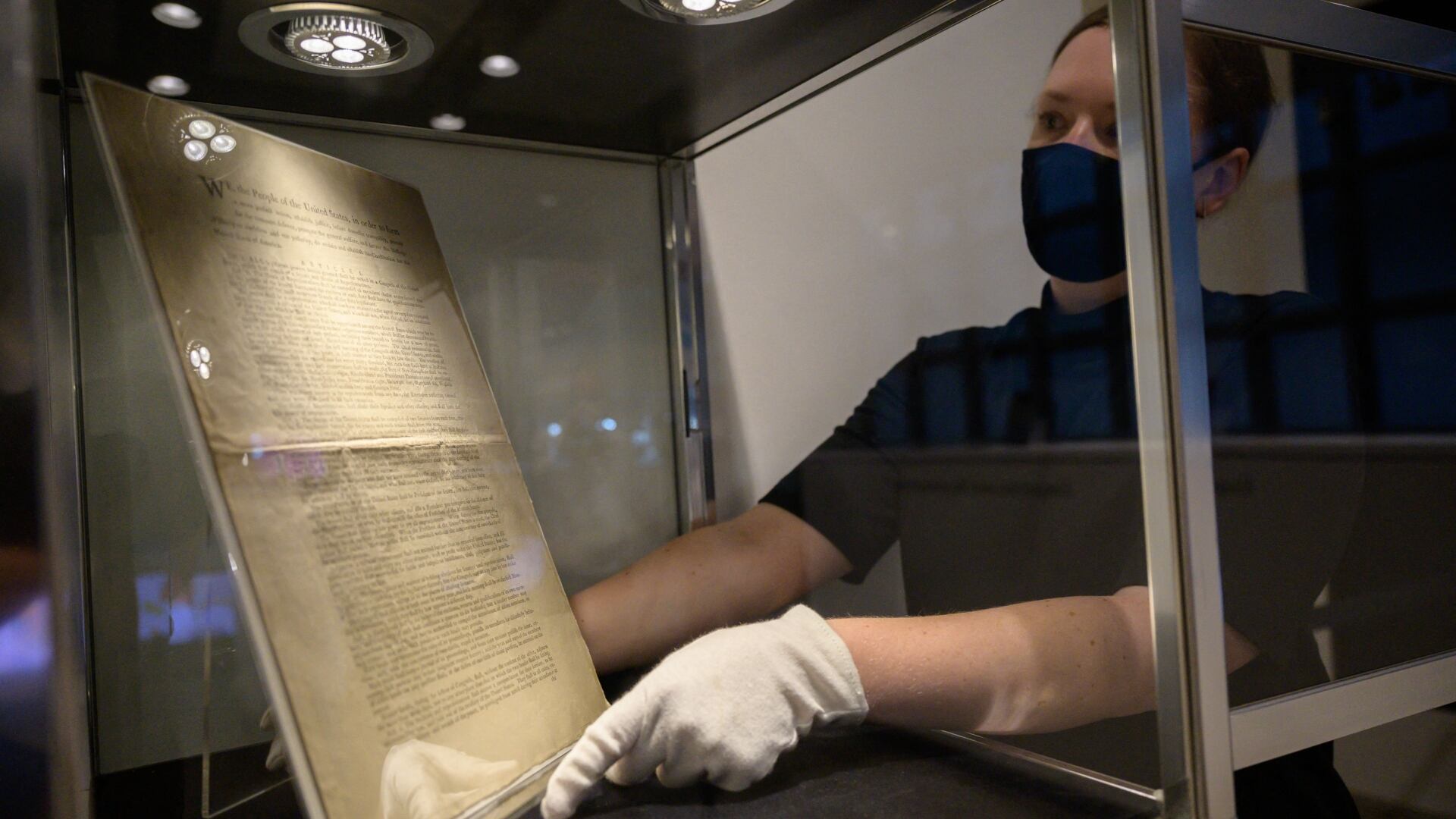
A group of crypto investors has come together to raise millions of dollars in the hopes of owning a rare piece of the U.S. Constitution. According to the crypto group, "Constitution DAO" It is time to put the constitution in the hands of the people. CEO and Founder of Metaversal Yossi Hasson, joined Cheddar to discuss more.
Polarization is among the defining traits of American politics in the 21st century. Sometimes it seems like the only thing we can all agree on is the fact that we don't really agree on anything. But those divisions don't just stop at whether you vote red or blue.
A new survey from the Pew Research Center finds that rather than just two political buckets, we have nine. The "2021 political typology" as it's called distinguishes between different ideological subsets in the Democratic and Republican party. It encompasses everyone from the loudest revolutionary lefties, to the loudest insurrection apologists on the right.
Andrew Daniller, research associate at the Pew Research Center, joins None of the Above to discuss.
Tanya Snyder, transportation reporter at Politico, joins None of the Above with J.D. Durkin to discuss the bipartisan infrastructure law, what it means for the electric vehicle industry and whether Democrats will be able to capitalize on the legislative victory ahead of the 2022 midterms.
Heading into 2022, the eyes of political nerds like us are fixed on statehouses across the country. State legislatures are in the process of taking the data from the 2020 census and using it to draw new congressional districts. The process has major implications for midterms, as Republicans could retake the majority just by gerrymandering enough seats into their column. In Maryland, state level Democrats are considering several maps, one of which would completely draw out the only Republican from the state in Congress.
Bruce DePuyt, senior reporter at Maryland Matters, and Helen Brewer, legal analyst at Princeton's Electoral Innovation Lab, join Cheddar Politics to discuss.