'Dark Money' Documentary Follows the Money in Politics
*By Max Godnick*
Ever since Watergate, investigative journalists have been urged to ["follow the money"](https://www.youtube.com/watch?v=vETxuL7Ij3Q) to find the truth in politics. But how do you locate the funds that come from undisclosed donors?
"Dark Money" is a new documentary that aims to answer that very question. The film makes its national broadcast debut on PBS on Monday night, shining a detective's flashlight on mysterious corporate spending in politics.
"As a filmmaker, it was just a good mystery novel sort of spy thriller story that I knew we'd be able to tell," the film's director/producer Kimberly Reed told Cheddar on Monday.
The documentary extrapolates from a particular situation in Montana to explore a larger, more national problem in U.S. politics. Reed spends most of "Dark Money" tracking local journalist John S. Adams's attempt to uncover the truth about the funding behind her home state's tangled elections.
"I could see the storm brewing," Reed said. "It's a really good case study, because we can actually connect all of the dots."
Reed described "dark money" as any funding that "makes its way into an election, and you don't know where it's coming from."
Those contributions have been legally permitted ever since the 2010 landmark U.S. Supreme Court decision on *Citizens United v. FEC*, which established campaign spending as a form of First Amendment-protected political speech.
"That's just a recipe for corruption," Reed said. "I just think that our democracy was founded with the assumption that we're going to know who's trying to influence our politics."
She pointed to the hyper-centralization of dark money groups as the part of the problem that scares her most acutely. The unidentified financing stems from a small handful of groups, with just 15 organizations accounting for all dark money spending since 2010. The largest is Crossroads GPS, led by Bush-era political operative Karl Rove. The organization has since changed its name but still acts as the same entity.
Reed noted that the issue is non-partisan, with equal-opportunity offenders hailing from both sides of the aisle. But she did add that conservatives were the first to "weaponize" the funding tactic ー and the left has led the charge in finding legislative solutions.
With just weeks to go before the midterm elections, Reed cautioned voters and watchdogs alike to be mindful of this less-salacious corner of corruption and scandal ー the funding without high-profile names attached.
"Where we see big anonymous money going into elections, that's where we need to pay attention, especially if there's foreign influence behind it," she said.
For full interview [click here](https://cheddar.com/videos/shady-campaign-finance-stars-in-new-documentary).
Rebecca Walser, President of Walser Wealth Management, joins Cheddar News' Closing Bell, where she discusses the factors behind Monday's surge on Wall Street and explains why investors will likely experience volatility in the market throughout the month of December.
Cheddar's Chloe Aiello joined "Closing Bell" to break down the progress of the SAFE Banking Act in Congress as cannabis businesses operators struggle to find financial institutions that will service them. Banks face steep federal penalties, including the risk of losing a bank charter, if found to be servicing marijuana businesses even if their state has legalized operations. Aiello reported that while there was some bipartisan support for the measure in the Senate, the bill faces some opposition from conservatives with "longstanding concerns" about cannabis and progressives who prefer a more comprehensive approach to reform.
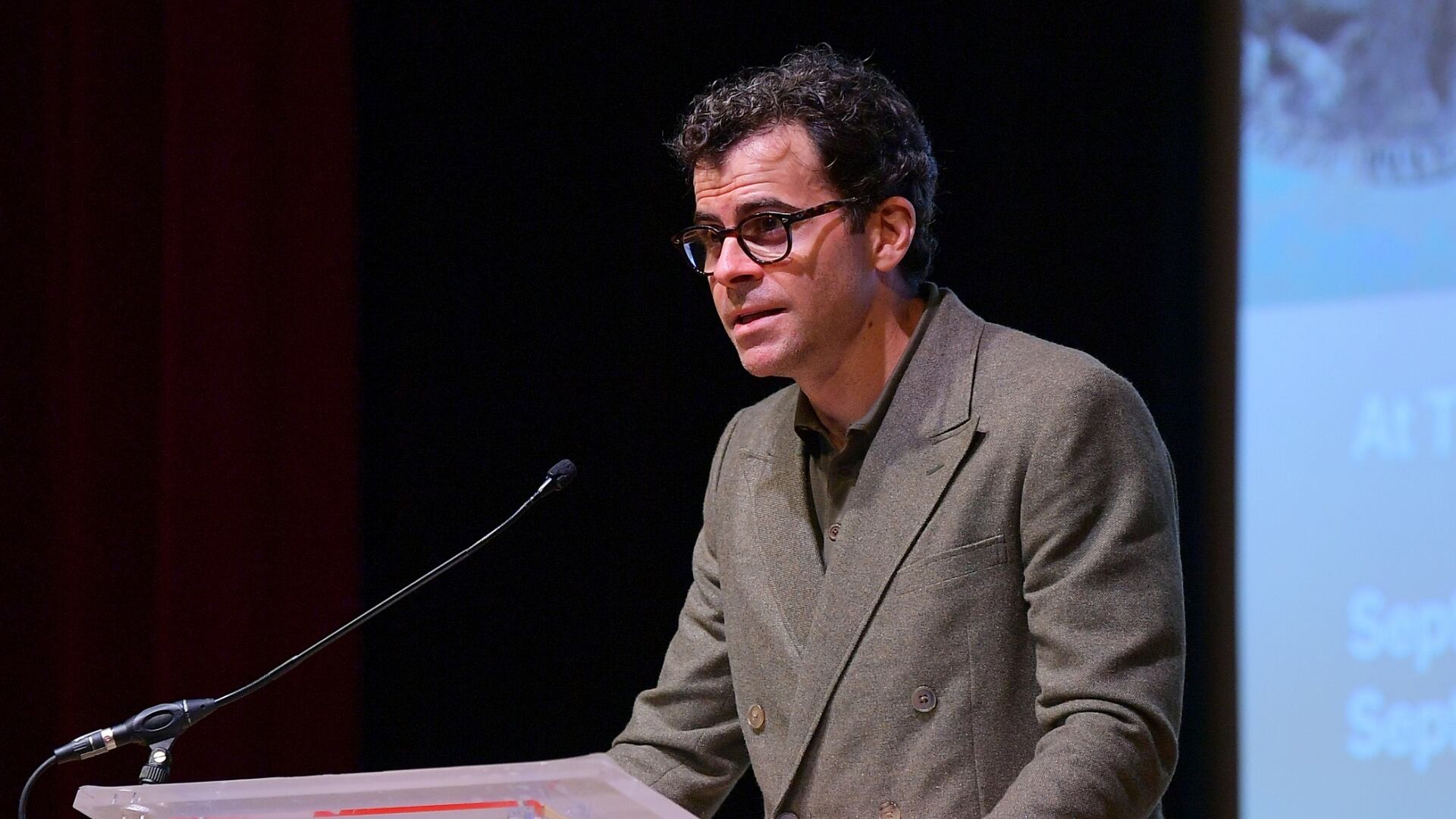
Head of Instagram Adam Mosseri is slated to testify this week in front of the Senate Commerce Subcommittee after a Wall Street Journal report that found the Meta-owned social media platform is negatively impacting the mental wellness of teen girls.
Chinese regulators are reportedly behind China-based ride-hailing company DiDi exiting from the New York Stock Exchange, just days after listing earlier this year. The regulators stated prior that DiDi had not received the necessary clearances to list in the states. Gordon Chang, Asian affairs expert, joined Cheddar to break down what the delisting says about the relationship between nations. "This really strikes me as an attempt to really to force a decoupling of China and the U.S. in the financial markets," Chang said.
U.S. Futures were pointing to a higher open to round out the week despite a miss on the November Jobs Report, which showed slower job growth than expected-- and as the omicron variant continues to spread across the country. Patrick Healey, Founder & President at Caliber Financial Partners joined Cheddar's Opening Bell to discuss.
Just days after the detection of the Omicron variant, the World Health Organization has agreed to start the process of establishing a global pandemic treaty or accord. Amy Maxmen, senior reporter for Nature, and Dr. Samuel Scarpino, managing director for the Rockefeller Foundation's Pandemic Prevention Institute, joined Cheddar to discuss this effort and what lessons can be learned from the many COVID-19 failures as the world prepares for future pandemics.
It's a mixed bag for the November jobs report. Hiring slowed last month as employers only added 210,000 jobs, massively missing the estimate of 550,000. But there was one bright spot: the unemployment rate fell to 4.2%, with the number of unemployed people dropping to 6.9 million. Both of those numbers are considerably down from their highs at the end of the 2020 recession. Heather Boushey, a member of President Biden's Council of Economic Advisers, joined Cheddar to discuss the report and the state of the country's ongoing economic recovery.