'Dark Money' Documentary Follows the Money in Politics
*By Max Godnick*
Ever since Watergate, investigative journalists have been urged to ["follow the money"](https://www.youtube.com/watch?v=vETxuL7Ij3Q) to find the truth in politics. But how do you locate the funds that come from undisclosed donors?
"Dark Money" is a new documentary that aims to answer that very question. The film makes its national broadcast debut on PBS on Monday night, shining a detective's flashlight on mysterious corporate spending in politics.
"As a filmmaker, it was just a good mystery novel sort of spy thriller story that I knew we'd be able to tell," the film's director/producer Kimberly Reed told Cheddar on Monday.
The documentary extrapolates from a particular situation in Montana to explore a larger, more national problem in U.S. politics. Reed spends most of "Dark Money" tracking local journalist John S. Adams's attempt to uncover the truth about the funding behind her home state's tangled elections.
"I could see the storm brewing," Reed said. "It's a really good case study, because we can actually connect all of the dots."
Reed described "dark money" as any funding that "makes its way into an election, and you don't know where it's coming from."
Those contributions have been legally permitted ever since the 2010 landmark U.S. Supreme Court decision on *Citizens United v. FEC*, which established campaign spending as a form of First Amendment-protected political speech.
"That's just a recipe for corruption," Reed said. "I just think that our democracy was founded with the assumption that we're going to know who's trying to influence our politics."
She pointed to the hyper-centralization of dark money groups as the part of the problem that scares her most acutely. The unidentified financing stems from a small handful of groups, with just 15 organizations accounting for all dark money spending since 2010. The largest is Crossroads GPS, led by Bush-era political operative Karl Rove. The organization has since changed its name but still acts as the same entity.
Reed noted that the issue is non-partisan, with equal-opportunity offenders hailing from both sides of the aisle. But she did add that conservatives were the first to "weaponize" the funding tactic ー and the left has led the charge in finding legislative solutions.
With just weeks to go before the midterm elections, Reed cautioned voters and watchdogs alike to be mindful of this less-salacious corner of corruption and scandal ー the funding without high-profile names attached.
"Where we see big anonymous money going into elections, that's where we need to pay attention, especially if there's foreign influence behind it," she said.
For full interview [click here](https://cheddar.com/videos/shady-campaign-finance-stars-in-new-documentary).
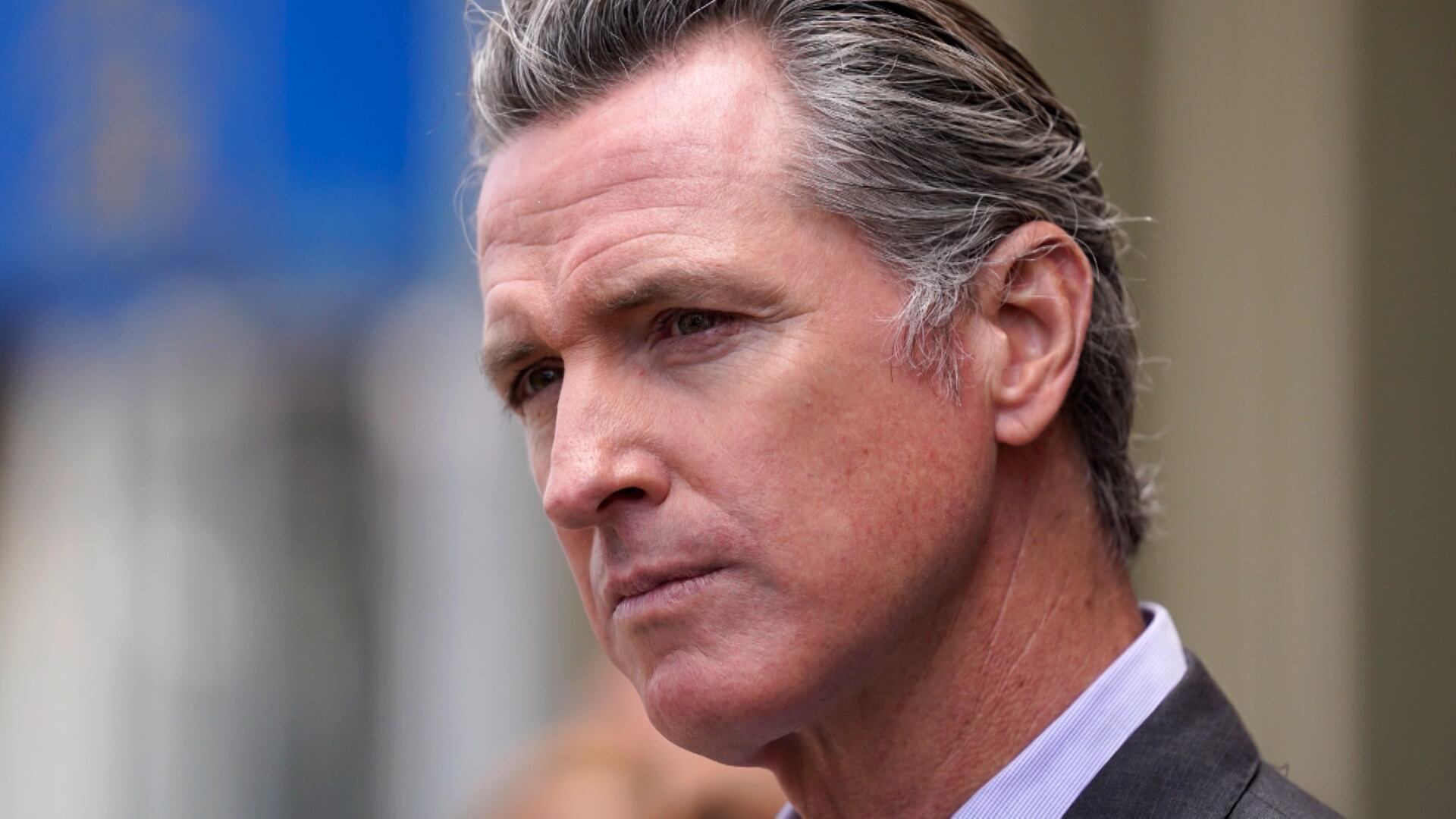
Emily Hoeven, newsletter editor at CalMatters, joins Cheddar News to discuss California Governor Gavin Newsom's gun law modeled after Texas's abortion law.
Chuck Rocha, host of 'Nuestro' podcast and opinion contributor at The New York Times, joins Cheddar News to discuss why Democrats are losing Hispanic voters.
More businesses are requiring workers to return to the office, but there is concern that many employees in the middle class, especially women and people of color, need remote work options for reasons including childcare and financial security. Joan Williams, director of the Center for WorkLife Law at the University of California, joined Cheddar to discuss why office mandates could be detrimental to the middle class. She noted that while companies claim a return to offices would help foster more collaboration and efficiency, reports show that they are successfully able to do their jobs from home.
The U.S. postal service has confirmed that it secretly developed and tested a blockchain-based mobile voting system ahead of the 2020 election. Susan Greenhalgh, senior advisor on election security, Free Speech for People, joins Cheddar News to discuss the cybersecurity complications of a mobile voting system.
The U.S. Supreme Court ruled to allow the controversial Texas abortion law to remain in effect, banning abortion at six weeks and allowing any private citizen to sue a person or doctor aiding or abetting someone seeking an abortion. Outraged at this decision, California Governor Gavin Newsom is working to draft a proposal in line with the law as it relates to guns. Shawn Hubler, California correspondent at the New York Times, joins Cheddar News to discuss.
Even as tech giant Google implements a vaccination mandate, charging its employees to declare their vaccine status within a time frame or risk dismissal, the federal government is tangled up in the court system trying to impose one of its own. Cindy Cohn, the executive director of the Electronic Frontier Foundation, and Harry Nelson, founder and managing partner of Nelson Hardiman LLP, joined Cheddar to debate the ethics, efficacy, and legality surrounding the issue. While Cohn noted that she thinks the federal mandate might be legally sound, her organization is also concerned with a separate question of privacy. "At EFF what we're most interested in is the digital surveillance that's going along with some of these attempts to try to track and confirm whether people are vaccinated or not," she said.