By Jake Offenhartz and Michael R. Sisak
A man who kept a chokehold around the neck of an agitated fellow passenger in the New York City subway, leading to the other rider's death, turned himself in to authorities Friday on a manslaughter charge that could send him to prison for 15 years.
Manhattan prosecutors announced Thursday they would bring the criminal charge against Daniel Penny, 24, a U.S. Marine Corps veteran, in the May 1 death of Jordan Neely, 30.
Penny turned himself in at a Manhattan police station Friday morning.
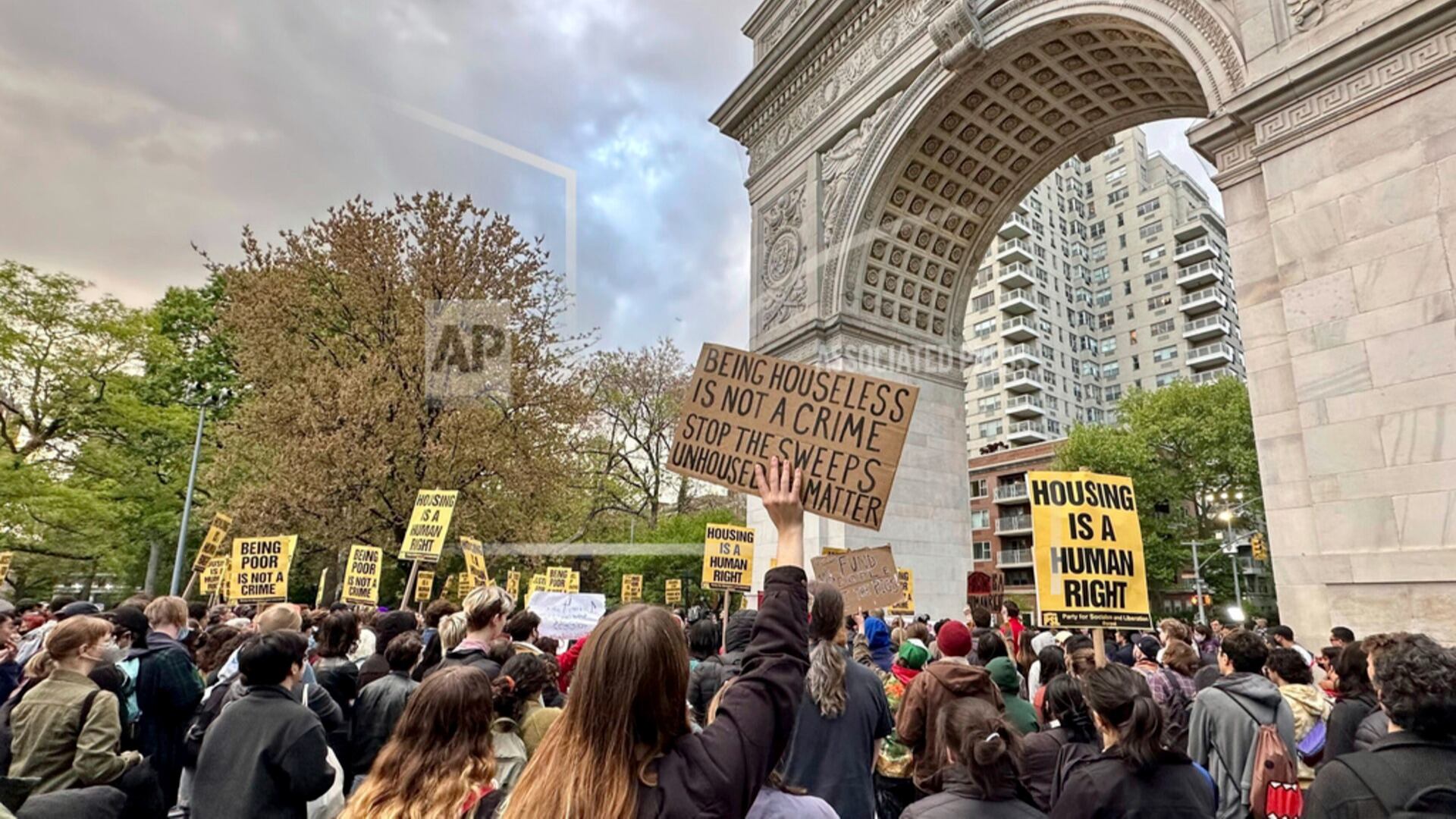
Neely's death, captured on video by a freelance journalist, has raised an uproar over many issues, including how those with mental illness are treated by the transit system and the city, as well as crime and vigilantism.
Thomas Kenniff, one of Penny's attorneys, said Penny turned himself in “voluntarily and with the sort of dignity and integrity that is characteristic of his history of service to this grateful nation.”
In a brief statement to reporters outside the police station, Kenniff said that he expected an arraignment later Friday and that the process “will unfold from there.”
Asked how Penny was feeling, Kenniff said his client “is dealing with the situation, like I said, with the sort of integrity and honor that is characteristic of who he is and characteristic of his honorable service in the United States Marine Corps.”
Penny's attorneys have said he acted in self-defense when he restrained Neely.
According to an onlooker, Neely, who is Black, had been screaming and begging for money aboard the train, but had not gotten physical with anyone.
Penny, who is white, was questioned by police in the aftermath but was released without charges.
Friends of Neely said the former subway performer had been dealing with homelessness and mental illness in recent years. He had several arrests to his name, including the 2021 assault of a 67-year-old woman leaving a subway station.
A second-degree manslaughter charge in New York will require the jury to find that a person has engaged in reckless conduct that creates an unjustifiable risk of death, and then consciously disregards that risk.
The law also requires that conduct to be a gross deviation from how a reasonable person would act in a similar situation.
_____
Associated Press writer Karen Matthews contributed to this report.
Updates with the latest details.