New York Governor Andrew Cuomo suggested the state is beginning to reach its apex of coronavirus cases, though he cautioned that numbers are changing daily.
Announcing 599 deaths in the last 24 hours, Cuomo called the fatality number “effectively flat for two days,” which he said hints at a possible flattening of New York’s curve, along with fewer hospital and ICU admissions. Early projections showed the state would need 55,000 to 110,000 hospital beds, and the governor noted that the state is tracking at a rate lower than the initial modeling suggested.
“If we are plateauing, it’s because social distancing is working,” he said, however, he also stated that numbers could still continue to rise.
“The big question that we’re looking at now is: what is the curve?” he asked rhetorically, before saying that the curve could either be a short peak or a longer plateau, which would still overburden an already strained system.
Cuomo said the state will continue moving ventilators to New York City's public hospital system and that the state will continue its “surge and flex” program to shift gear and equipment to hospitals most pressed at any given time.
“This is a hospital system where we have our foot to the floor, and the engine is at redline and you can’t go any faster,” he described. “Staying at this level is problematic.”
The governor also announced an extension of NY Pause, extending restrictions on schools and nonessential businesses to April 29 and that he planned to ask President Trump to designate the USNS Comfort, currently being underutilized due to what Cuomo said was lower-than-expected non-COVID hospitalizations, a treatment center for coronavirus patients.
When asked about the availability of ventilators, Cuomo said “all of them” are being used. “We’re beyond capacity.”
“We are into the Plan B, C, D that we outlined,” he said. But, “we don't need any ventilators right now,” he said on his way out of the press conference. Despite hospitals using BIPAP machines and splitting ventilators, the New York governor expressed that he does not believe anyone has lost their life due to a lack of equipment or staffing. “The people we lost are the people we couldn’t save.”
He also displayed photos from New York City parks in an effort to chastise people for not staying inside, calling it “wholly unacceptable,” and announced an increase in the maximum fine for breaking social distancing rules to $1,000.
“What right do you have to act irresponsibly in a way that could get you sick, or someone else sick, and then I have to send an ambulance to pick you up and bring you to an emergency room that’s already overburdened?” Cuomo asked.
Regarding drug trials of hydroxychloroquine and Zithromax, Cuomo claimed that they have had some positive results but that those results were anecdotal and not yet conclusive.
After premiering at the 2022 Sundance Festival, Showtime is slated to drop the four-part docuseries "We Need to Talk About Bill Cosby" this Sunday. Director W. Kamau Bell joined Cheddar to discuss the sensitive project and about coming to grips with the reality of who Bill Cosby is following the numerous allegations of sexual assault. Bell said the biggest takeaway from the project is that survivors are not only looking for the 84-year-old comedian to be held accountable, they also want to prevent future assaults. "Maybe the key thing to learn is how do we create a society that is more supportive and accepting particularly women in this case who are survivors of sexual assault," Bell said.
Tax season is now underway, and it's going to be a bit different than in years past. For starters, the deadline is April 18, instead of the typical April 15th, and many Americans will need to account for advance child tax credit payments, the return of the recovery rebate credit, and a special break for charitable contributions, among other things. Brent Weiss, Co-Founder and certified financial planner at Facet Wealth, tells us what we need to know about filing our taxes this year, and when we can expect to receive our returns.
College enrollment has been on a steady decline for years, and the pandemic hasn't helped. Since the start of the pandemic, there has been a 6.6% — more than 1 million students — drop in undergraduate enrollment, according to a recent report. Douglas Belkin, higher education reporter at the Wall Street Journal, joined Cheddar to discuss the long-term implications of students sitting out of college, and what institutions can do about it.
As the midterm election looms, things aren't looking too promising for President Joe Biden. One year into his term as president, Biden is facing one of the lowest approval ratings of any modern-day president, threatening his party's control of the House in 2022. Brian Bennett, Senior White House Correspondent for TIME, joined Cheddar's Opening Bell to discuss.
A full one year into his term as President of The United States, President Biden addressed the nation on Wednesday, facing questions on everything from inflation to chip shortages and covid-19. As Biden enters his second year in office, he is facing one of the lowest approval ratings of any modern-day president. Kate Davidson, Reporter, POLITICO joined Cheddar's Opening Bell to discuss.
San Diego has just implemented a new law that could set the stage for how the country deals with food waste. This new law hopes to make a dent in that. Businesses and groceries stores out in San Diego will need to put a plan in place to *donate edible food rather than toss it straight to the trash. Food Rescue Manager at Feeding San Diego, Kate Garret
The streaming giant Netflix posted its latest earnings from its fourth quarter after the close on Thursday. The company's stock plummeted shortly after the company warned that its rate of subscription additions are slowing down. Senior Reporter at MarketWatch Jon Swartz, joined Cheddar to discuss more.
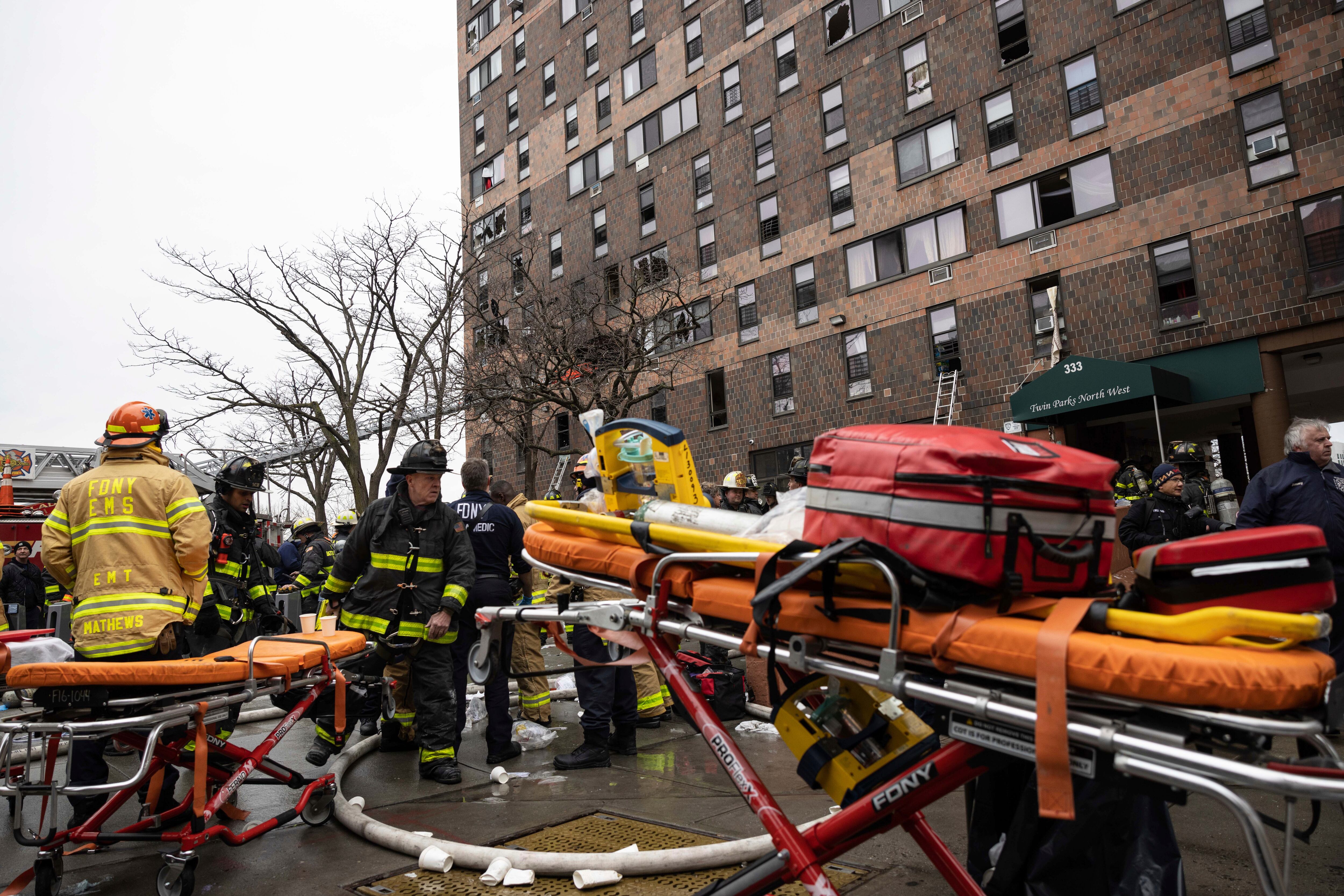
Earlier this month, New York City experienced one of the deadliest fires it has seen in decades. 17 people lost their lives in the Fordham section of the Bronx. This was due to a faulty space heater which reportedly began on the lower floor of the 120 unit building. Thanks to the F. D. N. Y. And heroic neighbors, many were able to get out in time. Unfortunately, the toxic smoke surged upwards through a safety door. Now, many advocates say negligence by policymakers and landlords has led to the deaths in black and brown communities from fires that honestly could have been preventable. Legislative Director of Citizen Action of New York, Rebecca Garrard, and the Chair of Journalism and New Media Studies at St. Joseph's College Theodore Hamm, joined Cheddar to discuss more.