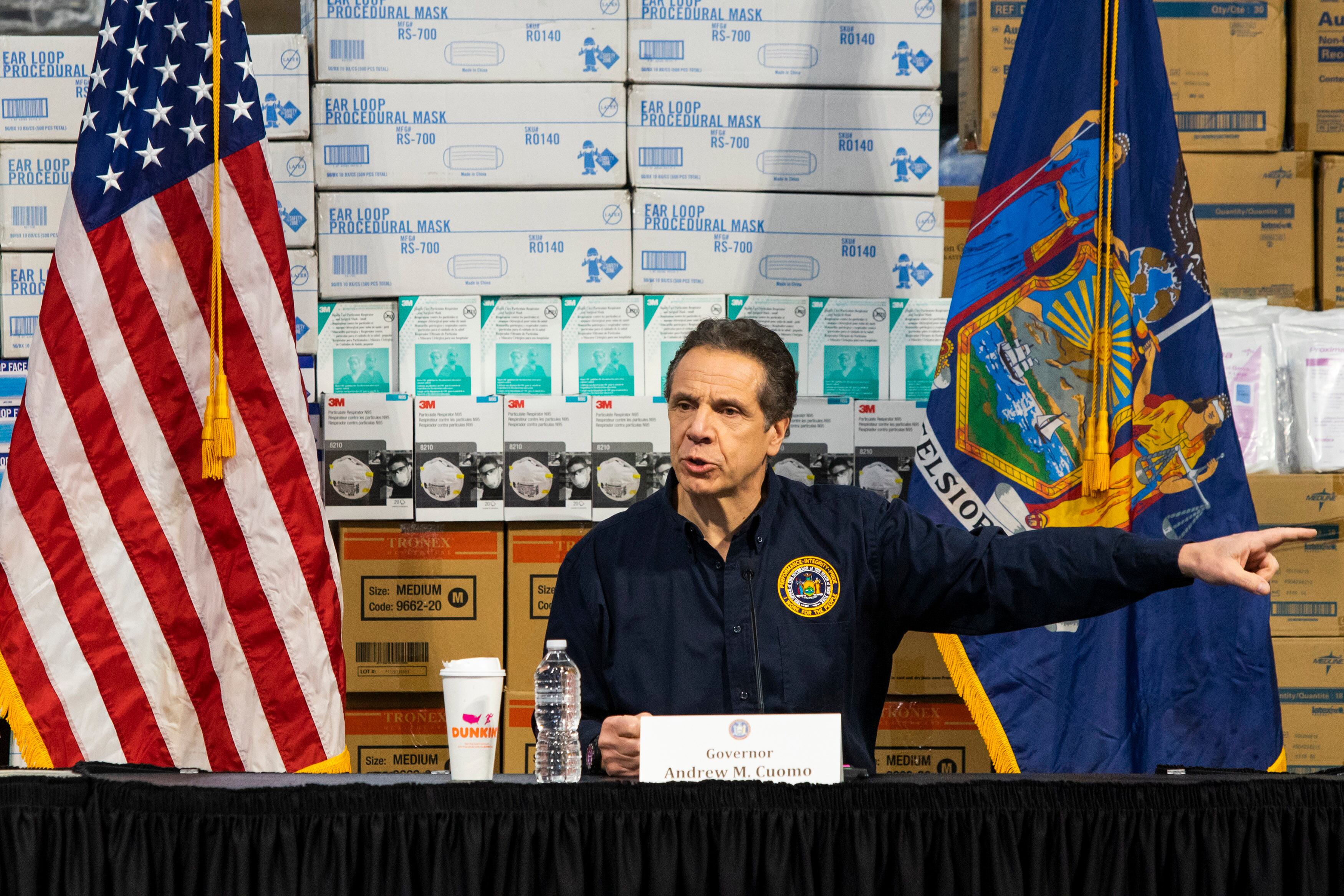
New York Governor Andrew Cuomo speaks to the media at the Javits Convention Center which is being turned into a hospital to help fight coronavirus cases on March 24, 2020 in New York City. New York City has about a third of the nation’s confirmed coronavirus cases, making it the center of the outbreak in the United States. (Photo by Eduardo Munoz Alvarez/Getty Images)
New York Governor Andrew Cuomo said new projections from health officials suggest instead of flattening, "the curve is increasing" and lambasted the federal government for its lack of action on distributing ventilators and for refraining from using the Defense Production Act.
The governor said the apex of the disease is approaching faster than anticipated and could come as soon as 14-21 days from now. He raised the number of hospital beds needed in the state to 140,000 beds and 40,000 ICU beds. New York currently has 3,000 ICU beds and 53,000 hospital beds. A few days ago, he said the state had projected it would need 110,000 beds.
Cuomo had previously included more hopeful notes of encouragement in his press conferences but on Tuesday delivered concerning news. "The apex is higher than we thought and the apex is sooner than we thought," he said.
Nearly half of the nationwide coronavirus cases are in New York state. Overnight, the case count rose by 5,000, bringing the total to more than 25,000 statewide.
"No one is testing more than we are testing," Cuomo said. "In many ways, we have exhausted every option available to us."
The governor noted that 23 percent of hospitalizations so far have needed ventilators and that 13 percent of positive diagnoses have required hospitalization as of Tuesday.
"We haven't flattened the curve, and the curve is actually increasing," Cuomo said from the Javits Center in Manhattan, which is being turned into a 1,000-bed emergency hospital by the Army Corps of Engineers.
On Monday, Dr. Deborah Birx, who is in charge of the White House response, said the attack rate in New York and New Jersey is five times higher than for the rest of the United States. The attack rate is the percentage of a population that catches the disease.
Cuomo was pointed in his criticism of the federal government for so far sending only a small fraction of needed ventilators to New York. "You want a pat on the back for sending 400 ventilators?" the governor demanded of the White House. "What are we going to do with 400 ventilators when we need 30,000 ventilators? You're missing the magnitude of the problem, and the problem is defined by the magnitude."
Cuomo said the state has so far procured 7,000 ventilators but needs 30,000 and, without more options for ventilators available, will start attempting the unusual plan to split them between people.
"If we don't have ventilators in 14 days, it does us no good," Cuomo assessed, again lamenting what he expressed was the lack of aid. "Not to exercise [the Defense Production Act] is inexplicable to me."
President Trump, during a Coronavirus Task Force town hall on Fox News Tuesday, struck back at the New York governor saying "I watch him on this show complaining."
"I'm not blaming him, but he shouldn't be talking about us," Trump said, referring to a claim that Gov. Cuomo neglected to purchase additional ventilators for the state in 2015. "He should be buying his own ventilators."
Still, citing New York's current 25,665 cases of the novel coronavirus, the governor called on Secretary of Health and Human Services Alex Azar to release 20,000 ventilators in the federal stockpile.
"The problem is the volume," he said. He asked the federal government to deploy ventilators around the country as needed as different states approach their own curve rates of infection while noting that New York has the greater need at the moment.
After passing its critical period, he said that the state would then move the ventilators to the next region addressing a crisis.
"I will take personal responsibility for transporting the 20,000 ventilators anywhere in this country that they want once we are past our apex," he said. "But don't leave them sitting in a stockpile."
Ukrainian President Volodymyr Zelenskyy has signed an application for Ukraine's membership in the European Union, pleading with the bloc to accept this request. It comes as Russian forces push further into Ukraine, forcing at least half a million refugees to flee. Benjamin Schmitt, Postdoctoral Research Fellow at Harvard University and Senior Fellow at the Center for European Policy Analysis, breaks down the latest in Ukraine.
A growing wave of major U.S. companies have taken steps to cut ties with Russia or offer support to Ukraine, as tensions escalate in the region. Exxon, Apple and Boeing are just the latest companies to make the move, following the likes of Google, Meta and BP who have all announced plans to exit the region in response to the conflict. Courtney Vinopal, Breaking News Reporter, Quartz joined Cheddar's Opening Bell for more.
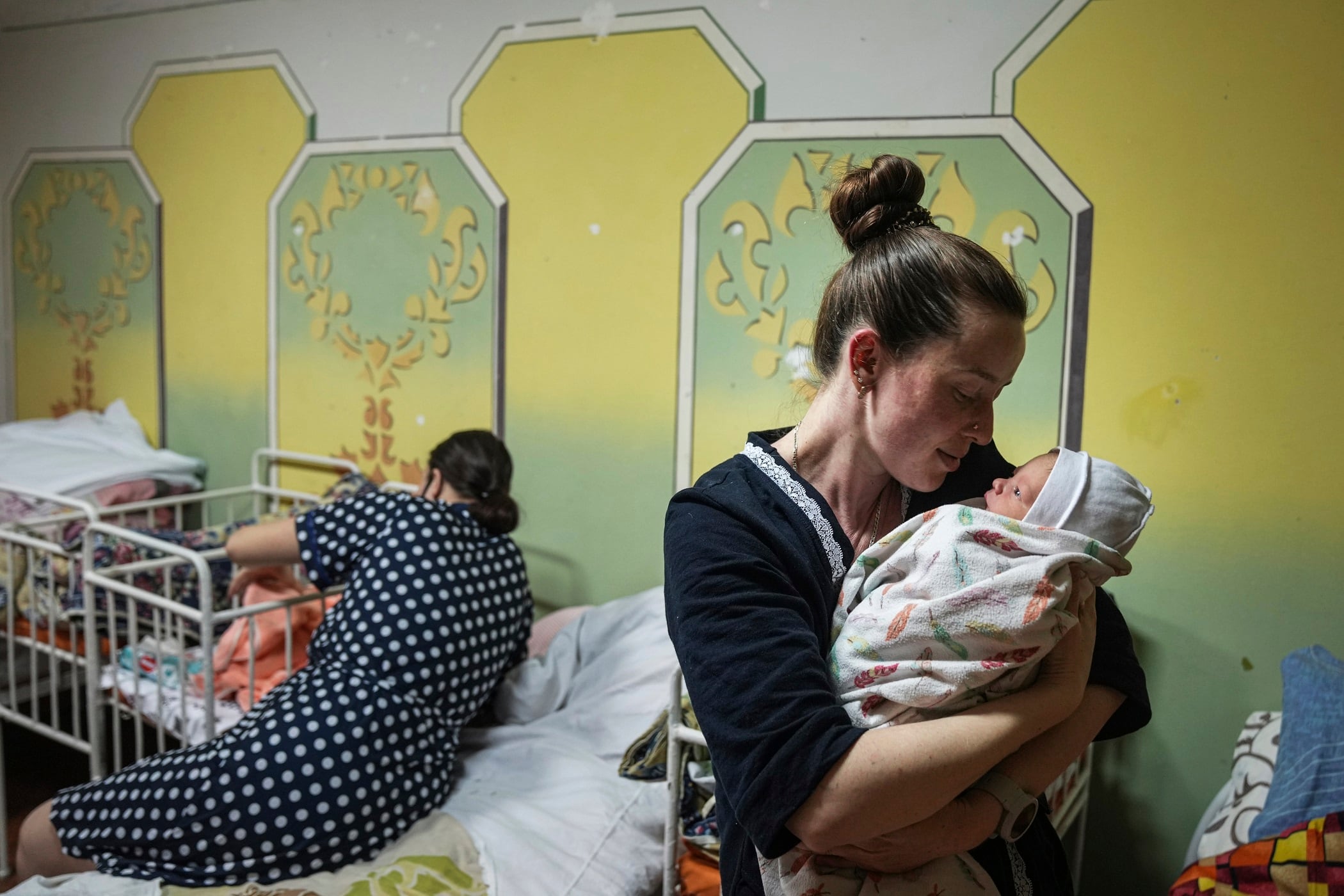
A hospital basement in Ukraine’s coastal city of Mariupol has transformed into a bomb shelter and maternity ward amid shelling during Russia’s invasion.
World leaders are currently dealing with a handful of pressing issues, including Russia's invasion of Ukraine, inflation, and not to mention the COVID-19 pandemic; but it could be argued that the most pressing issue is one that has experienced its fair share of neglect in the past -- climate change. As tensions escalate between Russia and Ukraine, there is fear the focus on climate will once again be pushed aside. However, the White House appears to be making some effort to prevent that from happening. The White House Office of Science and Technology held a first-of-its-kind roundtable discussion with some of the nation's leading climate scientists on Thursday. Michael Mann, Director of the Earth System Science Center at Pennsylvania State University, and author of the book 'The New Climate War' joins Cheddar News' Closing Bell to discuss his experience as one of the climate scientists at the White House event.
Scott Clemons, Partner and Chief Investment Strategist at Brown Brothers Harriman, joins Cheddar News' Closing Bell, where he discusses the factors leading to the sell-off on Wall Street today and explains why uncertainty is worse than bad news for the investors.
U.S. stocks rebounded to end higher on Thursday after President Biden announced new sanctions against Russia following the country's attack on Ukraine. The Dow was down 859 points at its lowest point of the session, before ultimately finishing the day in the green. Melissa Armo, founder and owner of the Stock Swoosh, joins Cheddar News' Closing Bell to discuss.
People of African and Middle Eastern descent fleeing from Russia’s invasion of Ukraine are facing the double trauma of racism at the borders. Professor of law and migration studies at the University of San Francisco, Bill Hing, joined Cheddar News Wrap to discuss what some are describing as a double standard for other refugees escaping the war. "Those that are from the Middle East and from Africa who just happen to be in Ukraine, for example on a student visa, they are not going to be able to get into Poland or another area of the Schengen area because they are not natural Ukrainian," he said.
Add FIFA to the list of organizations announcing a break with Russia. The world soccer authority has suspended the nation from competing in the 2022 World Cup tournament, while the NHL also announced suspending business relations with Russia. Executive editor and senior writer at Sports Illustrated, Jon Wertheim, joined Cheddar News to discuss the rebukes. "I think a big element of this is, this is a way to really hit at Putin because we know how much this appearance of strength and the victory… often portrayed through sports, how much that means to him," he said. "This will bother him in a way that it might not bother other world leaders."