Boxes containing the Moderna COVID-19 vaccine are moved to the loading dock for shipping at the McKesson distribution center in Olive Branch, Miss., Sunday, Dec. 20, 2020. (AP Photo/Paul Sancya, Pool)
Congressional leaders have hashed out a massive, year-end catchall bill that combines $900 billion in COVID-19 aid with a $1.4 trillion omnibus spending bill and reams of other unfinished legislation on taxes, energy, education and health care. The huge, still-unreleased bill is slated for votes on Monday — with lawmakers having only a few hours to read it before casting their votes.
Here are some highlights of the measure with overall funding amounts and specific amounts for some but not necessarily all initiatives; some amounts are not yet available and some aspects of the catchall bill do not involve spending.
COVID-19 RELIEF
Unemployment insurance ($120 billion). Revives supplemental federal pandemic unemployment benefits but at $300 per week — through March 14 — instead of the $600 per week benefit that expired in July. Extends special pandemic benefits for “gig” workers and extends the maximum period for state-paid jobless benefits to 50 weeks.
Direct payments ($166 billion). Provides $600 direct payments to individuals making up to $75,000 per year and couples making $150,000 per year — with payments phased out for higher incomes —- with $600 additional payments per dependent child.
Paycheck Protection Program ($284 billion). Revives the Paycheck Protection Program, which provides forgivable loans to qualified businesses. Especially hard-hit businesses that received PPP grants would be eligible for a second round. Ensures that PPP subsidies are not taxed.
Vaccines, testing, health providers ($69 billion). Delivers more than $30 billion for procurement of vaccines and treatments, distribution funds for states, and a strategic stockpile. Adds $22 billion for testing, tracing, and mitigation, $9 billion for health care providers, and $4.5 billion for mental health.
Schools and universities ($82 billion). Delivers $54 billion to public K-12 schools affected by the pandemic and $23 billion for colleges and universities; $4 billion would be awarded to a Governors Emergency Education Relief Fund; nearly $1 billion for Native American schools.
Rental assistance. ($25 billion) Provides money for a first-ever federal rental assistance program; funds to be distributed by state and local governments to help people who have fallen behind on their rent and may be facing eviction.
Food/farm aid ($26 billion) Increases stamp benefits by 15% for six months and provides funding to food banks, Meals on Wheels, and other food aid. Provides an equal amount ($13 billion) in aid to farmers and ranchers.
Child Care ($10 billion). Provides $10 billion to the Child Care Development Block Grant to help families with child care costs and help providers cover increased operating costs.
Postal Service ($10 billion). Forgives a $10 billion loan to the Postal Service provided in earlier relief legislation.
OMNIBUS APPROPRIATIONS ($1.4 TRILLION)
The bill also includes $1.4 trillion in annual spending bills that fund agency operating budgets through Sept. 30 of next year. The measure has not been released but provides President Donald Trump with a last, $1.4 billion installment for a wall on the U.S.-Mexico border.
MISCELLANEOUS
The measure also contains more than 3,000 pages of miscellaneous legislation, including:
Surprise medical billing. Includes bipartisan legislation to protect consumers from huge surprise medical bills after receiving treatment from out-of-network providers.
Tax extenders. Extends a variety of expiring tax breaks, including lower excise taxes of craft brewers and distillers. Renewable energy sources would see tax breaks extended, as would motorsport facilities, and people making charitable contributions. Business meals would be 100% deductible through 2022.
Water projects. Includes an almost 400-page water resources bill that targets $10 billion for 46 Army Corps of Engineers flood control, environmental and coastal protection projects.
The United States Secretary of Agriculture, Tom Vilsack joins None of the Above to discuss the newly emerging conflict in Europe, what it means for agriculture in the states, dairy and meat consumption, and how the department is planning to promote climate-smart agriculture.
Tens of thousands of people have fled Ukraine in attempts to escape the Russian Invasion. According to the U.N. neighboring countries like Poland, Hungary, and even Romania have seen half a million refugees. While the hospitality is being welcomed by many, it also highlights the mistreatment of migrants and refugees from the Middle East and Africa. Professor of Philosophy and Director of Politics at Northeastern University Serena Parekh, joined Cheddar, to discuss more.
As Russia unleashed war in the country of Ukraine, global leaders have started inflicting punishment on Vladimir Putin's regime via commercial and financial penalties. According to President Joe Biden Putin's aggression is "a flagrant violation of international law and it demands a firm response from the international community".However, the main question is will these sanctions actually work. Partner at Jenner & Block LLP, Rachel Alpert, joined Cheddar to discuss more.
A Gallup poll finds that now 7.1% of American adults identify as LGBTQ, jumping from 3.5% in 2012. The increase is driven by Generation-Z – those born between 1997 and 2003 – of whom one out of five identify as LGBTQ. Cheddar News speaks with Washington Blade reporter Chris Johnson about the significant shift.
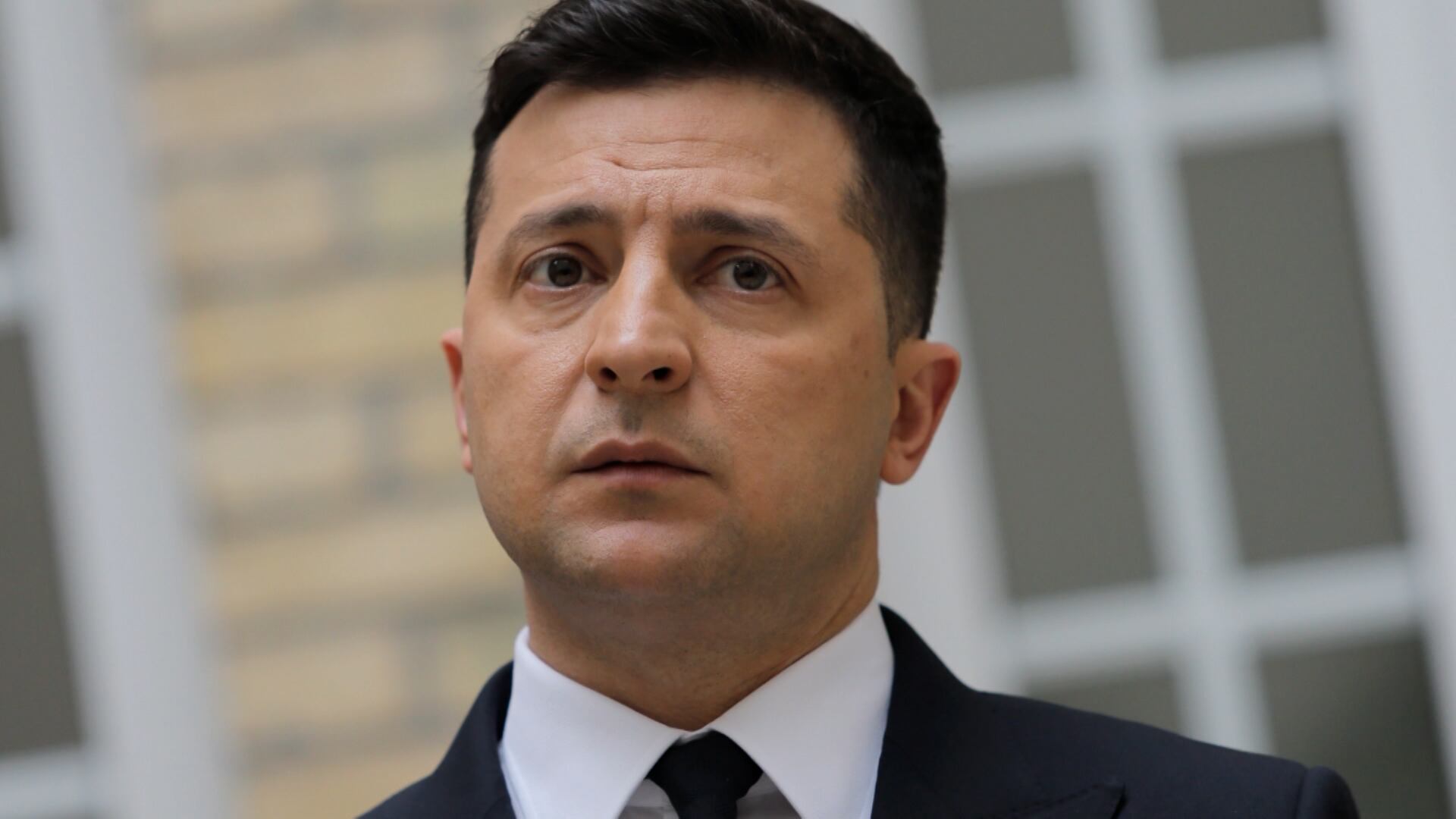
As the Biden administration continues to see the potential for an imminent invasion of Ukraine after contradictory reports of a Russian troop pullback or buildup, Rep. Ami Bera (D-Calif. 7th District), a member of the House Committee on Foreign Affairs, joined Cheddar News to give his insight into the tense situation. "When I was in Ukraine a couple of weeks ago and we were talking with the Ukrainian leadership with President Zelensky, they said we ought to approach Vladimir Putin as though he was a poker player," he said. "So this could be one of those head fakes where he's saying one thing and doing another thing."
The Biden Administration has now issued new guidelines when it comes to carbon capture. The new guidelines handed down this week encouraged the widespread use of climate attacks that traps and stores carbon emissions. The goal here is the process would help keep carbon out of the atmosphere without requiring a whole lot of change by big companies and manufacturing plants. Several scientists say that this method would be crucial to help us decrease the use of carbon emissions by the year 2050. Professor of Civil and Environmental Engineering at Stanford University, Mark Jacobson, joined Cheddar to discuss more.
Natalie Fertig, federal cannabis policy reporter for Politico Pro, joins Cheddar News to discuss the latest in marijuana legalization in the United States.
The Biden administration is launching a new task force to promote the use of 'cleaner' construction materials with lower life cycle emissions. This comes as the White House works to speed up government purchases of greener products. Sweta Chakraborty, climate change expert and U.S. president of "We Don't Have Time," joins Cheddar News to discuss.
Due to the staffing shortages of teachers in New Mexico, the state has been encouraging its National Guard members to fill in as licensed substitutes to keep schools open. Kurt Steinhaus, New Mexico secretary of education, joined Cheddar News to explain the state's stopgap measure amid its lack of teaching professionals. "The first thing they have to go through a fingerprint background check, just like any other substitute new Mexico. The second thing they have to do is go through some online training, and then we provided some in-person professional development about classroom management," Steinhaus explained about the qualifications process.