Here we go again: COVID-19 hospital admissions have inched upward in the United States since early July in a small-scale echo of the three previous summers.
With an updated vaccine still months away, this summer bump in new hospitalizations might be concerning, but the number of patients is far lower than before. A look at what we know:
HOW BAD IS THE SPIKE?
For the week ending July 29, COVID-19 hospital admissions were at 9,056. That's an increase of about 12% from the previous week.
But it's a far cry from past peaks, like the 44,000 weekly hospital admissions in early January, the nearly 45,000 in late July 2022, or the 150,000 admissions during the omicron surge of January 2022.
“It is ticking up a little bit, but it’s not something that we need to raise any alarm bells over,” said Dr. David Dowdy, an infectious disease epidemiologist at Johns Hopkins Bloomberg School of Public Health.
It’s likely that infections are rising too, but the data is scant. Federal authorities ended the public health emergency in May, so the Centers for Disease Control and Prevention and many states no longer track the number of positive test results.
WHAT ABOUT DEATHS?
Since early June, about 500 to 600 people have died each week. The number of deaths appears to be stable this summer, although past increases in deaths have lagged behind hospitalizations.
HOW ARE WE TRACKING THE VIRUS?
The amount of the COVID-19 virus in sewage water has been rising since late June across the nation. In the coming weeks, health officials say they'll keep a close eye on wastewater levels as people return from summer travel and students go back to school.
Higher levels of COVID-19 in wastewater concentrations are being found in the Northeast and South, said Cristin Young, an epidemiologist at Biobot Analytics, the CDC's wastewater surveillance contractor.
“It’s important to remember right now the concentrations are still fairly low,” Young said, adding it's about 2.5 times lower than last summer.
“There are a couple that we’re watching, but we’re not seeing anything like delta or omicron,” Young said, referencing variants that fueled previous surges.
And mutations in the virus don't necessarily make it more dangerous.
“Just because we have a new subvariant doesn’t mean that we are destined to have an increase in bad outcomes," Dowdy said.
WHEN IS THE NEW VACCINE COMING?
This fall, officials expect to see updated COVID-19 vaccines that contain one version of the omicron strain, called XBB.1.5. It’s an important change from today’s combination shots, which mix the original coronavirus strain with last year’s most common omicron variants.
It's not clear exactly when people can start rolling up their sleeves for what officials hope is an annual fall COVID-19 shot. Pfizer, Moderna and smaller manufacturer Novavax all are brewing doses of the XBB update but the Food and Drug Administration will have to sign off on each, and the CDC must then issue recommendations for their use.
Dr. Mandy Cohen, the new CDC director, said she expects people will get their COVID-19 shots where they get their flu shots — at pharmacies and at work — rather than at dedicated locations that were set up early in the pandemic as part of the emergency response.
“This is going to be our first fall and winter season coming out of the public health emergency, and I think we are all recognizing that we are living with COVID, flu, and RSV," Cohen told The Associated Press last week. “But the good news is we have more tools than ever before.”
AP Medical Writers Lauran Neergaard and Mike Stobbe contributed to this report.
The Associated Press Health and Science Department receives support from the Howard Hughes Medical Institute’s Science and Educational Media Group. The AP is solely responsible for all content.
Mukul Bakhshi, Chief of Strategy and Government Affairs for CGFNS International, joins Cheddar News to discuss strained U.S. hospitals seeking foreign nurses.
The Democratic governors of New Jersey, Connecticut, Delaware, and Oregon say they will lift mask requirements for schools in the coming weeks, reflecting a nationwide shift away from restrictions. Cheddar News speaks with internist Dr. Vivek Cherian whether it's safe to relax the regulation.
After months of investigation, board members from U.S. big oil companies were slated to appear before a House oversight committee this week to discuss their respective roles in pushing for climate initiatives internally. However, all four board members from Exxon, Shell, Chevron, and BP said they couldn't attend due to scheduling conflicts. Climate experts are testifying in their place about how effective big oil's climate promises have been so far. Meanwhile, President Joe Biden's lead science adviser Eric Lander has resigned after an investigation found he violated workplace policy. What will this mean for Biden's climate agenda? Amy Harder, executive editor of Cipher, a publication by Breakthrough Energy, joins Cheddar Climate to discuss.
Although this week's weather is predicted to be less severe than the 2021 storm, Texans are preparing for the worst - stocking up on supplies and emptying shelves in grocery stores, once again. Some Texans still have not recovered from last year's tragedy, and are heading into the next few weeks with anxiety for what's to come. Leslie Beyer, CEO of the Houston-based energy workforce & technology council, joins Cheddar News to discuss if the Texas grid will fail again.
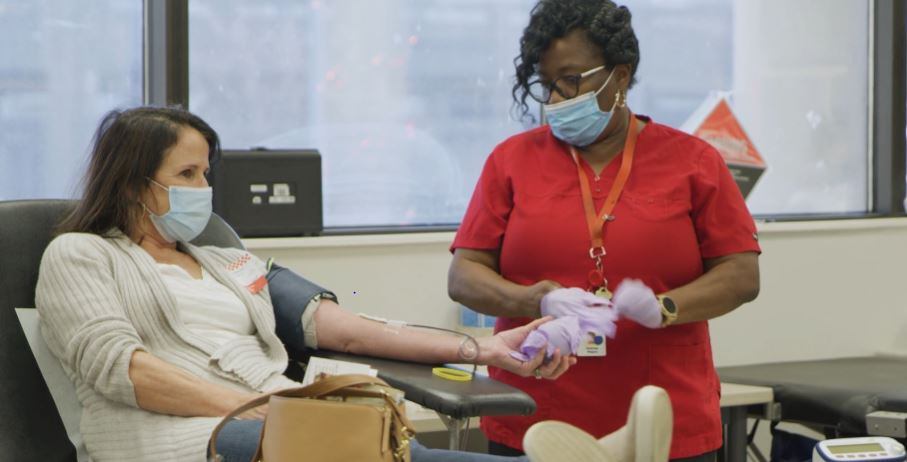
The American Red Cross has declared its first-ever "national blood crisis" in the United States. Since COVID hit the U.S. in March 2020, blood donations have declined by 10 percent. American Red Cross Medical Director, Dr. Baia Lasky joined Cheddar News to discuss the country facing the worst blood shortage in over a decade. Dr. Lasky noted that as much as 40 percent of Americans are eligible to donate blood but only about 4 percent do so. "This is going to be ongoing," she said. "This is not an acute shortage. We really do need the commitment of people to come out and donate and donate again." Appointments to donate can be made by using the Red Cross Donor App, at RedCrossBlood.org, or calling 1-800-RED CROSS (1-800-733-2767).
Eight months after the National Football League announced $1 million in research into cannabinoids, the NFL-NFLPA Joint Pain Management Committee has awarded the funding to two teams of medical researchers at the University of California San Diego and the University of Regina. The NFL says the studies will investigate the effects of cannabinoids on pain management and neuroprotection from concussion in elite football players, respectively. Cheddar correspondent Chloe Ailello spoke with Jeff Miller, the executive vice president of communications, public affairs, and policy for the NFL, about the studies, as well as the recent lawsuit filed against the NFL by former Miami Dolphins head coach Brian Flores. "Maybe we can learn things from other alternative pain approaches that are going to benefit our player population and then sports medicine as a whole," Miller said.
On this episode of Cheddar Innovates: CEO of HereAfter AI discusses how artificial intelligence can be used to preserve family history and stories, and allow you to 'talk' to loved ones that have passed; Creator of the board game 'Travel Explore Discover' explains how she came up with the idea for this informative and educational board game, and how she's using the proceeds to give back to her community; Cheddar gets a look at Curiosity Stream's 'The Humboldt Current.'
Immunologist Dr. Purvi Parikh of the Allergy & Asthma Network joined Cheddar News to break down long Covid, in which Covid symptoms remain up to two years after infection; a phenomenon that has so far mystified health experts.
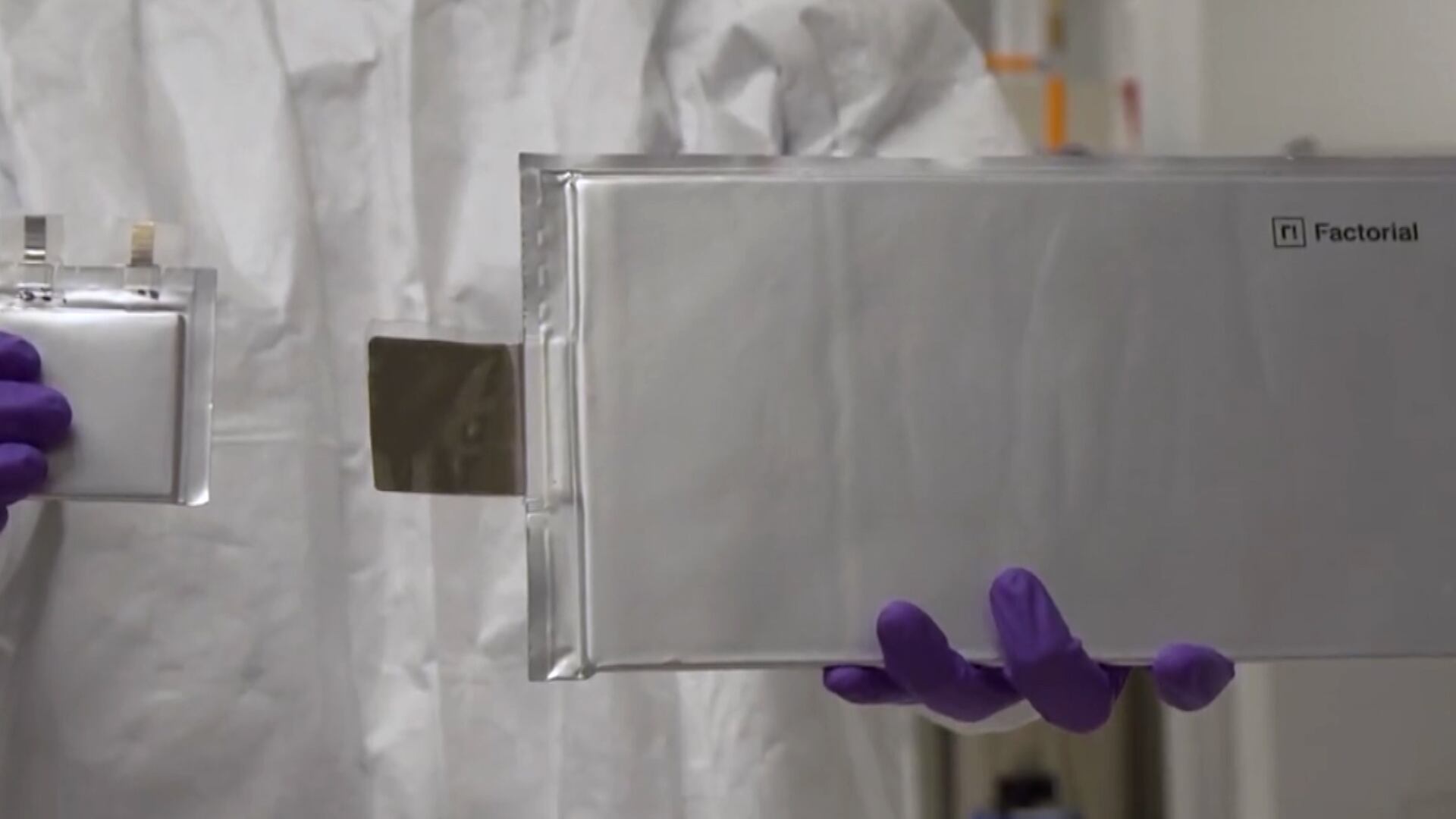
Solid-state battery maker Factorial Energy recently raised $200 million in a Series D round led by Mercedes-Benz and Stellantis. Factorial says the funding will be used to accelerate commercial production and deployment of its solid-state battery technology, which the company says is safer, and offers up to 50% more driving range than current lithium-ion technology. Factorial also has joint development agreements (announced in late 2021) with Mercedes-Benz, Stellantis, and Hyundai, three of the top 10 global automotive manufacturers, to commercialize its batteries. Factorial CEO Siyu Huang joined Cheddar News' Closing Bell to discuss.