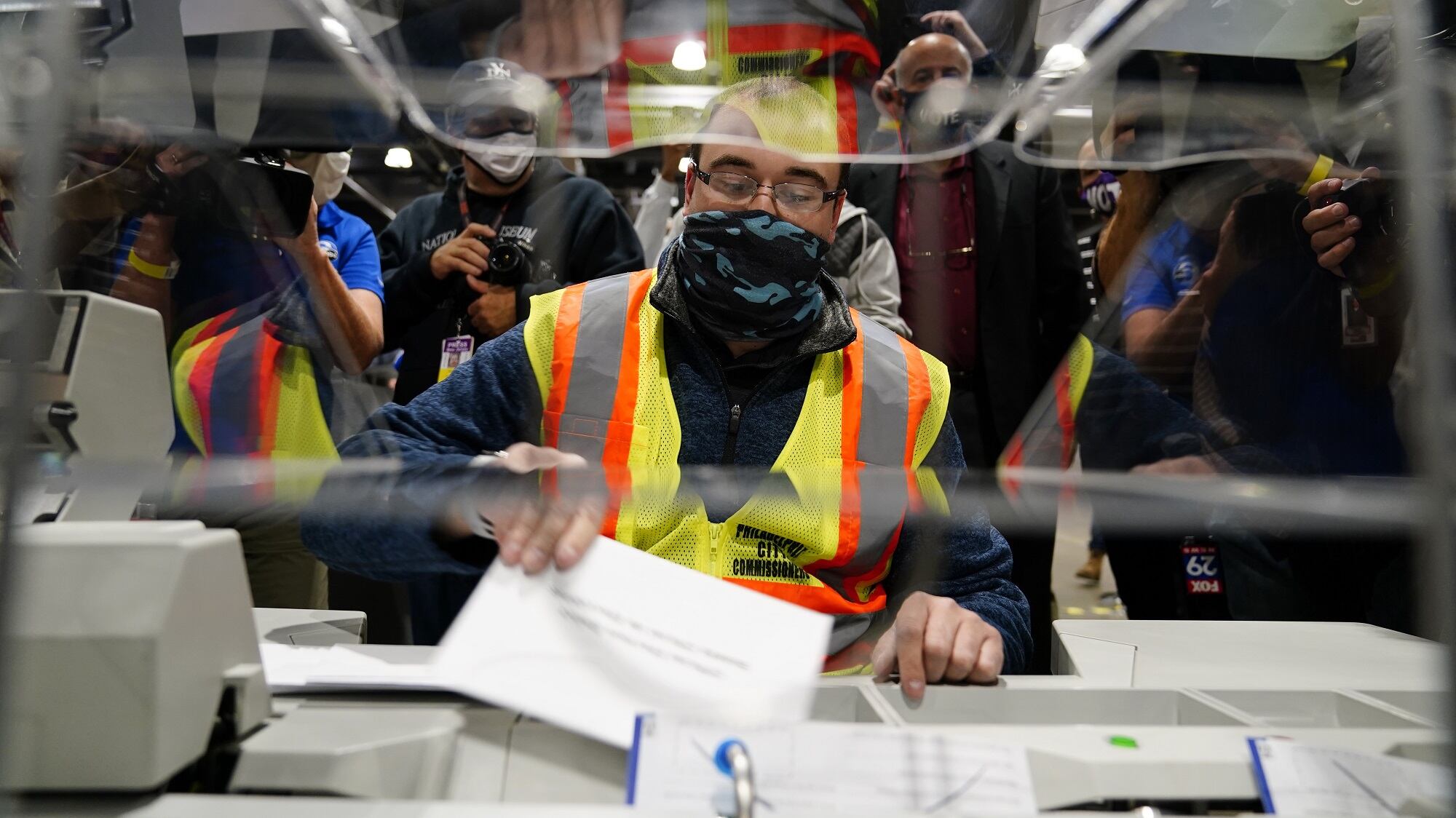
John Hansberry, with the Philadelphia City Commissioners office, demonstrates an extraction machine at the city's mail-in ballot sorting and counting center in preparation for the 2020 General Election in the United States, Monday, Oct. 26, 2020, in Philadelphia. (AP Photo/Matt Slocum)
HOW WILL VARIOUS BALLOTS BE COUNTED, AND WHAT RESULTS WILL BE KNOWN ON ELECTION NIGHT?
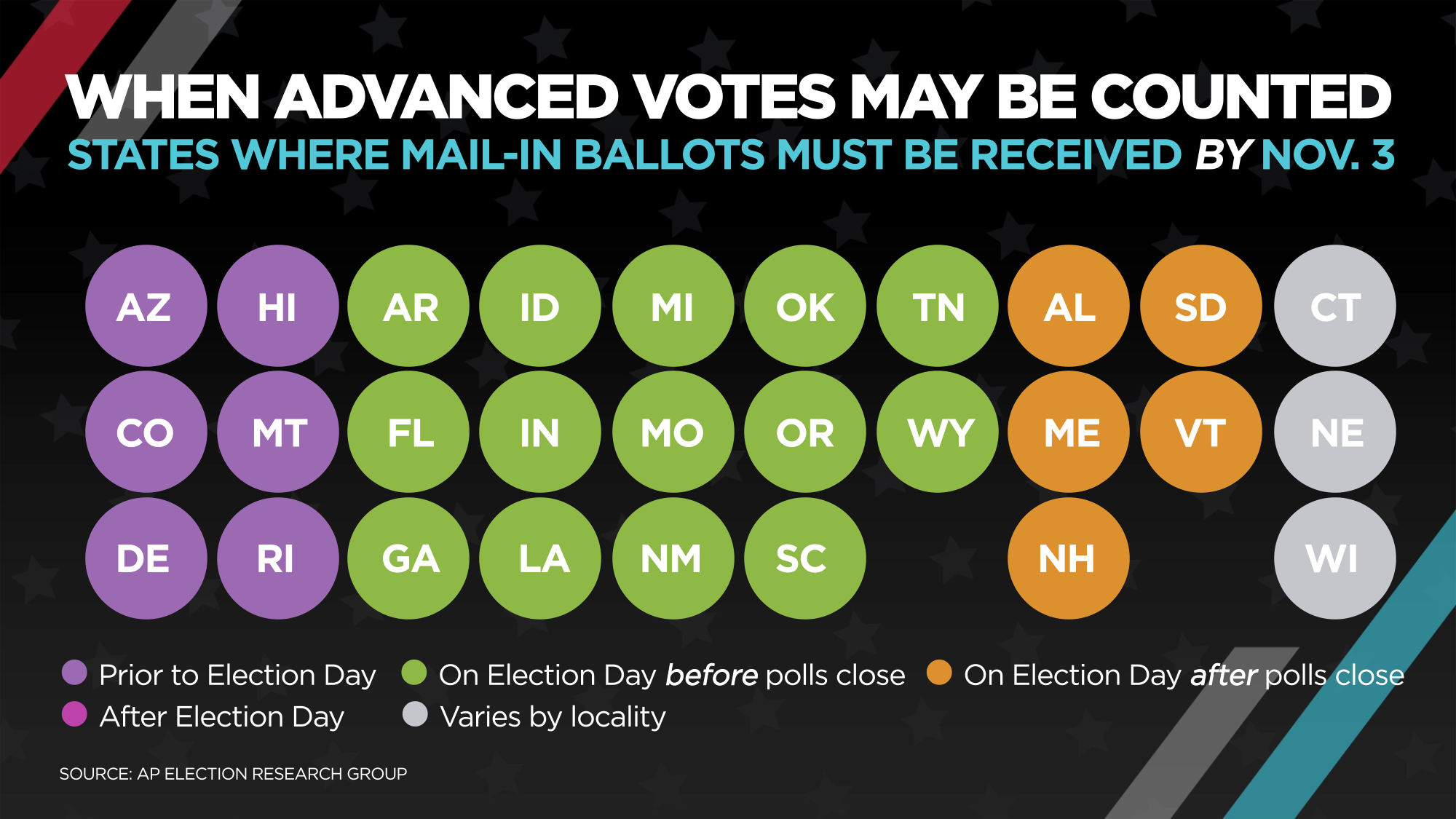
Millions of Americans have already voted, but each state has different rules on when it's allowed to actually start counting those ballots. That is going to produce results coming in at very different times — perhaps days or even weeks after Election Day.
In some places, election officials can begin processing ballots weeks before Election Day. That means workers can start verifying voter information while also removing ballots from their envelopes to physically get them ready for tabulation. Doing so readies ballots for counting on Election Day and will speed up the release of results.
But it's not that simple.
In some of the most critical battleground states, laws prevent the early processing of ballots. So on Nov. 3, Election Day, officials will have to run an in-person election while also working through the unprecedented number of mail-in votes. This dynamic is likely to delay results and heighten the potential for big shifts if in-person vote tallies are upended by the counting of mail-in ballots.
President Donald Trump has repeatedly warned of voting fraud without offering any evidence. Because of that, there are concerns that he will use delays in vote-counting to declare results illegitimate. While results might come in later than usual this year, that's because of a change in how people are voting, not malfeasance or fraud.
Here is another wrinkle: Nationwide delivery delays at the U.S. Postal Service are sparking fears that ballots might not arrive in time to be counted. Republicans, including Trump's campaign, have been filing lawsuits to stop election officials from counting ballots that are delivered after Election Day.
For example: As of right now in Pennsylvania, votes that arrive by mail three days after Nov. 3 will be counted, after an intense legal battle that went all the way to the U.S. Supreme Court last week. Republicans have filed another suit against the extension. Also, Pennsylvania doesn’t allow early processing of mail-in ballots, further complicating matters.
In Michigan, another hotly contested state, an appeals court has struck down a 14-day ballot-counting extension, leading the state's top election official to urge voters to drop off their ballots in person rather than use the Postal Service. Courts have also nixed similar extensions in Wisconsin and Indiana.
This story is part of a series dedicated to answering commonly asked questions from AP's audience about the 2020 U.S. presidential election.
Nancy Pelosi and House Democratic leaders are now planning to amend the stop trading on congressional knowledge act, otherwise known as the 'Stock' Act. This 2012 law governs how members disclose the purchase or sale of stocks and amending it would close a loophole, eliminating the trading of individual stocks by members of congress. Pelosi has consistently opposed a ban on stock trading by lawmakers and congressional staff...so what's changed? Kedric Payne, Vice President of Campaign Legal Center, joins Cheddar News to discuss.
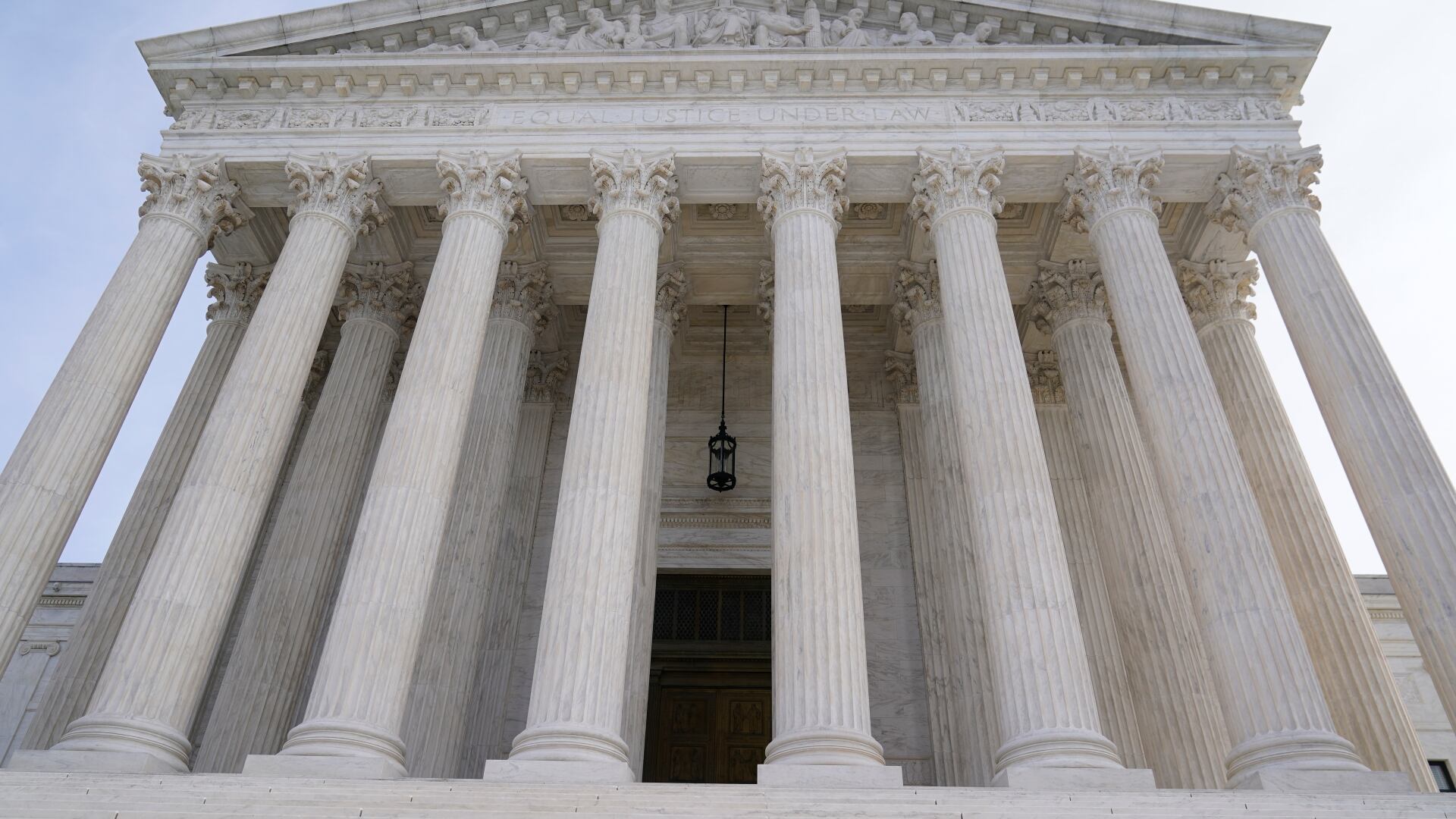
In a 5-4 vote, the U.S. Supreme Court allowed for a controversial new version of the Alabama congressional map to remain in place. The lower court had previously ordered that the state must redraw that congressional map because it violates the Voting Rights Act by diluting the political power of Black voters. Redistricting expert Yurij Rudensky joins Cheddar News to weigh in.
Florida lawmakers have introduced a controversial bill restricting some discussion of sexual orientation and gender identity in classrooms with young students. Supporters say the move empowers parents to have more of a say in what their children learn. Florida State Senator Shevrin Jones joins Cheddar News to discuss more.
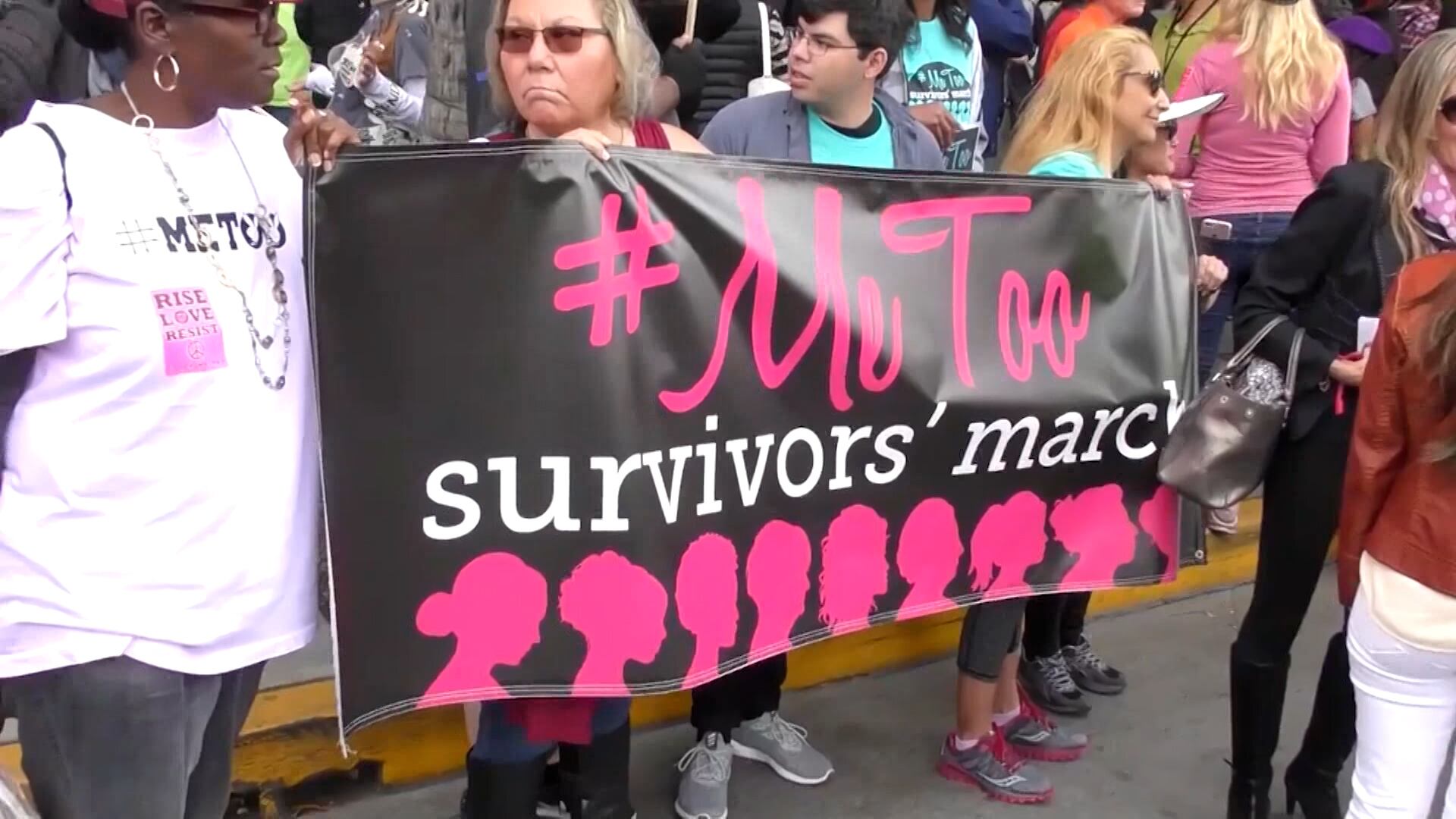
Congress this week passed a bill that would end forced arbitration for workplace sexual assault and harassment, one of the most significant changes to employment law in years. Cheddar News speaks with Marjorie Mesidor, Sexual Harassment Attorney, who explains that arbitrators are often retired judges or attorneys who "tends to have a more conservative view both to law and rewards."
As the situation with Russia has grown more precarious, the White House urged Americans remaining in Ukraine to leave immediately. The Biden administration that it sees continuing signs of escalation but did not have specific information detailing a timetable for a potential invasion. Kristine Berzina, senior fellow and head of the geopolitics team at the Alliance for Securing Democracy, joined Cheddar News to provide her analysis. "There's talk of an impending phone call between President Putin, President Biden," Berzina said. "That is certainly a good sign to indicate that there would be significant cost."
Terrell Starr, host of 'Black Diplomats' podcast and senior nonresident fellow at the Eurasia Center for Atlantic Council, joins Cheddar News from Kyiv, Ukraine to discuss the mounting tension there.
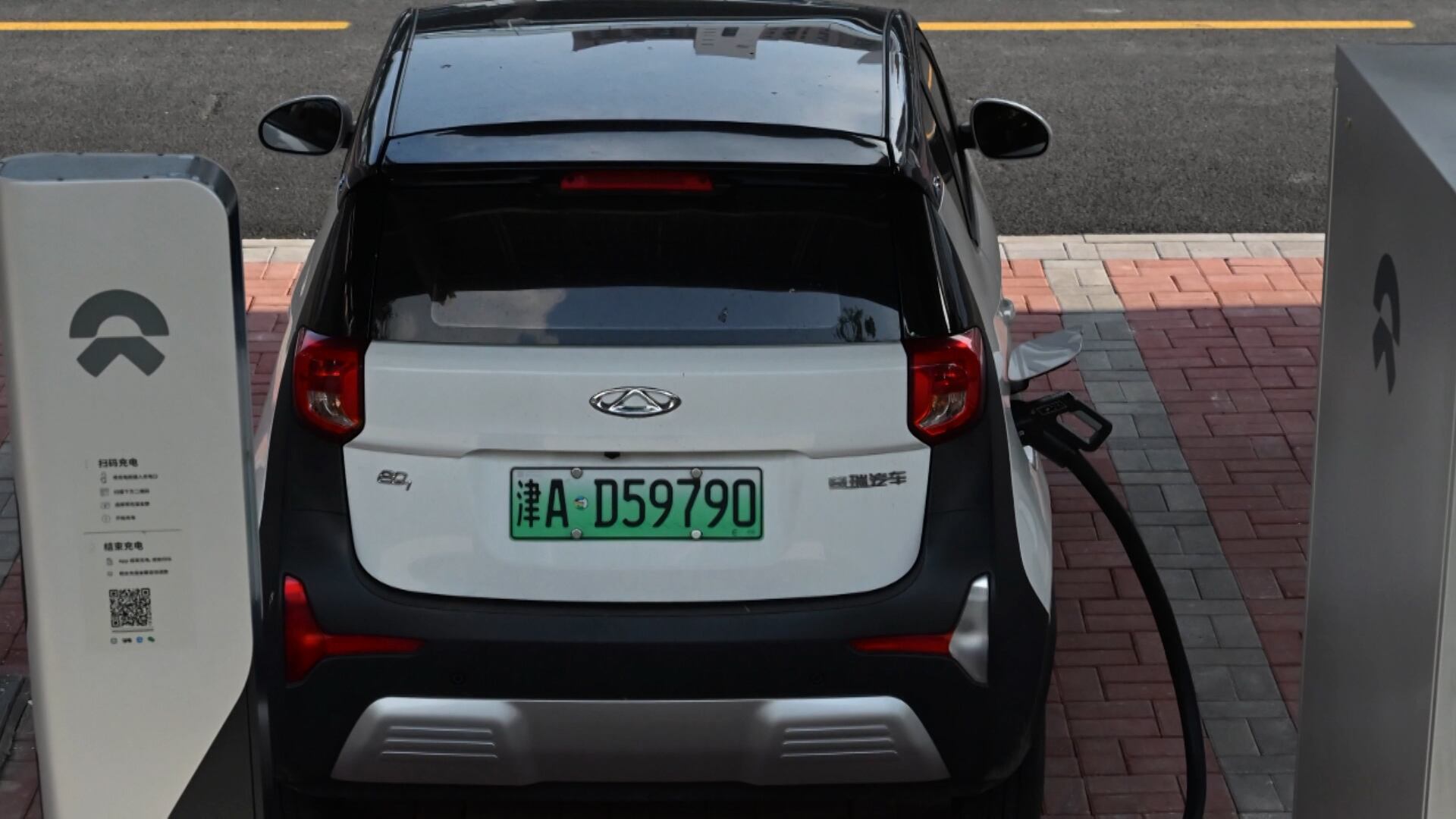
The White House laid out plans for a $5 billion investment into a national network of charging stations to ease EV driving anxiety. Bruce Brimacombe, CEO of EV infrastructure GOe3 joined Cheddar News to discuss how much needs to be done for drivers to get over the fear of running out of energy. "People need to be able to do what they're doing now," he said. "But that is the way that if you're going to buy an electric car, you got to feel like you're not changing your world." Brimacombe noted that building out the infrastructure between cities was GOe3's own focus.
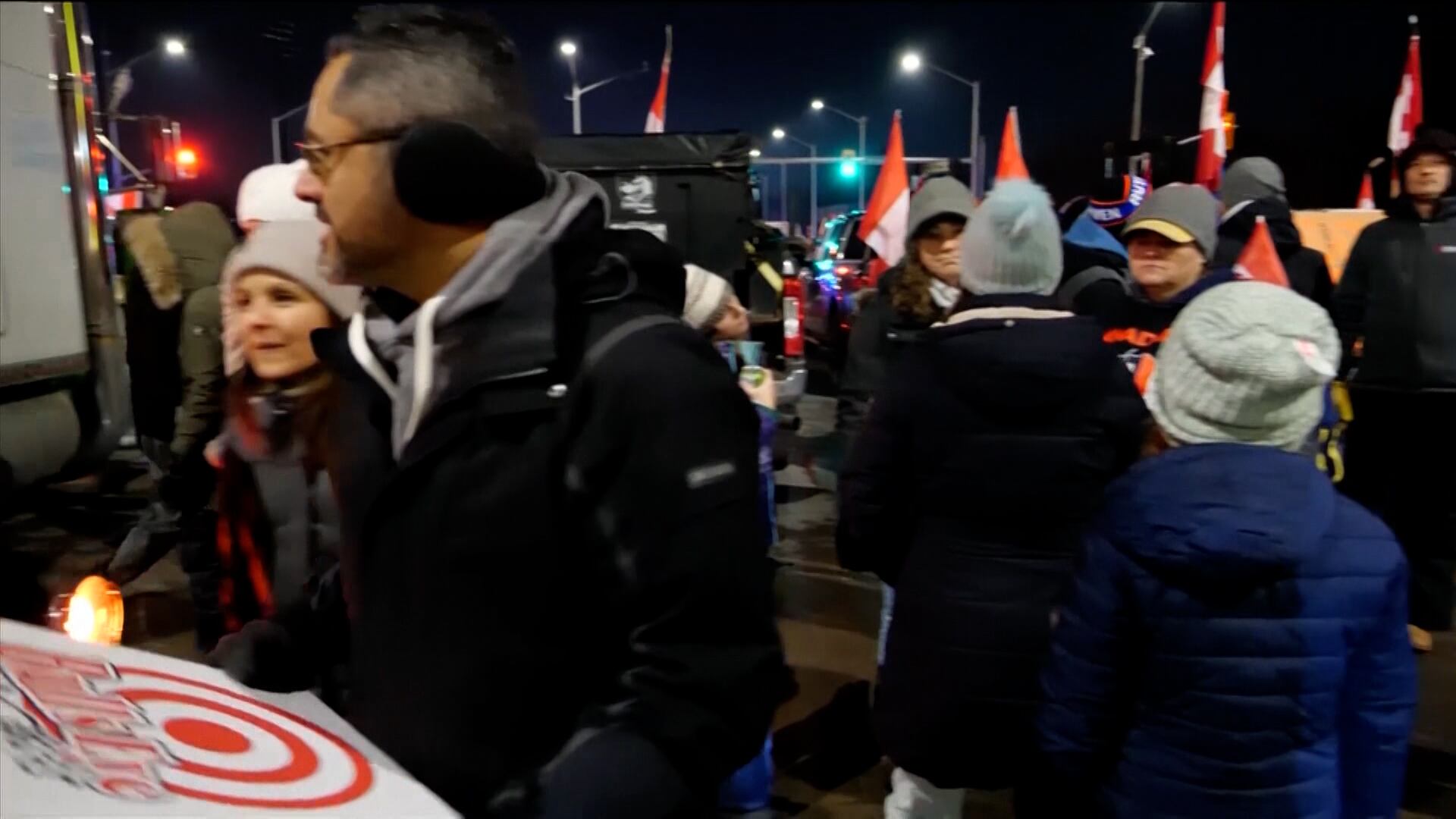
U.S. automakers are saying that the blockade of the Ambassador Bridge, a crucial border crossing between the U.S. and Canada, is affecting their production lines. Michelle Krebs of Cox Automotive warns that the disruption "couldn't come at a worst time," amid chip and labor shortages in Detroit.
AND DETROIT-BASED AUTO MAKERS SAY THEY ARE SHUTTING DOWN PLANTS OR SCALING BACK PRODUCTION BECAUSE OF PARTS SHORTAGES.
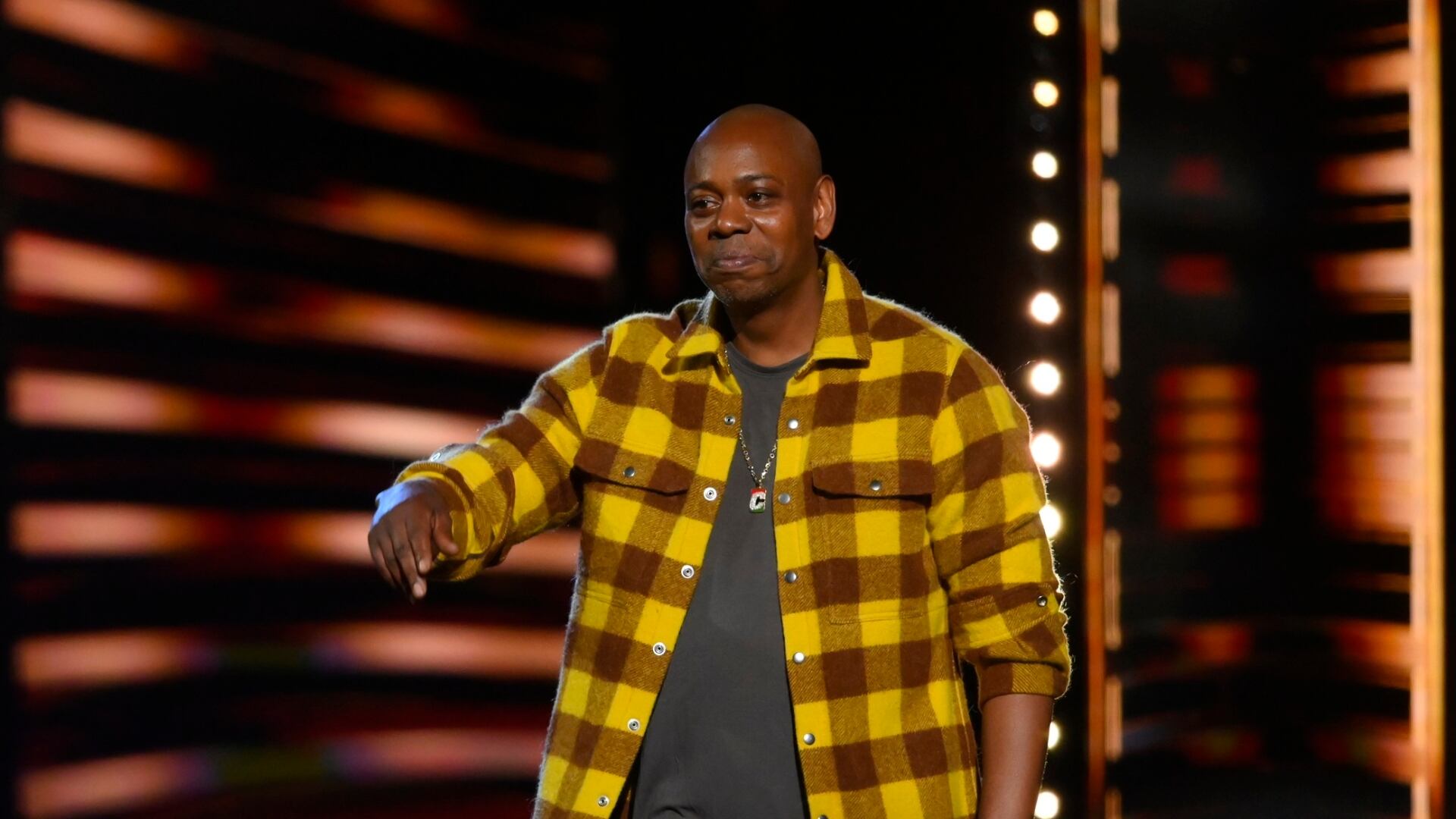
Plans to add affordable housing to a development in Yellow Springs, Ohio, were squashed after comedian Dave Chappelle and other community members spoke out against the project. Chappelle threatened to pull the plug on his local comedy club and restaurant projects if the development had been approved.