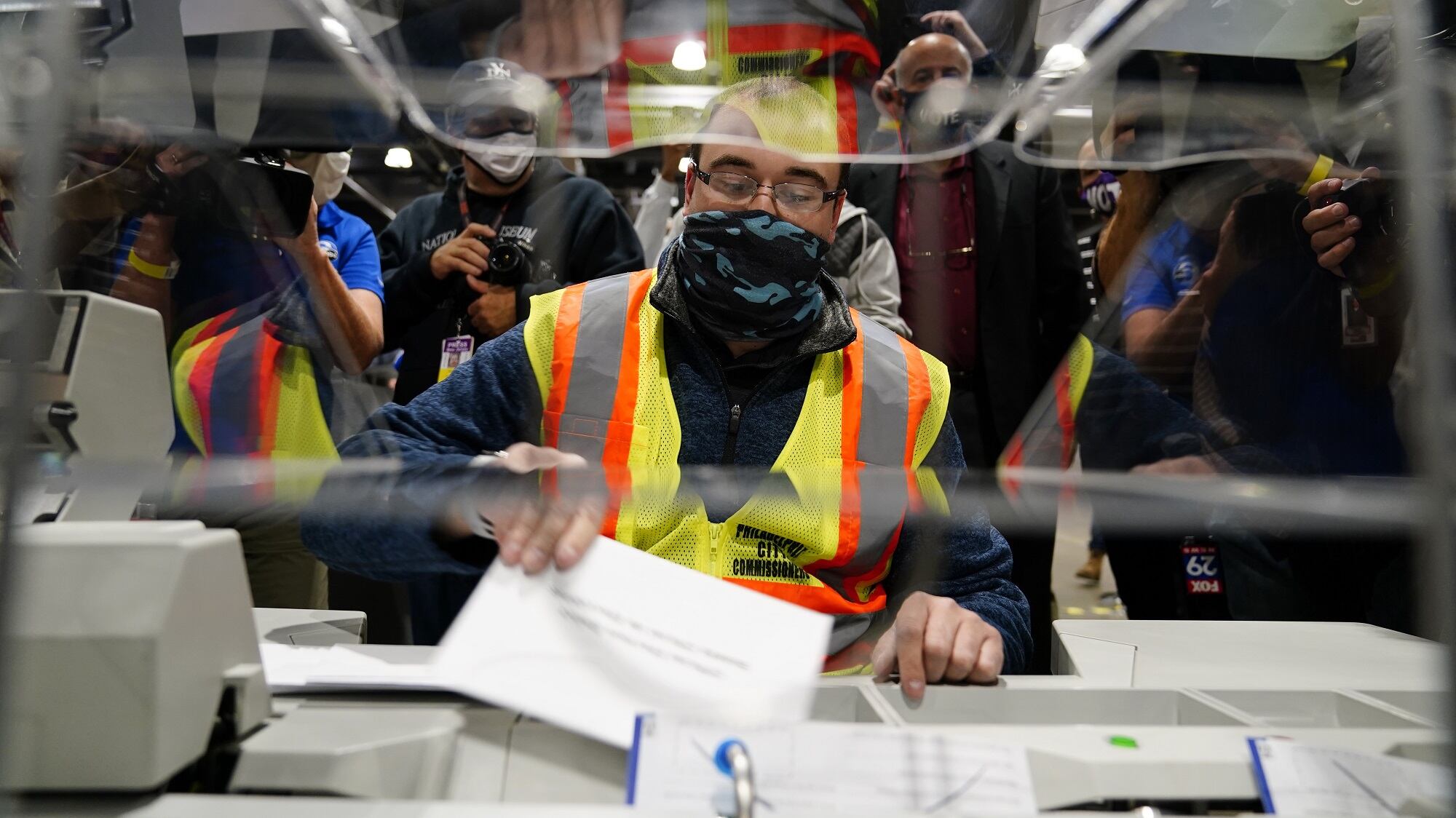
John Hansberry, with the Philadelphia City Commissioners office, demonstrates an extraction machine at the city's mail-in ballot sorting and counting center in preparation for the 2020 General Election in the United States, Monday, Oct. 26, 2020, in Philadelphia. (AP Photo/Matt Slocum)
HOW WILL VARIOUS BALLOTS BE COUNTED, AND WHAT RESULTS WILL BE KNOWN ON ELECTION NIGHT?
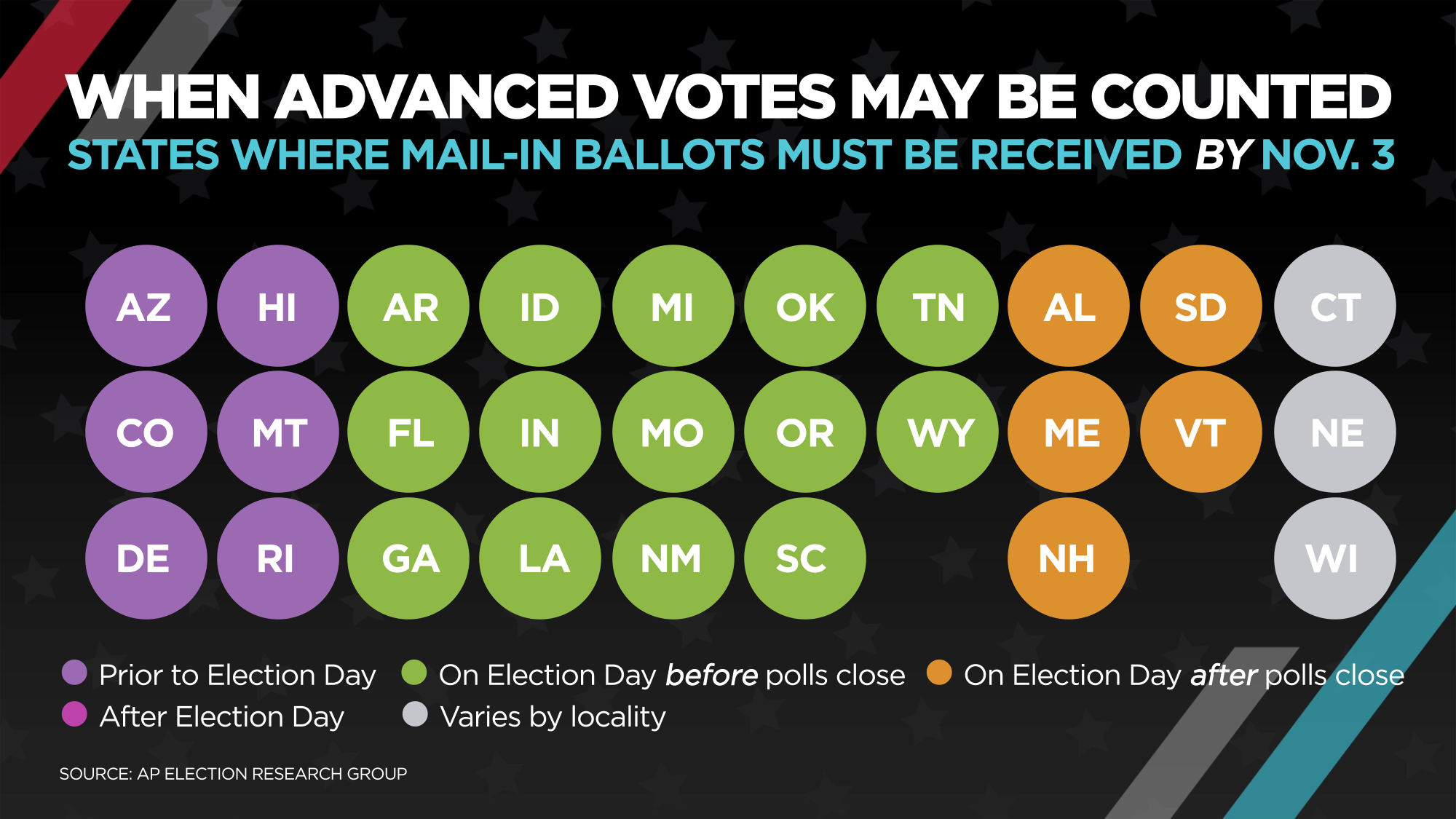
Millions of Americans have already voted, but each state has different rules on when it's allowed to actually start counting those ballots. That is going to produce results coming in at very different times — perhaps days or even weeks after Election Day.
In some places, election officials can begin processing ballots weeks before Election Day. That means workers can start verifying voter information while also removing ballots from their envelopes to physically get them ready for tabulation. Doing so readies ballots for counting on Election Day and will speed up the release of results.
But it's not that simple.
In some of the most critical battleground states, laws prevent the early processing of ballots. So on Nov. 3, Election Day, officials will have to run an in-person election while also working through the unprecedented number of mail-in votes. This dynamic is likely to delay results and heighten the potential for big shifts if in-person vote tallies are upended by the counting of mail-in ballots.
President Donald Trump has repeatedly warned of voting fraud without offering any evidence. Because of that, there are concerns that he will use delays in vote-counting to declare results illegitimate. While results might come in later than usual this year, that's because of a change in how people are voting, not malfeasance or fraud.
Here is another wrinkle: Nationwide delivery delays at the U.S. Postal Service are sparking fears that ballots might not arrive in time to be counted. Republicans, including Trump's campaign, have been filing lawsuits to stop election officials from counting ballots that are delivered after Election Day.
For example: As of right now in Pennsylvania, votes that arrive by mail three days after Nov. 3 will be counted, after an intense legal battle that went all the way to the U.S. Supreme Court last week. Republicans have filed another suit against the extension. Also, Pennsylvania doesn’t allow early processing of mail-in ballots, further complicating matters.
In Michigan, another hotly contested state, an appeals court has struck down a 14-day ballot-counting extension, leading the state's top election official to urge voters to drop off their ballots in person rather than use the Postal Service. Courts have also nixed similar extensions in Wisconsin and Indiana.
This story is part of a series dedicated to answering commonly asked questions from AP's audience about the 2020 U.S. presidential election.
U.S. stocks closed Friday at session lows after May CPI data showed inflation in the U.S. has not peaked and is still rising rapidly. For the week, the S&P fell 5.06%, the Dow lost 4.58%, and the Nasdaq dropped 5.60%, marking the worst week since January for all three major indexes. Mike Zigmont, Head of Trading and Research at Harvest Volatility Management, joins Cheddar News' Closing Bell to discuss.
Benefits brokerage, Nava Benefits, raised $40 million in a Series B round. Nava says it's on a mission to fix healthcare, one benefits plan at a time. The startup is working to bring benefits to small business that are normally available to only Fortune 500 companies. Brandon Weber, Co-Founder and CEO of Nava Benefits, joined Cheddar News' Closing Bell to discuss.
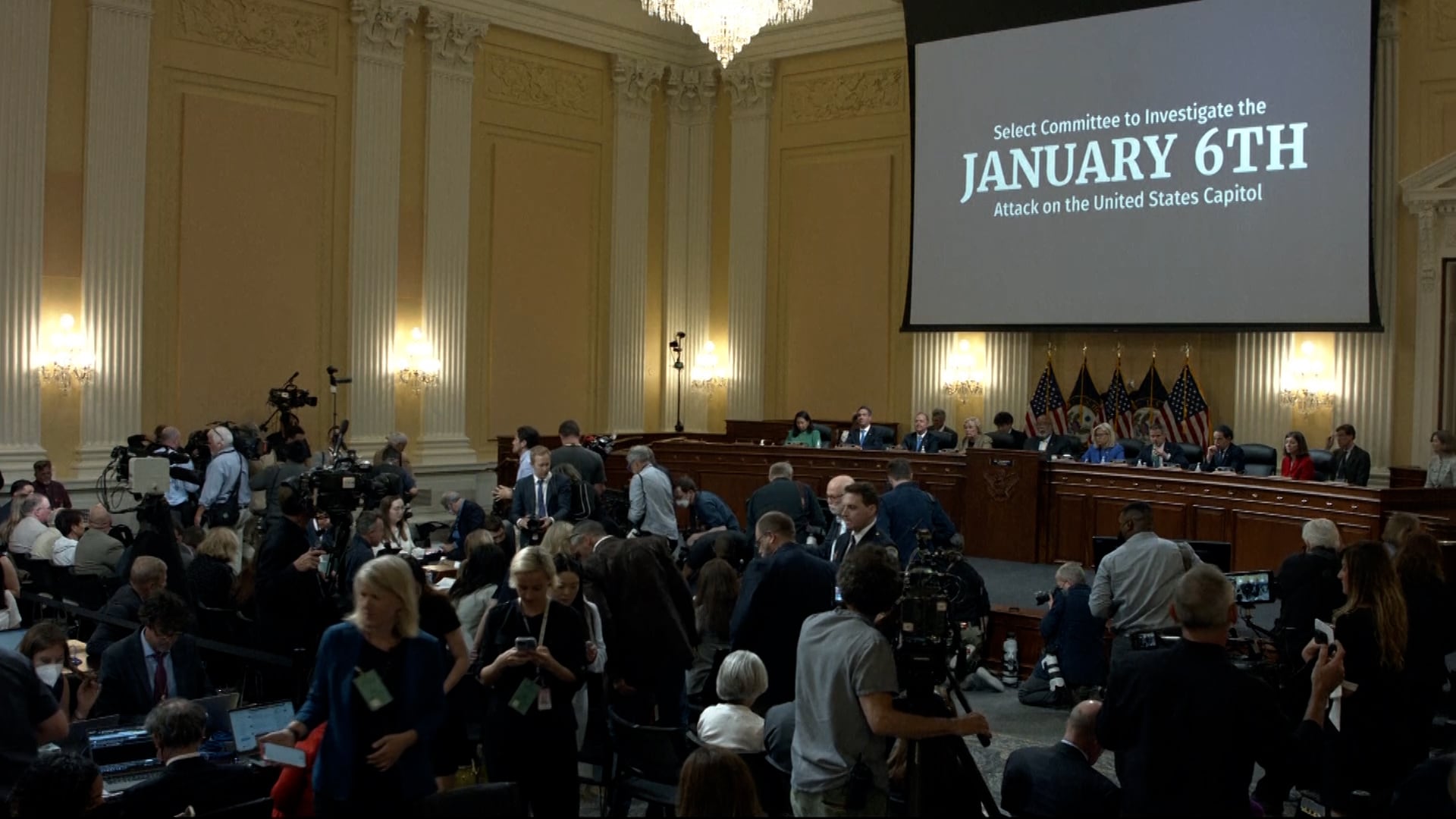
The House Select Committee investigating the Jan. 6 riots on Capitol Hill held its first primetime hearing on Thursday. Cheddar News speaks with legal analyst Tracy Pearson, who breaks down the biggest takeaways.
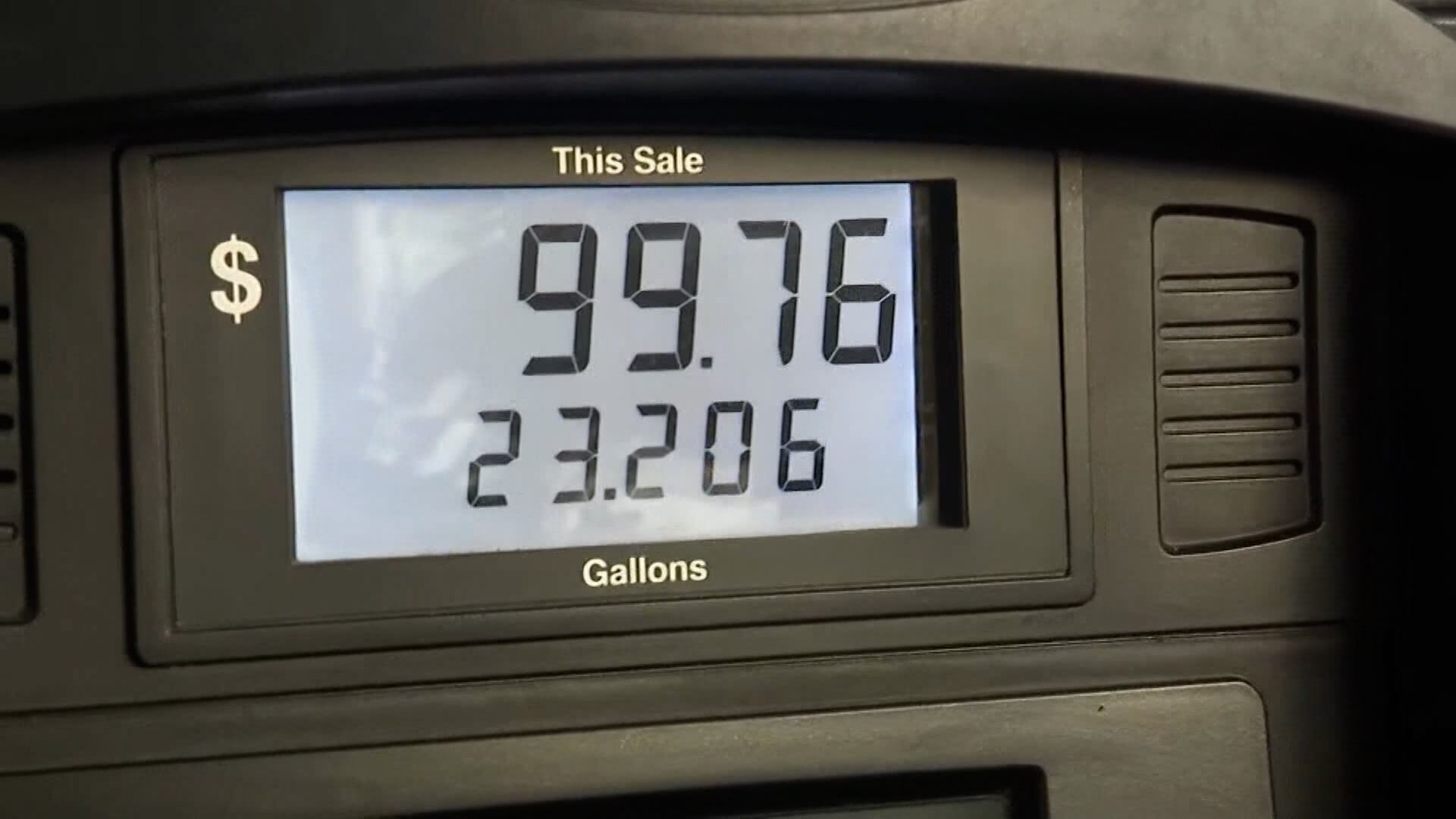
Fuel and oil prices have risen almost 17 percent since May, making the national gas prices reach nearly $5 a gallon. Andrew Lipow from consulting firm Lipow Oil Associates joined Cheddar News to discuss the future of gas prices. "The biggest issue on the oil market is really events that are beyond our control, which is what is happening over in Europe," he said, regarding the ongoing Russia Ukraine war. Lipow also said he predicted gas prices to hit $5.05 and that he's focused on the Biden administration's overtures in repairing a relationship with Saudi Arabia.
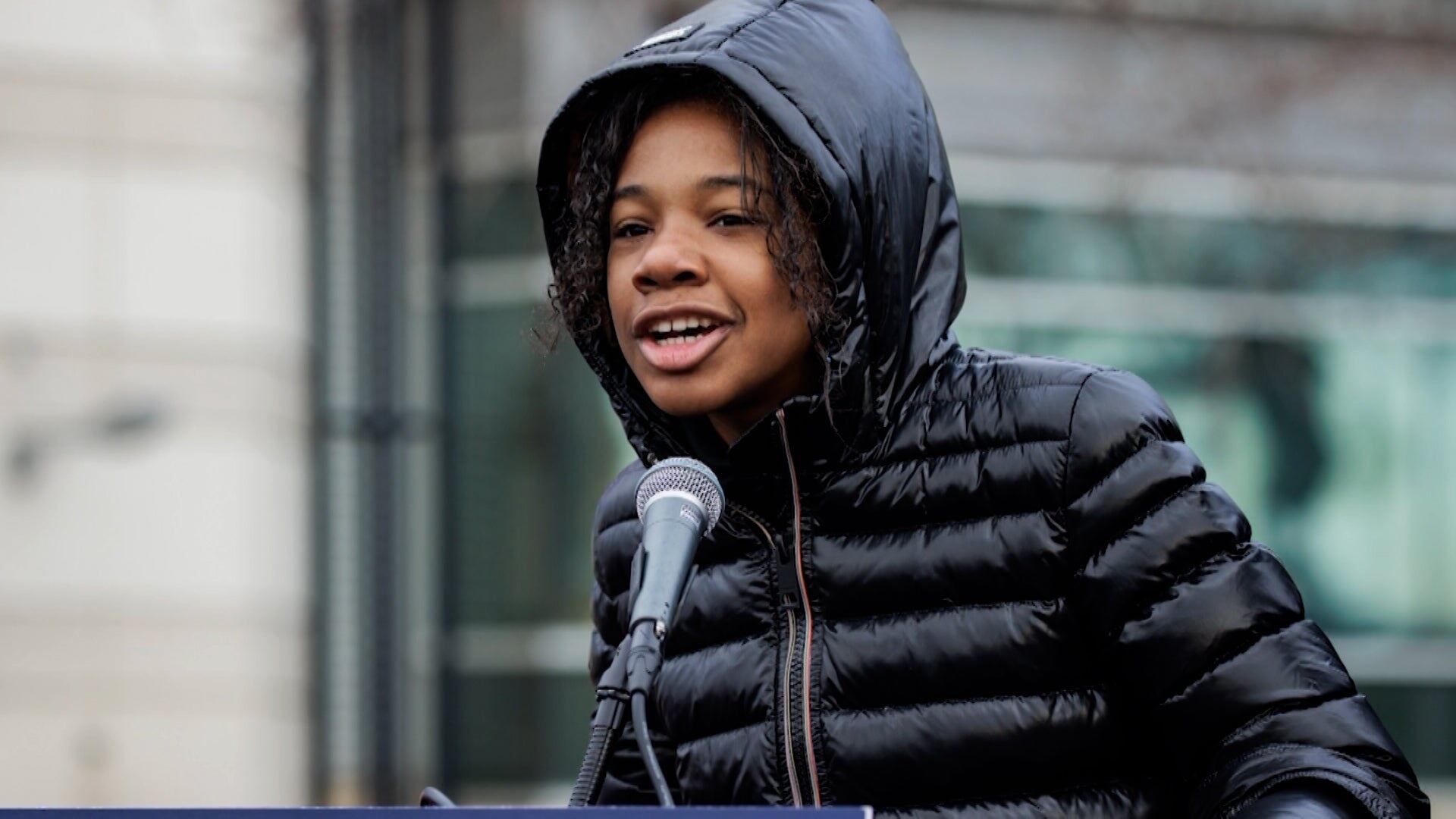
March For Our Lives will be returning this weekend to Washington, DC, in the wake of the recent mass shooting seen throughout the country. Marchers include Yolanda Renee King, the only granddaughter of Martin Luther King Jr. She joined Cheddar News to discuss the importance of the march and activism in general. "I just think that it's so important to have these rallies because we need to demand to our leaders and politicians that they pass legislation and that and we actually need to see action," she said.
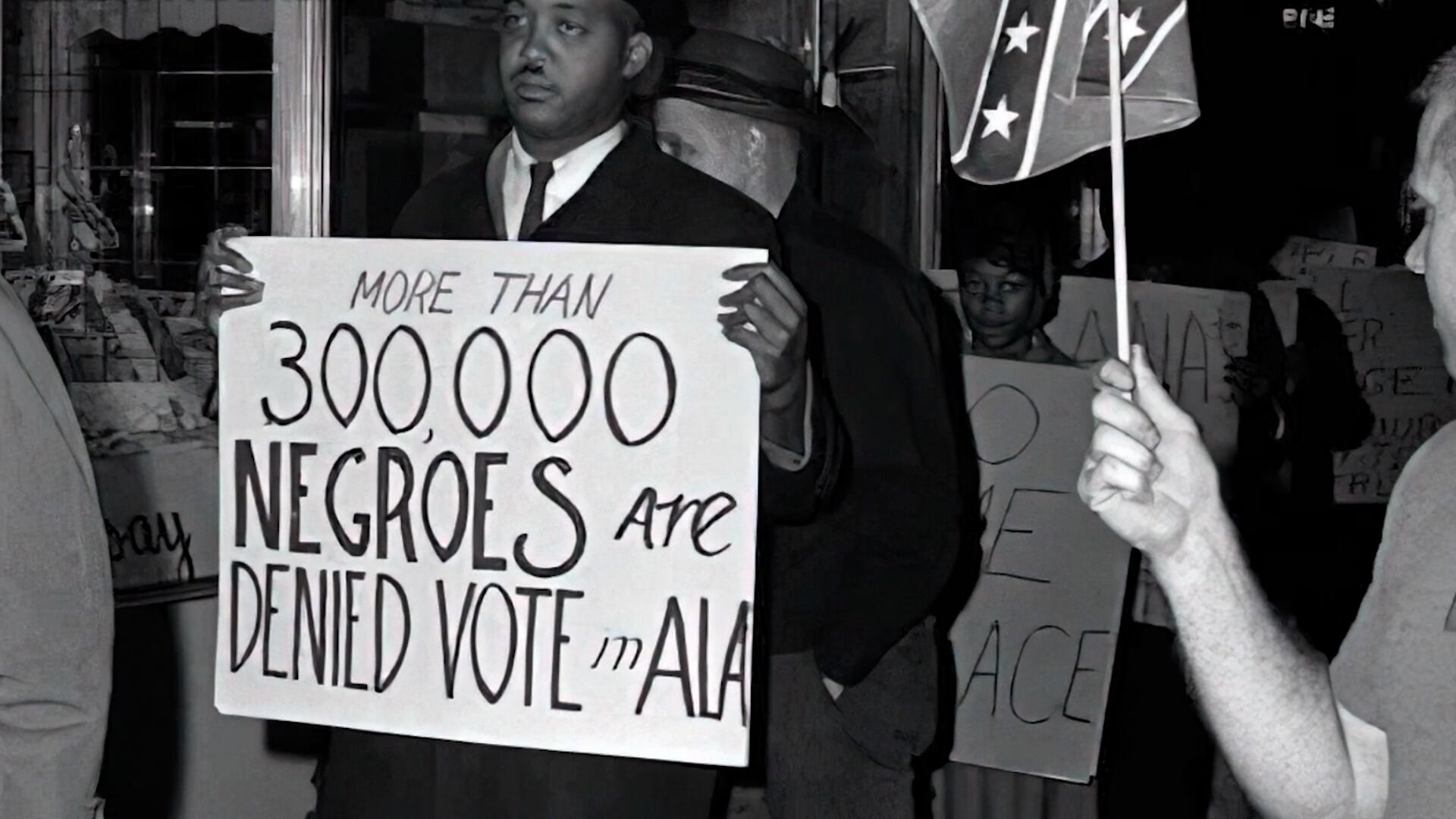
Erika Alexander and Whitney Dow, directors of 'The Big Payback,' join Cheddar News to discuss their new film, 'The Big Payback.' It premieres Saturday, June 11 at the Tribeca Festival.
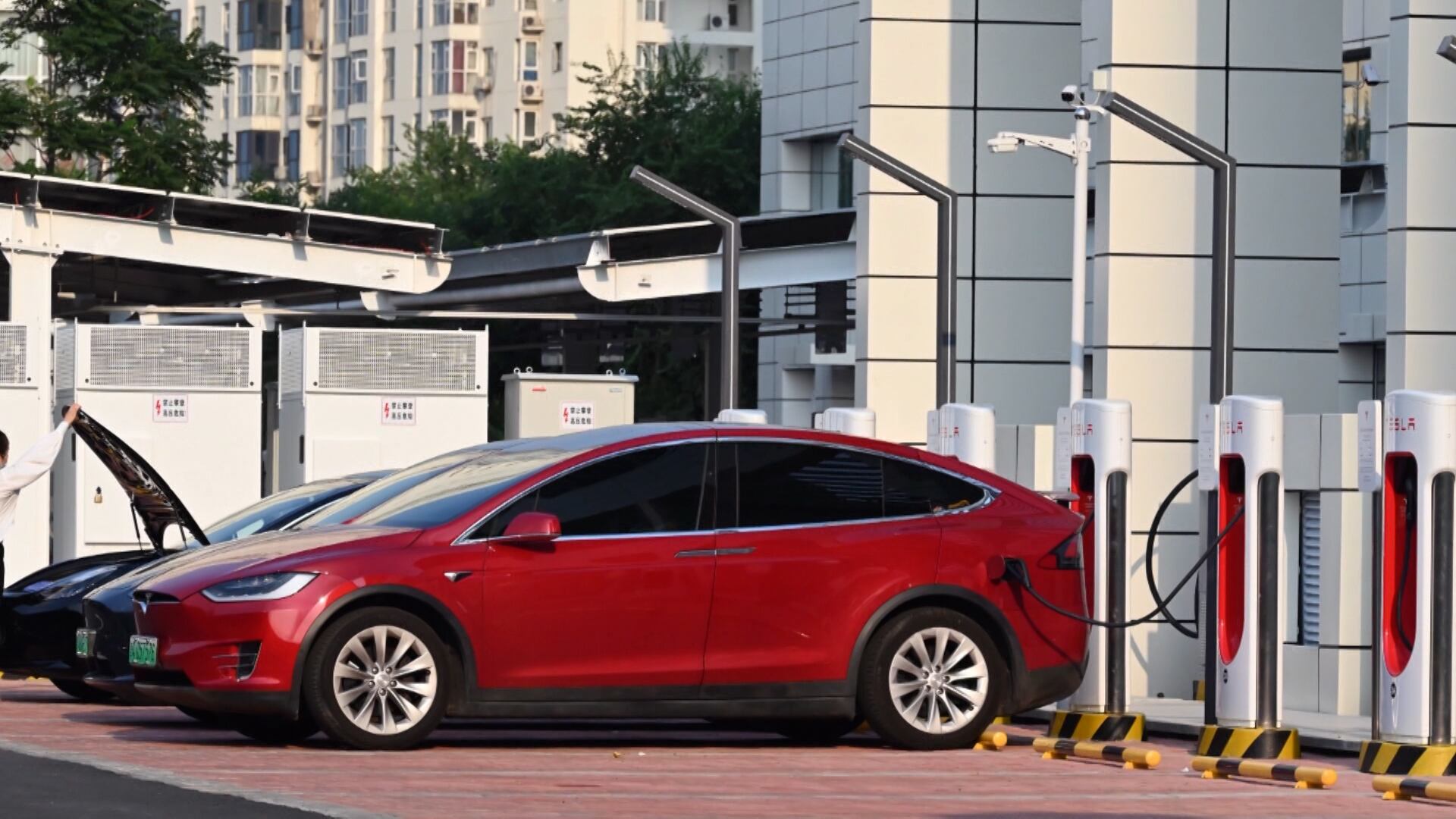
President Biden proposed a new rule that would add 500,000 chargers for electric vehicles nationwide. The proposal comes amid the rapid shift to EVs with dozens of automakers announcing plans for all-electric fleets within the next decade. But with the new surge will the U.S. have the proper infrastructure to keep up? Scott Painter, founder and CEO of Autonomy.com joined Cheddar's Opening Bell to discuss. "I really think the idea of standardization is a big deal. Standardization certainly makes it much better for everybody to be able to get a charge when they need one," he said.
The House select committee investigating the January 6th riots on Capitol Hill is opening its landmark series of public hearings. Cheddar News speaks with Mike Sozan, senior fellow at the Center for American Progress who explains how to follow the hearings and what to expect.