*By Carlo Versano*
Once every decade, there's a seismic shift in technology ー usually in the form of a new innovation ー that reshapes how we live, said venture capitalist Gene Munster.
"There's always little waves going on in tech, but every 10 years or so there's a big wave that hits," Munster, a managing partner at Loup Ventures, said Wednesday in an interview on Cheddar.
There was the smartphone in the mid-aughts, following the widespread adoption of the world wide web. Before that, the PC. Munster said we're now in the early stages of the latest changes in tech: the emergence of A.I., robotics, autonomous vehicles, and augmented and virtual reality. Our lives, he said, will be manifestly different. And Munster's firm recently launched a new ETF to expose investors to that theory.
The Loup Frontier Tech ETF will contain a basket of relatively small, highly innovative tech companies with market caps in the $500 million to $2 billion range, Munster said. [The fund](http://www.innovatoretfs.com/pdf/LOUP_Factsheet.pdf), which launched in late July, was built to reward companies with revenue growth and positive cash flow.
For now, Munster wants to prioritize smaller stocks, but there's one major exception: the ETF does hold shares of Tesla.
Why does the $50 billion-plus company fit the strategy? Munster said Tesla, despite its public dramas, has "the greatest product road map of any tech company." He added that CEO Elon Musk has built a business that is uniquely positioned to leverage renewable energy, the storage of that energy, and the combined trends of zero-emissions and autonomy in automobiles.
Munster's belief that virtual and augmented reality are technologies that will "fundamentally change how humans interact with each other" is not widespread ー VR, after all, has struggled to gain broad adoption, and Snap, which built its first app on the basis of AR, has seen its share price cut in half since its IPO last year. But the Loup Frontier Tech ETF includes stocks like Micron Technology, which makes chips for VR headsets. That kind of diversification ー plays on gaming and autonomy side by side ー is what distinguishes his ETF holdings from typical sector-based funds, Munster said.
One tech giant which may be marking its own seismic shift is Apple. Munster, who was previously a top analyst of the stock at research firm Piper Jaffray, believes the company is on the verge of transitioning from a hardware operation into a service-based company with its App Store, Apple Music, and iCloud. That change will propel the stock higher as investors shift from a "boom-bust" mentality based on the product cycle to a more solid conception of "Apple as a Service."
And what about Apple, flush with all that cash, making a play for Tesla?
Munster said it isn't out of the question. Both companies have a shared ideology based on a love of design; and Apple has long been trying to enter the EV market with its Project Titan electric car.
"It's always been a fairy tale that Apple and Tesla are going to find a way to get together," he said.
For full interview [click here] (https://cheddar.com/videos/gene-munster-captures-tech-growth-with-new-etf-launch).
For the first time since September, Bitcoin fell below $40,000 early Monday. The currency's average short-term price has now dipped below its average long-term price, which is known by a rather dramatic term, a death cross. According to analysts, the indicator appears to be a result of mounting concerns of faster liquidity withdrawal by the US Federal Reserve. The crypto slump also follows a week of rough trading for equities overall. CEO Snickerdoodle Labs and Co-Founder of the Stanford Future of Digital Currency Initiative, Jonathan Padilla, joined Cheddar to discuss more.
With the record highs in pet ownership in recent months, there is a huge emerging market in pet technology. The new halo collar isn't just a smart collar; it's the next-generation dog safety system. Cheddar News sits down with the co-founders of Halo, Cesar Milan and Ken Ehrman, to discuss.
With no end in sight to supply chain snarls, some companies are reconsidering the way they manufacture goods. Harry Moser, founder and president of Reshoring Initiative and Jennifer Smith, logistics and supply chain reporter for the Wall Street Journal, joined Cheddar News' Closing Bell to discuss some of the ways companies are trying to solve their supply chain problems in the long term.
Bitcoin dipped below $40,000 this week amid a broader slump to begin the year. Some speculate that as cryptocurrencies correlate closer to traditional assets that factors like the Federal Reserve tightening monetary policy will weigh on digital coins. Jalak Jobanputra, managing partner at Future Perfect Ventures, joins Cheddar News' Closing Bell to discuss why crypto markets are feeling pressure from the Fed's potential 2022 rate hikes, broader crypto market predictions, and more.
A.I. startup Fractal has raised $360 million in funding, officially entering the unicorn club. Pranay Agrawal, CEO and Co-Founder of Fractal, joined Cheddar News' Closing Bell to discuss what the company plans to do with the fresh capital.
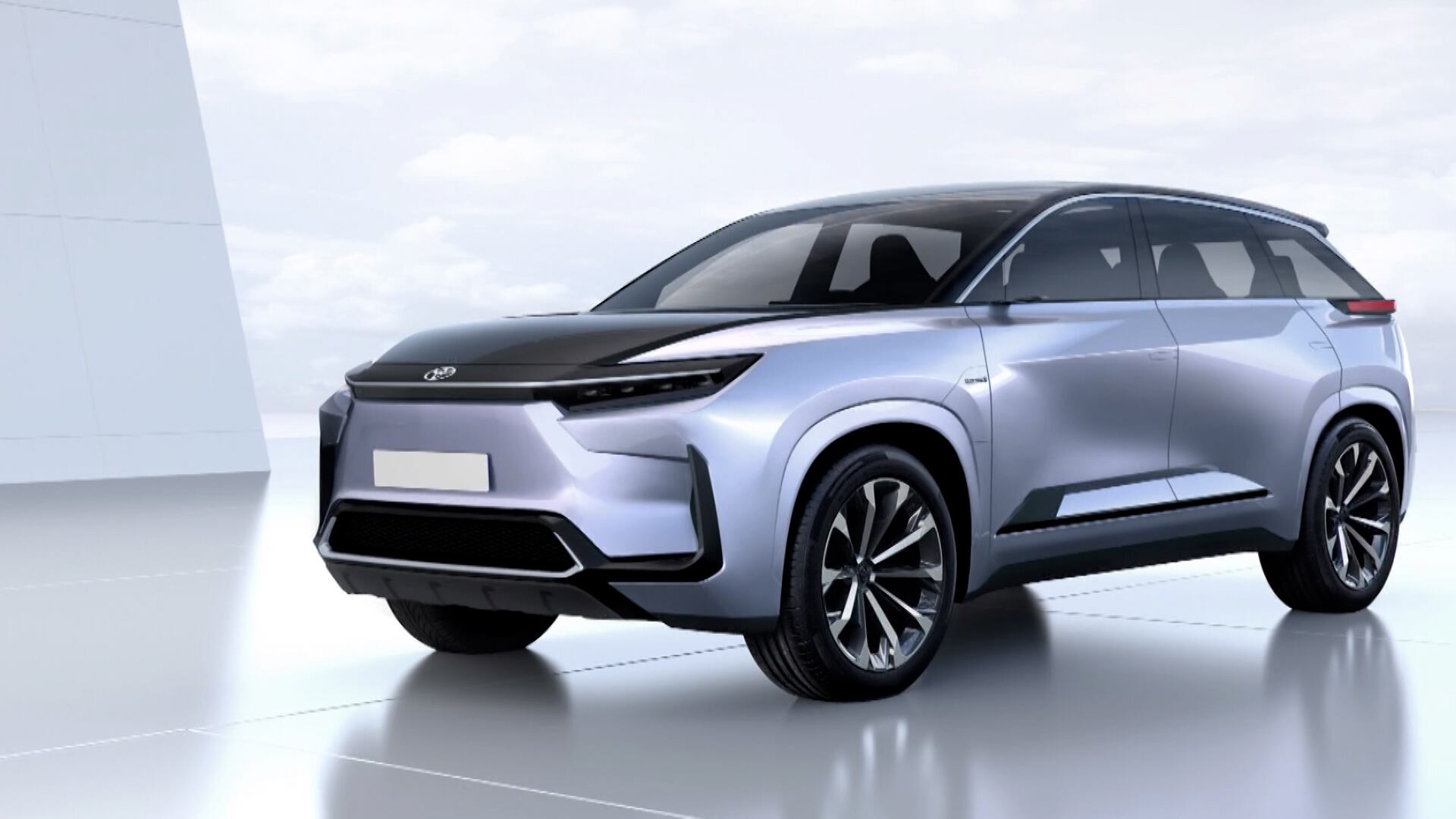
Electric vehicles are quickly becoming an accessible way for consumers to slash emissions as legacy automakers begin to electrify their fleets and world leaders including President Joe Biden push for broad EV adoption. But consumers have concerns about EV range, the availability of charging stations, and more. What if it were both helpful to consumers — and feasible from a climate change standpoint — to keep hybrid models that run on gas on the market? Gill Pratt, CEO of the Toyota Research Institute & Toyota Motor Corporation's Chief Scientist joins Cheddar Climate to discuss his team's research about 'carbon return on investment,' how Toyota is electrifying its fleet, and more.
Fresh off of a $42 million Series B Fundraise, co-founder and CEO of Chapter, Cobi Blumenfeld-Gantz, joined Cheddar to discuss the company's business model and how it will use the capital going forward. He explained that Chapter is a Medicare advisor that searches savings on medical options in order to help users find the right plan for them. "We want to make sure we can help all of our existing members and as many new Americans find the right Medicare coverage, so we're hiring aggressively for the best talent we can," Blumenfeld-Gantz said.