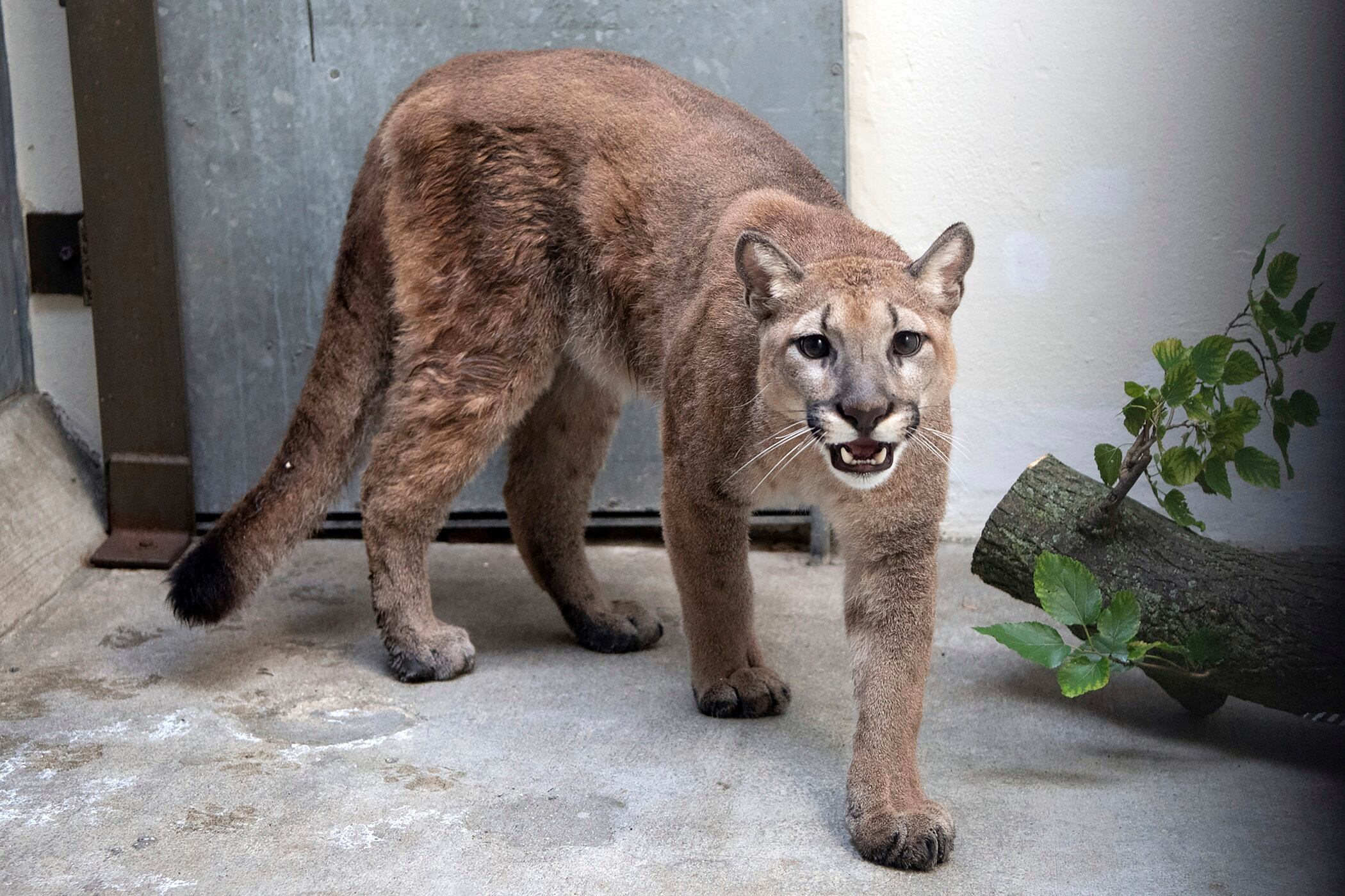
This photo provided by New York's Bronx Zoo shows an 11-month-old, 80-pound cougar that was removed from an apartment, in the Bronx borough of New York, where she was being kept illegally as a pet, animal welfare officials said Monday, Aug. 30, 2021. The cougar, nicknamed Sasha, spent the weekend at the Bronx Zoo receiving veterinary care and is now headed to the Turpentine Creek Wildlife Refuge in Arkansas, officials said. (Courtesy of The Bronx Zoo via AP)
An 80-pound cougar was removed from a New York City apartment where she was being kept illegally as a pet, animal welfare officials said Monday.
The owner of the 11-month-old female cougar surrendered the animal on Thursday, Kelly Donithan, director of animal disaster response for the Humane Society of the United States, said in a news release.
The cougar, nicknamed Sasha, spent the weekend at the Bronx Zoo receiving veterinary care and is now headed to the Turpentine Creek Wildlife Refuge in Arkansas, officials said.
The Humane Society coordinated with zoo officials, the state Department of Environmental Conservation and the New York Police Department on the big cat's removal.
“I’ve never seen a cougar in the wild, but I’ve seen them on leashes, smashed into cages, and crying for their mothers when breeders rip them away," the Humane Society’s Donithan said. “I’ve also seen the heartbreak of owners, like in this case, after being sold not just a wild animal, but a false dream that they could make a good ‘pet.’”
Donithan said this cougar was relatively lucky because her owners, who live in the Bronx, recognized that a wild cat is not fit to live in an apartment and surrendered her.
“The owner’s tears and nervous chirps from the cougar as we drove her away painfully drives home the many victims of this horrendous trade and myth that wild animals belong anywhere but the wild," Donithan said.
Department of Environmental Conservation Commissioner Basil Seggos said that while cougars "may look cute and cuddly when young, these animals can grow up to be unpredictable and dangerous."
Bronx Zoo director Jim Breheny said the exotic pet trade makes no contribution to the conservation of endangered species.
“These animals often end up in very bad situations, kept by private individuals who don’t have the resources, facilities, knowledge, or expertise to provide for the animals’ most basic needs,” Breheny said. "In addition to these welfare concerns for the animals, the keeping of big cats by private people poses a real safety hazard to the owner, the owner’s family and the community at large.”
New York has seen other notable cases involving dangerous animals in private residences, including Ming, a 400-pound tiger that was removed from a Harlem apartment in 2003.
Ming’s owner, Antoine Yates, was arrested and sentenced to five months in prison for reckless endangerment. Ming died in 2019 at the Noah’s Lost Ark Exotic Animal Rescue Center in Ohio.
Police Commissioner Dermot Shea said the cougar's case “is currently under investigation and no further information is available at this time.”
It's no secret tech giant Amazon has a mission of becoming a major player in sports media, and the company is poised to make progress on that goal in 2022. Amazon Prime Video will be the exclusive home to Thursday Night Football for the 2022-23 NFL season. In December, the New York Post reported that Amazon is in the beginning stages of developing studio sports programs, and hopes to soon have a full daily lineup of sports shows. Front Office Sports senior reporter A.J. Perez joined Cheddar News' Closing Bell to discuss.
Digital mental health company Little Otter recently announced it closed a $22 million Series A round. Little Otter was founded in 2020 by a mother-daughter team, which based the company on the idea that a child's mental health can only be addressed by treating the whole family through technology available to everyone. Little Otter CEO and co-founder Rebecca Egger and her mother, Little Otter Chief Medical and Scientific Officer and co-founder Dr. Helen Egger joined Cheddar News' Closing Bell to discuss.
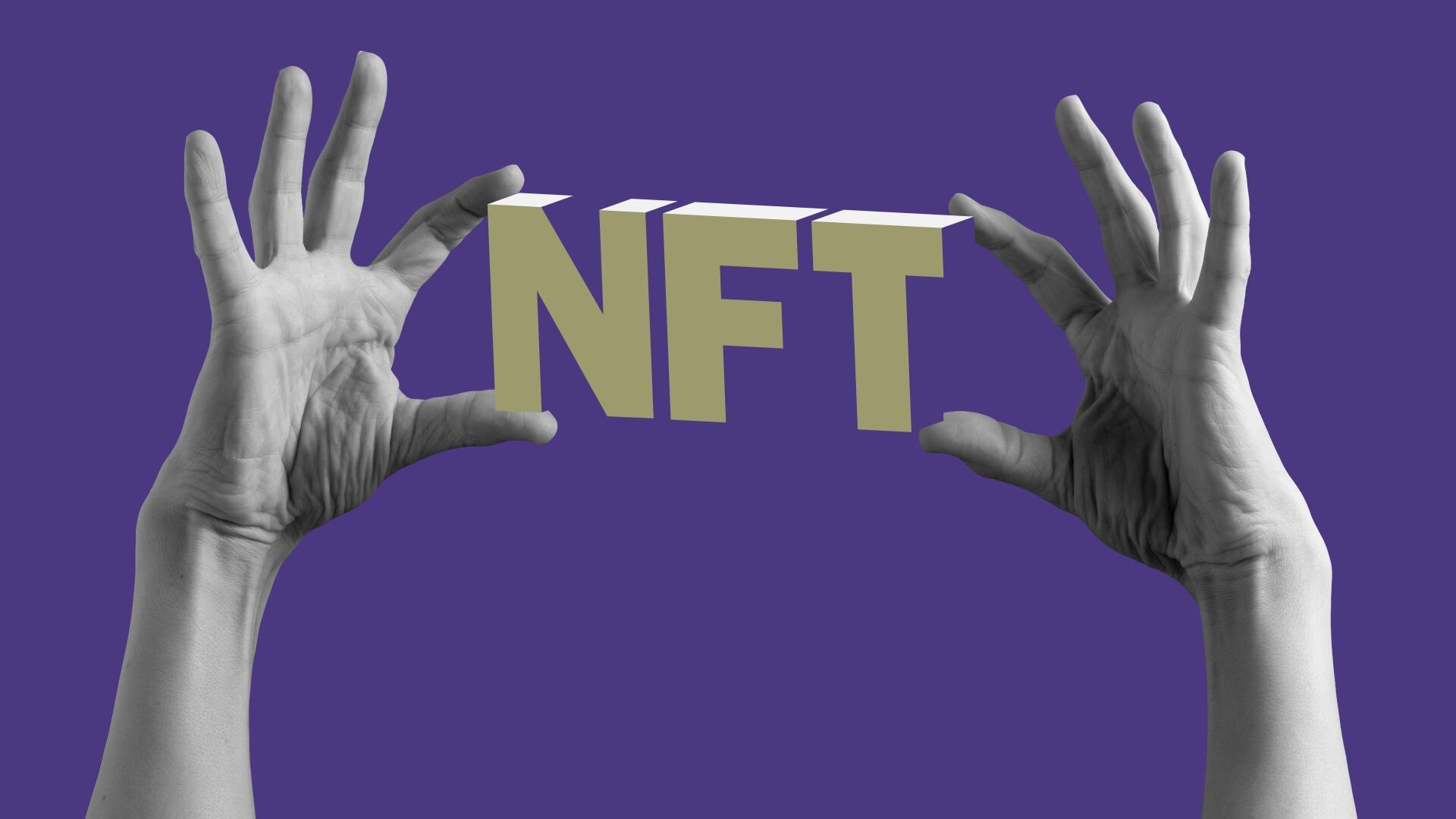
Adi Robertson, senior reporter at The Verge, joins Cheddar News to break down the battle between two NFT collections by Phunky Ape Yacht Club and PHAYC that are selling plagiarized Bored Ape Yacht Club designs.
Covid-19 has changed the way we view wellness. Jillian Hughes, communications director of Mental Health America, joins Cheddar News to discuss breaking the stigma around mental health. Justin Davis, CEO and co-founder of Spectrum Labs, weighs in on how social media impacts our wellbeing. Lastly, Precision Nutrition CEO Timothy Jones advices us on what trends to watch in 2022.
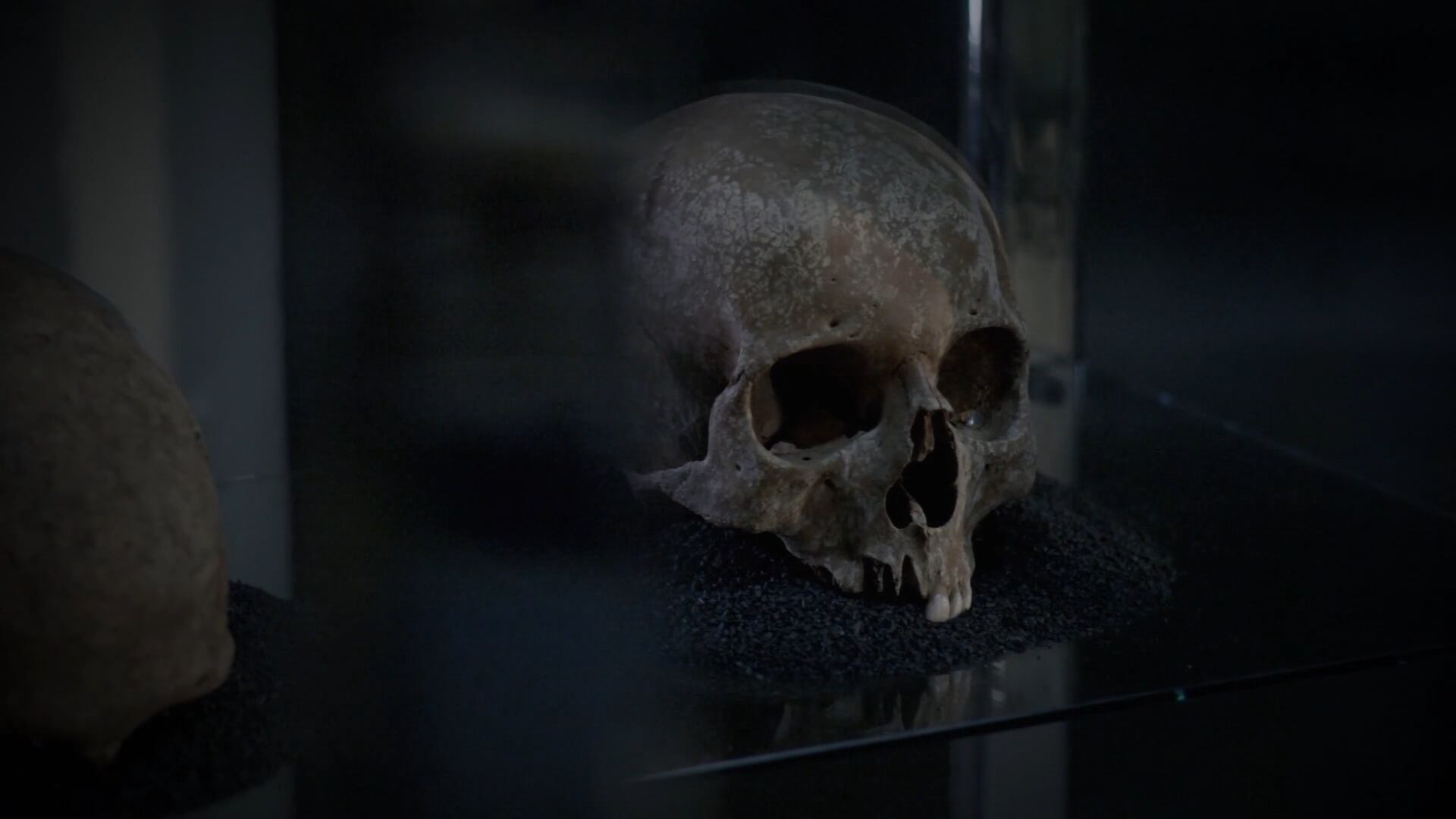
On this episode of Cheddar Innovates: Founder of Unlimited Tomorrow breaks down how he is creating completely 3D printed prosthetics to make them more affordable, customizable, and accessible; Chief Technology Officer of Zebra Technologies explains what the future of collaboration between robots and humans may look like; A look at Curiosity Stream's 'Mystery of the Roman Skulls.'
According to a recent analysis from ProPublica and the Wall Street Journal an analysis of Facebook posts, internal company documents, and interviews reveal key evidence about the social media giant's role in January 6 insurrection. National Reporter at ProPublica Craig Silverman, joined Cheddar to discuss more.
In the fight against climate change, much of the conversation revolves around reducing greenhouse gases like carbon dioxide or methane - and attempting to raise oxygen levels. But there's another gas - hydrogen - that could play a big role in the fight for the climate. Marco Alvera, CEO of Italian energy infrastructure company Snam and author of the book, 'The Hydrogen Revolution,' joined Cheddar Climate to explain the role hydrogen plays in helping achieve a net-zero future.