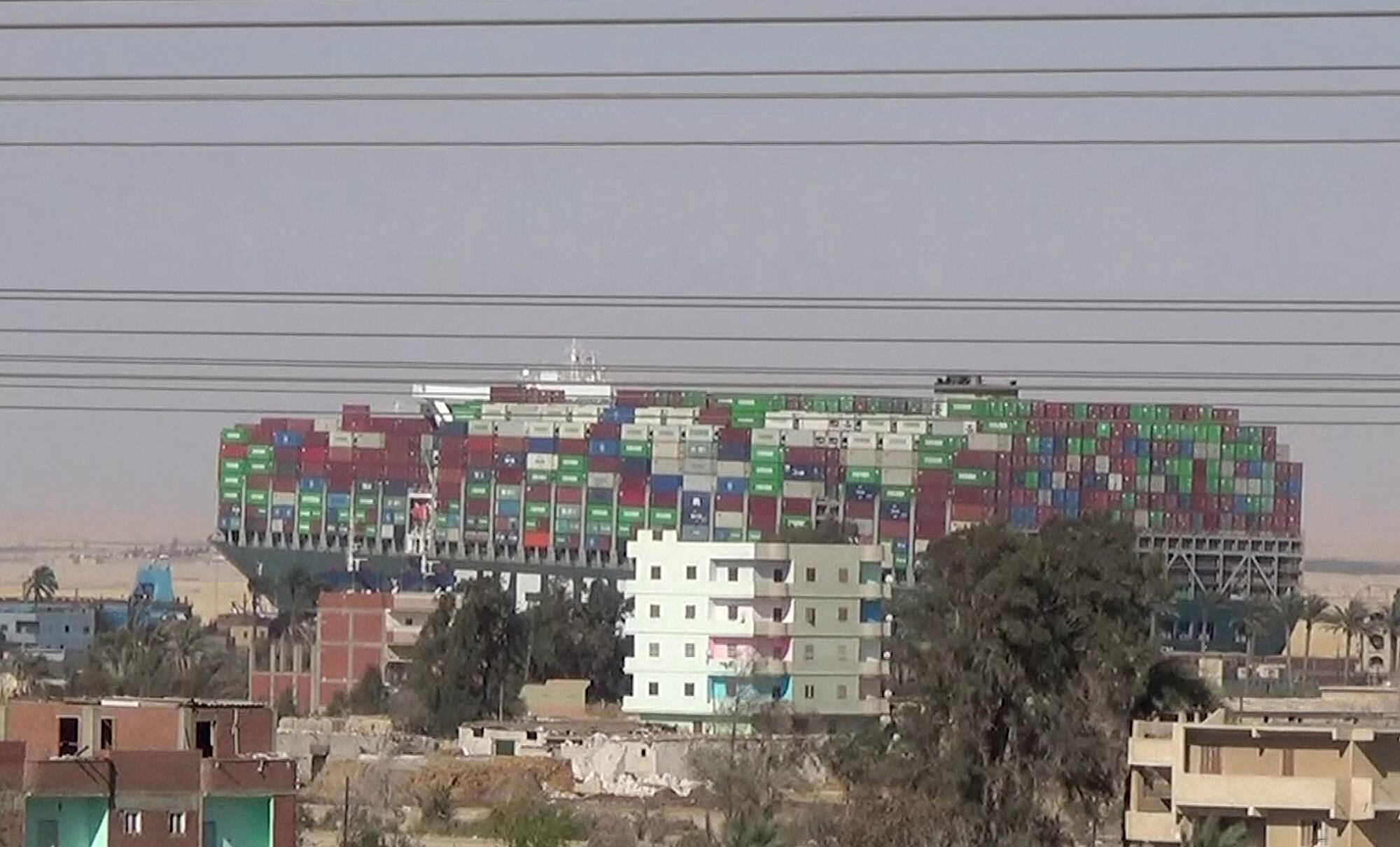
In this grab taken from file video, a view of huge container ship, Ever Given on the Suez Canal. The huge container ship that blocked the Suez Canal for nearly a week earlier this year has finally reached the port of Rotterdam to begin unloading its cargo. The Ever Given eased into a container terminal as dawn broke over the port in the Netherlands on Thursday, July 29, 2021, months later than originally planned. The Panama-flagged vessel was heading for Rotterdam when it plowed into the sandy bank of a single-lane stretch of the Suez Canal on March 23. (AP)
The huge container ship that blocked the Suez Canal for nearly a week earlier this year finally reached the port of Rotterdam in the Netherlands on Thursday to begin unloading its cargo.
As dawn broke over the sprawling port, the Ever Given eased into the Amazonehaven container terminal months later than originally planned.
The Panama-flagged vessel was heading for Rotterdam when it plowed into the sandy bank of a single-lane stretch of the canal about 6 kilometers (3.7 miles) north of the southern entrance, near the city of Suez on March 23.
Earlier this month, the Ever Given left the canal’s Great Bitter Lake, where it had been held for over three months amid a financial dispute. It was freed to continue its voyage after the ship's Japanese owner, Shoei Kisen Kaisha Ltd., reached a compensation settlement with canal authorities following weeks of negotiations and a court standoff.
The Dutch port said the vessel is expected to remain in Rotterdam until Aug. 5, when it will head for the English port of Felixstowe.
Anyone in the U.S. who had an account at any time between May 24, 2007, and December 22, 2022, is eligible to receive a payment. The 2022 settlement resolves a lawsuit alleging that Facebook allowed millions of its users’ personal information to be fed to Cambridge Analytica, a firm that supported Donald Trump’s 2016 presidential campaign.
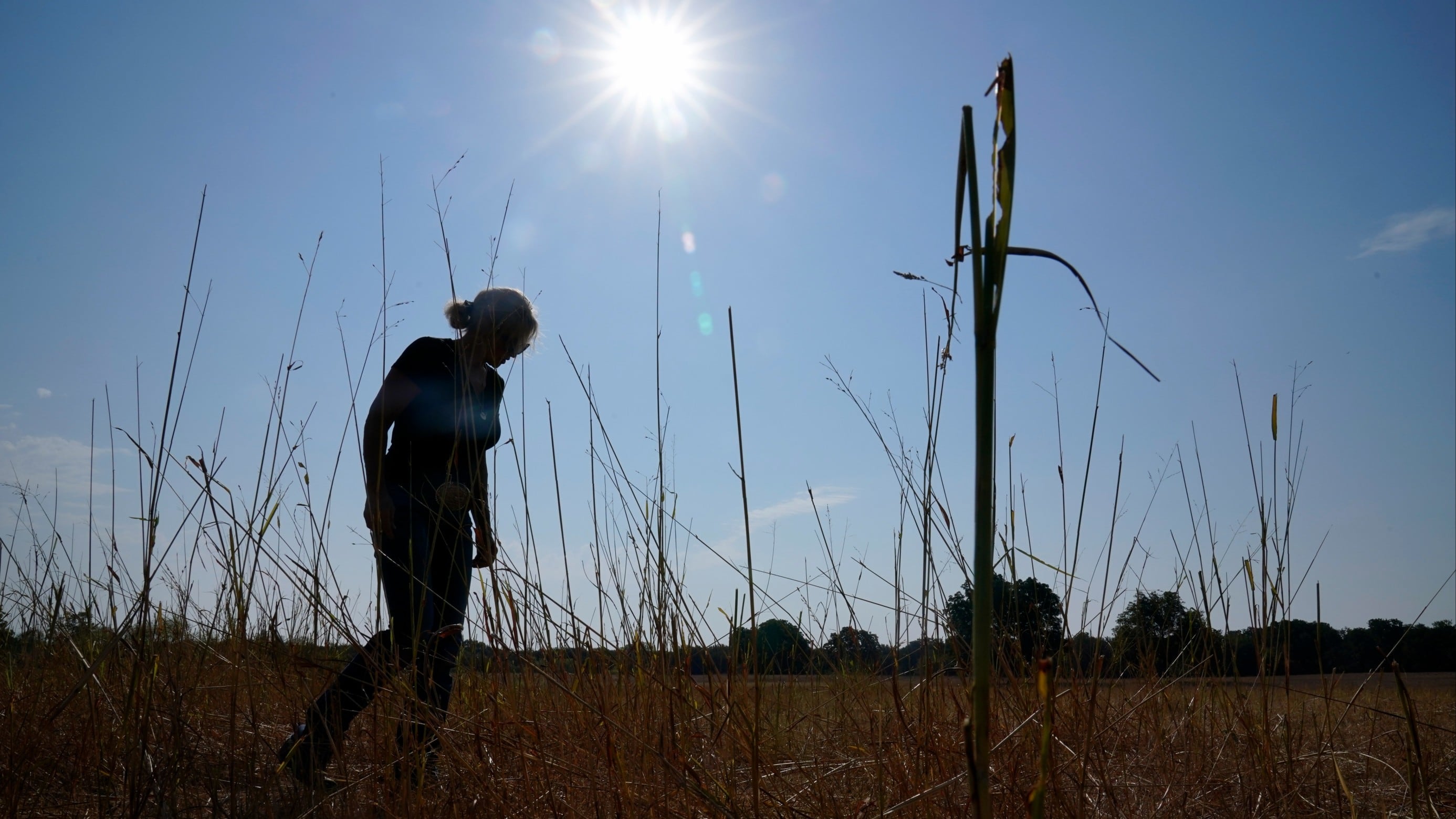
Irrigation might have saved Jackson's hay, but she and her husband rejected the idea about 10 years ago over the cost: as much as $75,000 for a new well and all the equipment. But now — with an extended drought and another U.S. heat wave this week that will broil her land about an hour northwest of Dallas for days in 100-degree-plus temperatures — Jackson said she is “kind of rethinking.”
Children’s advocacy groups including Fairplay and Common Sense Media are asking the Federal Trade Commission to investigate Google, saying the tech giant serves personalized ads to kids on YouTube despite federal law prohibiting the practice.