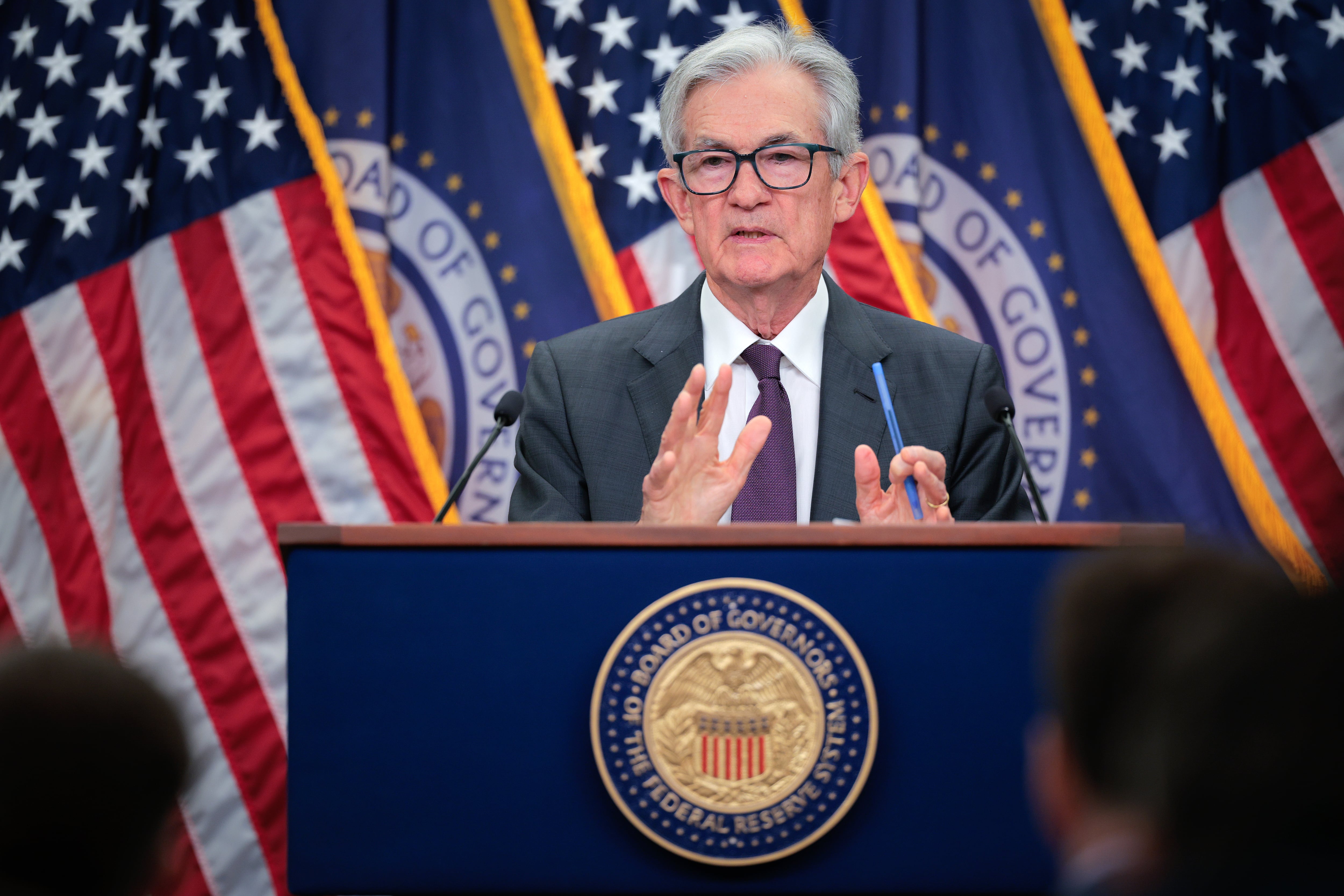
A sales associate helps customers as they consider the purchase of a big-screen television at a Costco warehouse on Wednesday, Nov. 18, 2020, in Sheridan, Colo. U.S. consumer confidence fell to a reading of 96.1 in November as rising coronavirus cases pushed Americans’ confidence down to the lowest level since August. The Conference Board said the November reading represented a drop from a revised 101.4 in October. (AP Photo/David Zalubowski)
By Matt Ott
A closely-watched gauge of U.S. consumer confidence tumbled in December as rising coronavirus cases dragged American optimism to its lowest level since the summer.
However, rising pessimism is now spreading during the crucial holiday season, which could make or break a number of retailers, airlines, restaurants, and other sectors that have been hammered financially during the pandemic.
The December reading of 88.6 released Tuesday by the Conference Board is a sharp decline from last month, which was revised downward to 92.9, and it is far worse than economists had expected.
It may be an ominous sign for an economy in which consumer spending accounts for 70% of all economic activity.
The Commerce Department reported last week that U.S. retail sales fell a seasonally adjusted 1.1% in November, the biggest drop in seven months, and also worse than most were expecting. The drumbeat of weak economic data may be providing a grim preview of Christmas receipts, which can account for a quarter or more of a retailer’s annual sales.
The index measuring consumers’ assessment of current business and labor market conditions also fell sharply, from 105.9 last month to 90.3 in December. Consumers’ short-term outlook for income, business, and labor market conditions ticked up slightly from 84.3 in November to 87.5 this month, possibly because of recent approvals for COVID-19 vaccines.
It remains to be seen how Congress' $900 billion relief bill, which was passed Monday and too late for the survey, will affect consumer behavior this winter.
The bill combines coronavirus-fighting funds with financial relief for individuals and businesses. It would establish a temporary $300 per week supplemental jobless benefit and a $600 direct stimulus payment to most Americans, along with a new round of subsidies for hard-hit businesses, restaurants, and theaters and money for schools, health care providers, and renters facing eviction.
Updated on December 22, 2020, at 11:26 a.m. ET with additional details.
Nestlé has dismissed its CEO Laurent Freixe after an investigation into an undisclosed relationship with a direct subordinate. The company announced on Monday that the dismissal was effective immediately. An investigation found that Freixe violated Nestlé’s code of conduct. He had been CEO for a year. Philipp Navratil, a longtime Nestlé executive, will replace him. Chairman Paul Bulcke stated that the decision was necessary to uphold the company’s values and governance. Navratil began his career with Nestlé in 2001 and has held various roles, including CEO of Nestlé's Nespresso division since 2024.
Kraft Heinz is splitting into two companies a decade after they joined in a massive merger that created one of the biggest food companies on the planet. One of the companies will include brands such as Heinz, Philadelphia cream cheese and Kraft Mac & Cheese. The other will include brands like Oscar Mayer, Kraft Singles and Lunchables. When the company formed in 2015 it wanted to capitalize on its massive scale, but shifting tastes complicated those plans, with households seeking to introduce healthier options at the table. Kraft Heinz's net revenue has fallen every year since 2020.
About 780,000 pressure washers sold at retailers like Home Depot are being recalled across the U.S. and Canada, due to a projectile hazard that has resulted in fractures and other injuries among some consumers.
President Donald Trump has fired one of two Democratic members of the U.S. Surface Transportation Board to break a 2-2 tie ahead of the board considering the largest railroad merger ever proposed.