It is up to the federal government to make sure America embraces rapid technological change in a way that is “positive for as many of our citizens as possible,” said Rep. John Delaney (D-MD).
In an interview with Cheddar, the Congressman said he doesn’t believe such progress is a threat to the labor market.
“Innovation generally creates more jobs than it displaces,” said Delaney. “But the problem is oftentimes the jobs that get created by innovation are not located in the same places where the jobs that were displaced are located.”
He pointed out that 80 percent of venture capital in this country goes to just California, New York, and Boston, which means that innovation and job creation is highly concentrated in and around those places.
“I think that will continue unless policymakers do things to make sure more of our country has the opportunity to have people invest in their communities and kind of benefit from this innovation.”
Delaney founded the A.I. Caucus to do just that. Comprised of lawmakers from both sides of the aisle, the group strives to work with the private sector to come up with policy ideas that can help the country keep up with technological change.
“I just want to make sure we don’t leave huge parts of the country behind,” he said.
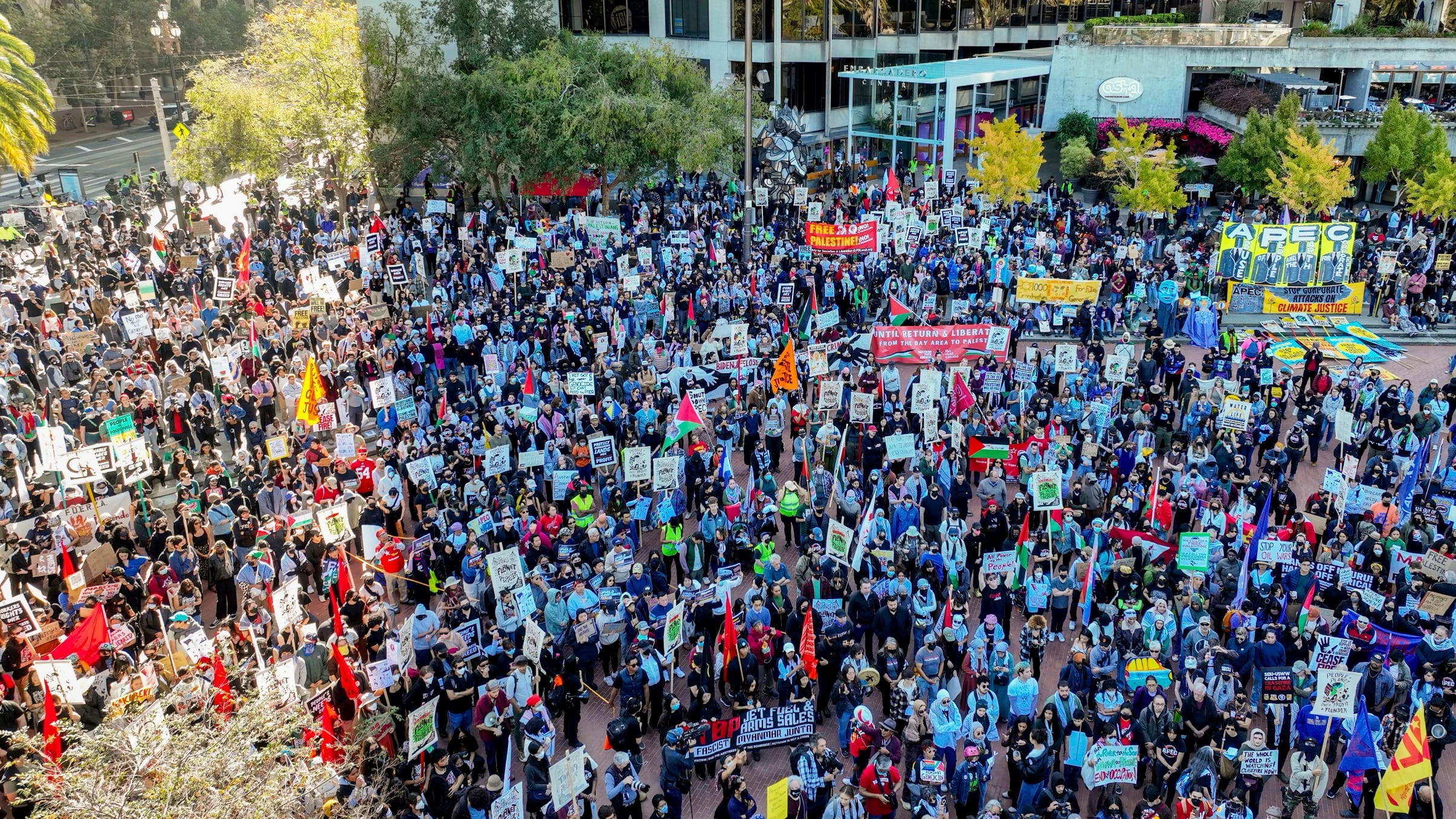
Thousands of people are expected in Washington, DC Tuesday for a demonstration to support Israel, condemn anti-Semitism, and call for the release of the roughly 240 hostages held by Hamas.
Battles between Israel and Hamas around hospitals forced thousands of Palestinians to flee from some of the last perceived safe places in northern Gaza, stranding critically wounded patients, newborns and their caregivers with dwindling supplies and no electricity, health officials said Monday.
Secret Service agents protecting President Joe Biden’s granddaughter opened fire after three people tried to break into an unmarked Secret Service vehicle in the nation’s capital, a law enforcement official told The Associated Press.