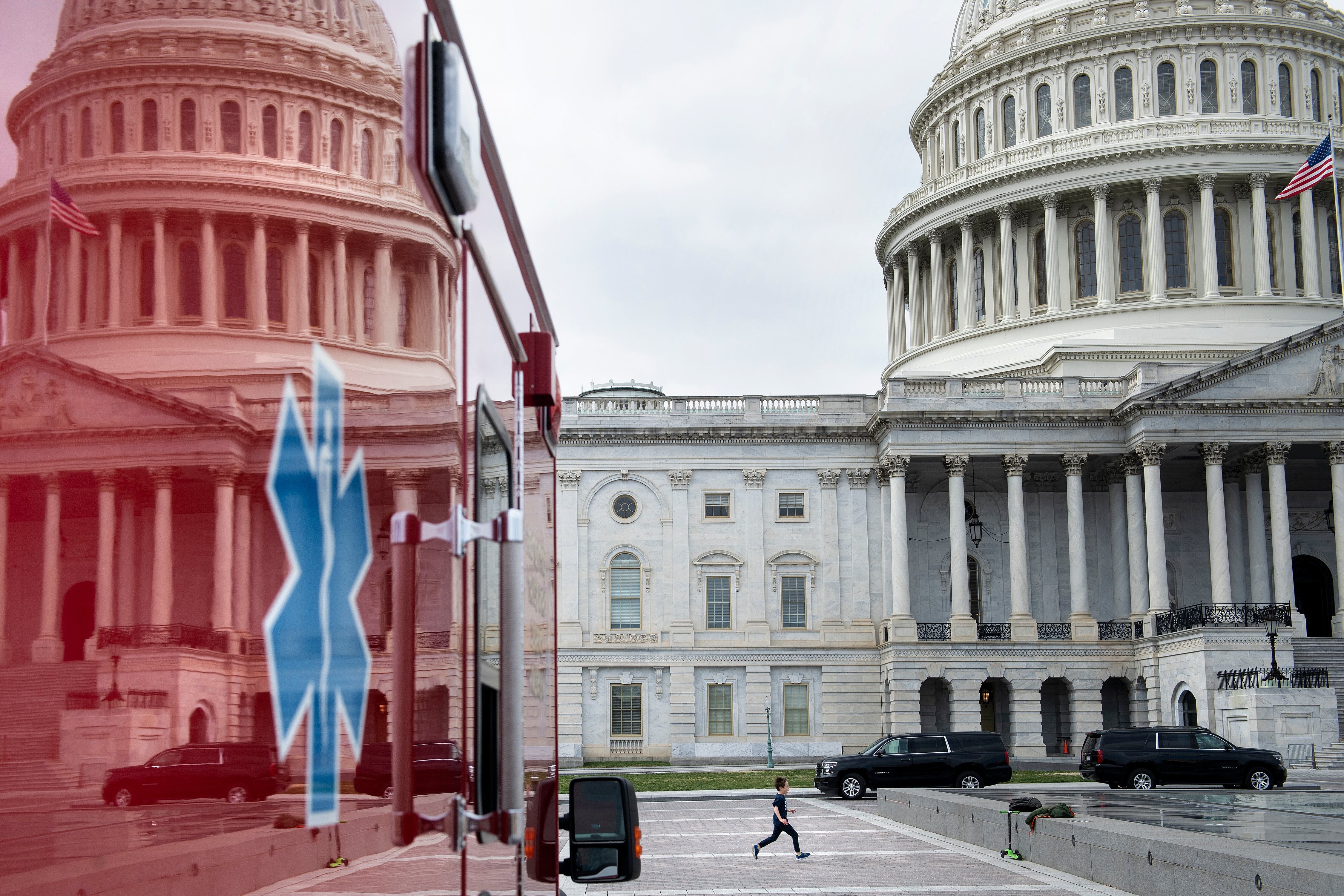
As negotiations stalled in the Senate on Tuesday, House Democrats released their own version of a coronavirus relief bill, upping the total cost to $2.5 trillion.
Both bills seek to address the overarching impacts of coronavirus on the economy. But the Republican leadership in the Senate and the Democratic leadership in the House are taking different approaches as to where those dollars should go.
Each piece of legislation is long: 247 pages for the Senate bill and a whopping 1,404 pages for the House bill. While we cannot distill every provision, here’s a look at some of the major differences between the two pieces of legislation:
Health care accessibility
Senate Republican bill:
House Democratic bill:
Additional health care money
Senate Republican bill:
House Democratic bill:
Direct aid to Americans
Senate Republican bill:
House Democrats’ bill:
Unemployment Insurance
Senate Republican’s bill:
House Democrats’ bill:
Paid leave and family medical leave
Senate Republican’s bill:
House Democrats’ bill:
Aid to small businesses
Senate Republican’s bill:
House Democrats’ bill:
State/local government assistance
Senate Republican’s bill:
House Democrats’ bill:
Student loan assistance
Senate Republican’s bill:
House Democrats’ bill:
The new bill also includes additional protections for health care workers dealing directly with COVID-19 patients, such as requiring hospitals and other health facilities to provide personal protective equipment (PPE) and implement clear protocols for dealing with the disease.
Other Democratic priorities include an expansion of nutrition assistance programs, commonly called food stamps, and election assistance provisions for states administering elections during the coronavirus pandemic. Eight states and Puerto Rico have already postponed primary elections.
Even though most public schools and universities have closed their doors, the Democrats’ bill sends funds their way, with $50 billion going to states to help shore up their school systems and $10 billion to universities affected by the outbreak.
The Democrats’ bill includes more stringent restrictions on limiting executive pay and stock buybacks for companies that receive money as part of the bill. Such restrictions were a major sticking point among Senate Democrats, who said the Republican bill did not go far enough in that respect.
House Democrats created airline-specific provisions, including requirements that companies receiving aid from the government meet new standards in carbon offsets and aim to reduce the airline industry’s carbon emissions by half by 2050.
The House bill also cancels all debt held by the U.S. Postal Service and allows it to borrow up to $15 billion from the federal government to operate during the crisis. The bill also requires the USPS to prioritize medical deliveries.
The House and Senate are still negotiating to come up with a final bill that addresses concerns on both sides and includes provisions from the White House. The Senate is still in session until a bill can be passed, and it has to be passed by unanimous consent in the House, meaning every person in the chamber must agree with the legislation. It is unclear what, if anything, from the House bill will be in the final agreement.
Such a deal could be announced as early as before the end of Tuesday.